
The appearance of white spots on the body of aquarium fish is one of the most common and alarming signals for any aquarist. This condition is often mistakenly called “ich,” but behind this general term can hide two completely different, though superficially similar, diseases: ichthyophthirius and oodinosis. Correct identification of the pathogen is a critically important step, as the treatment protocols for these diseases differ significantly. An incorrect diagnosis can lead to the loss of the entire fish population.
The purpose of this material is to provide aquarists, both beginners and experienced, with a comprehensive guide to differential diagnosis, symptomatology, and effective treatment strategies for both parasitic diseases.
White Spots on Fish: Ichthyophthirius or Oodinosis? A Complete Guide
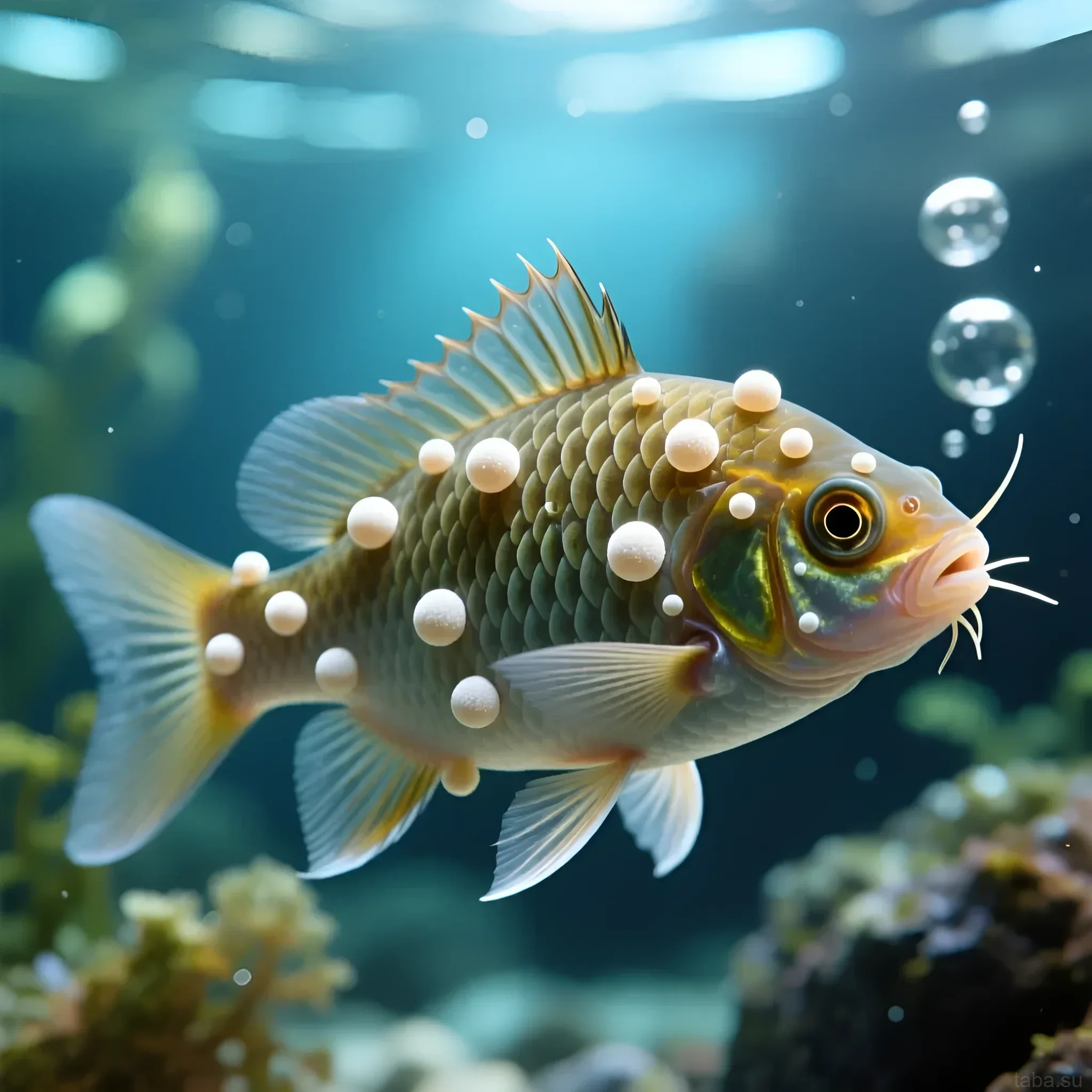
Ichthyophthirius (Ichthyophthiriosis) and oodinosis (Oodiniosis) are parasitic infestations that affect the skin and gills of fish. Although both diseases manifest as small spots on the body, their causative agents belong to different taxonomic groups, have different life cycles, and, most importantly, respond differently to chemical treatments.
Understanding the biology of the parasites and accurately identifying the nature of the lesions allows not only to save the fish but also to avoid the unnecessary use of strong medications that can harm the biological balance of the aquarium.
What is Ichthyophthirius (“Ich”): Causes, Symptoms, and Parasite Life Cycle
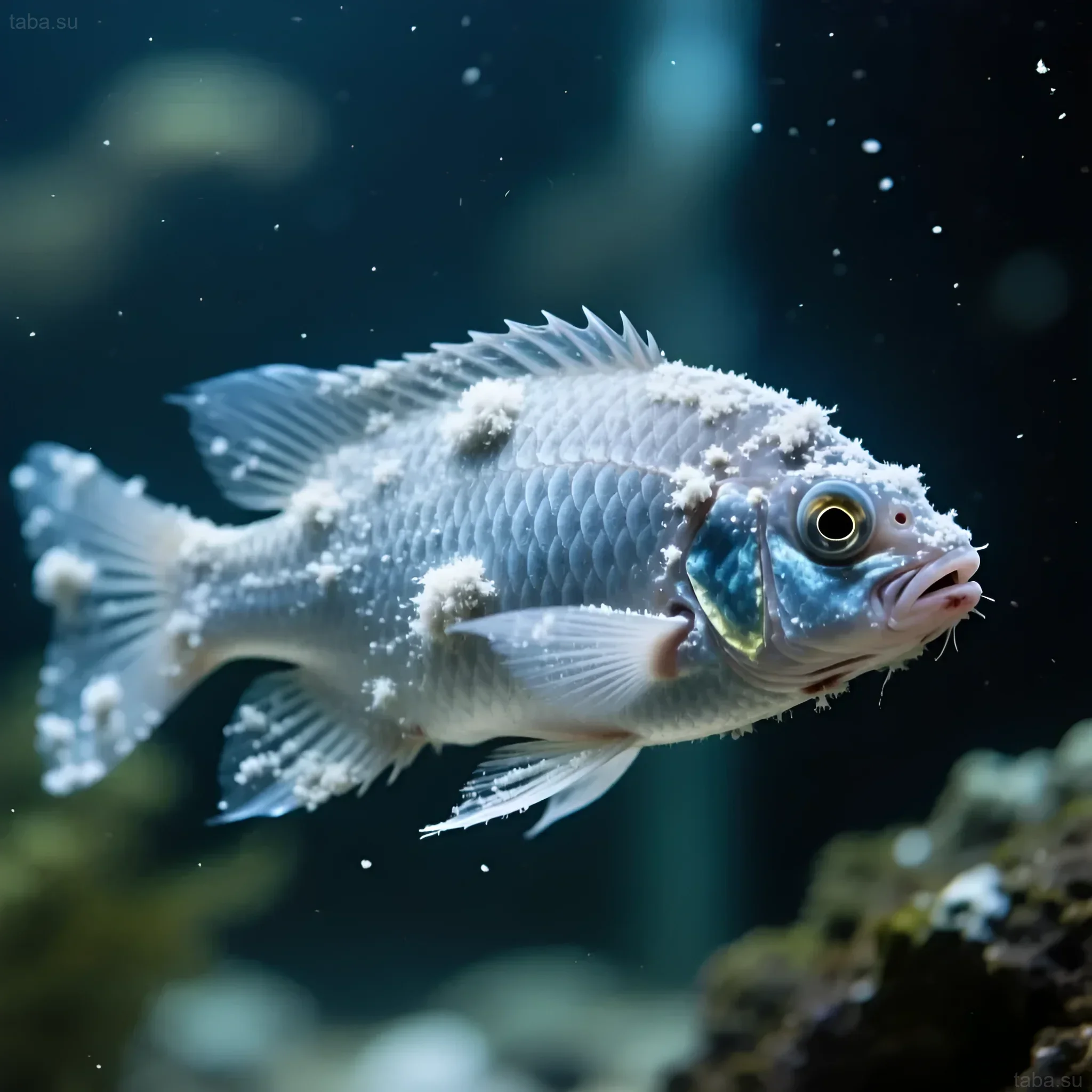
Ichthyophthirius, commonly called “ich” or “white spot disease,” is caused by the parasitic ciliate Ichthyophthirius multifiliis. It is one of the most well-known and rapidly spreading parasites in freshwater aquaristics.
Symptoms of Ichthyophthirius
Key signs by which experts identify “ich” are:
- Spot size and appearance: Spots are relatively large, clearly defined, convex, resembling grains of semolina or salt. Size can reach 0.5–1.5 mm.
- Color: Bright white or translucent.
- Location: Initially appear on fins and tail, then rapidly spread to the body and gills.
- Fish behavior: Fish become restless, often rubbing against decorations or substrate (so-called “flashing”) as the parasite causes severe irritation.
- Gill involvement: In severe infestations, gills are affected first, leading to difficulty breathing (fish hang at the surface and gasp for air).
Life Cycle of Ichthyophthirius multifiliis
Understanding the life cycle is critical for successful treatment, as the parasite is only vulnerable during its free-swimming stage (tomites).
- Trophont: The feeding stage. The parasite burrows under the epithelium of the fish’s skin or gills, where it is protected from chemicals and grows, forming a visible white spot.
- Tomont: The reproductive stage. Upon reaching maturity, the trophont leaves the fish, falls to the bottom (or attaches to plants), and encysts. Rapid division occurs within the cyst.
- Tomite: The free-swimming stage. Hundreds of microscopic tomites emerge from the cyst. This stage lasts only 24–48 hours. If a tomite does not find a host fish within this time, it dies. It is during this stage that chemical treatment must be administered.
Oodinosis (Velvet Disease): How to Recognize “Velvet Disease”
Oodinosis is caused by dinoflagellates, most commonly Piscinoodinium pillulare. This disease is nicknamed “Velvet Disease” due to the characteristic appearance of the affected fish.
Symptoms of Oodinosis
Oodinosis often progresses more aggressively and subtly than ichthyophthirius, especially in small fish (e.g., neon tetras – Paracheirodon innesi, or danios – Danio rerio).
- Spot size and appearance: Spots are extremely small, dust-like, not convex. They look like a thin coating or “sprinkle.”
- Color: Characteristic golden-yellow, rusty, or grayish hue. Under directed light, the fish appears covered in velvet.
- Location: Primarily affects the gills and head, then spreads to the body.
- Fish behavior: Severe flashing, lethargy, loss of appetite. In case of gill involvement, difficulty breathing and hanging at the surface.
- Mucus coating: Fish may produce a large amount of mucus in an attempt to get rid of the parasites, giving the body a cloudy appearance.
Differential Diagnosis: How to Distinguish Ichthyophthirius from Oodinosis – Step-by-Step Guide
Accurately differentiating these two diseases requires careful observation. Experts recommend using bright, directed lighting to examine the fish, especially if you suspect oodinosis.
Comparative Symptom Table
| Parameter | Ichthyophthirius (Ich) | Oodinosis (Velvet) |
|---|---|---|
| Causative Agent | Ciliate (Ichthyophthirius multifiliis) | Dinoflagellate (Piscinoodinium pillulare) |
| Spot Size | Large (0.5–1.5 mm), resembling semolina grains. | Microscopic, dust-like. |
| Texture | Convex, clearly defined. | Flat, creating a “velvet” or “dusty” effect. |
| Color | Bright white, pearlescent. | Golden-yellow, rusty, grayish. |
| Protection from Medication | High (parasite is under the skin). | Medium (parasite is attached to the surface). |
| Light Sensitivity | Low. | High (parasite is photosynthetic). |
Step-by-Step Diagnostic Guide
- Step 1: Assess the size. If the spots look like large, individual, convex grains (you can count them), it is most likely ichthyophthirius.
- Step 2: Assess color and texture. If the fish looks as if it has been sprinkled with golden or rusty dust, and the spots lack distinct convexity, it is oodinosis.
- Step 3: Check behavior. Both diseases cause flashing, but with oodinosis, severe lethargy and excessive mucus production are often observed.
- Step 4: Consider the history. Ichthyophthirius is most often introduced with new fish or due to a sharp drop in temperature. Oodinosis often occurs with severe stress and poor water quality, as well as a lack of quarantine.
Ichthyophthirius Treatment: Effective Methods and Medications
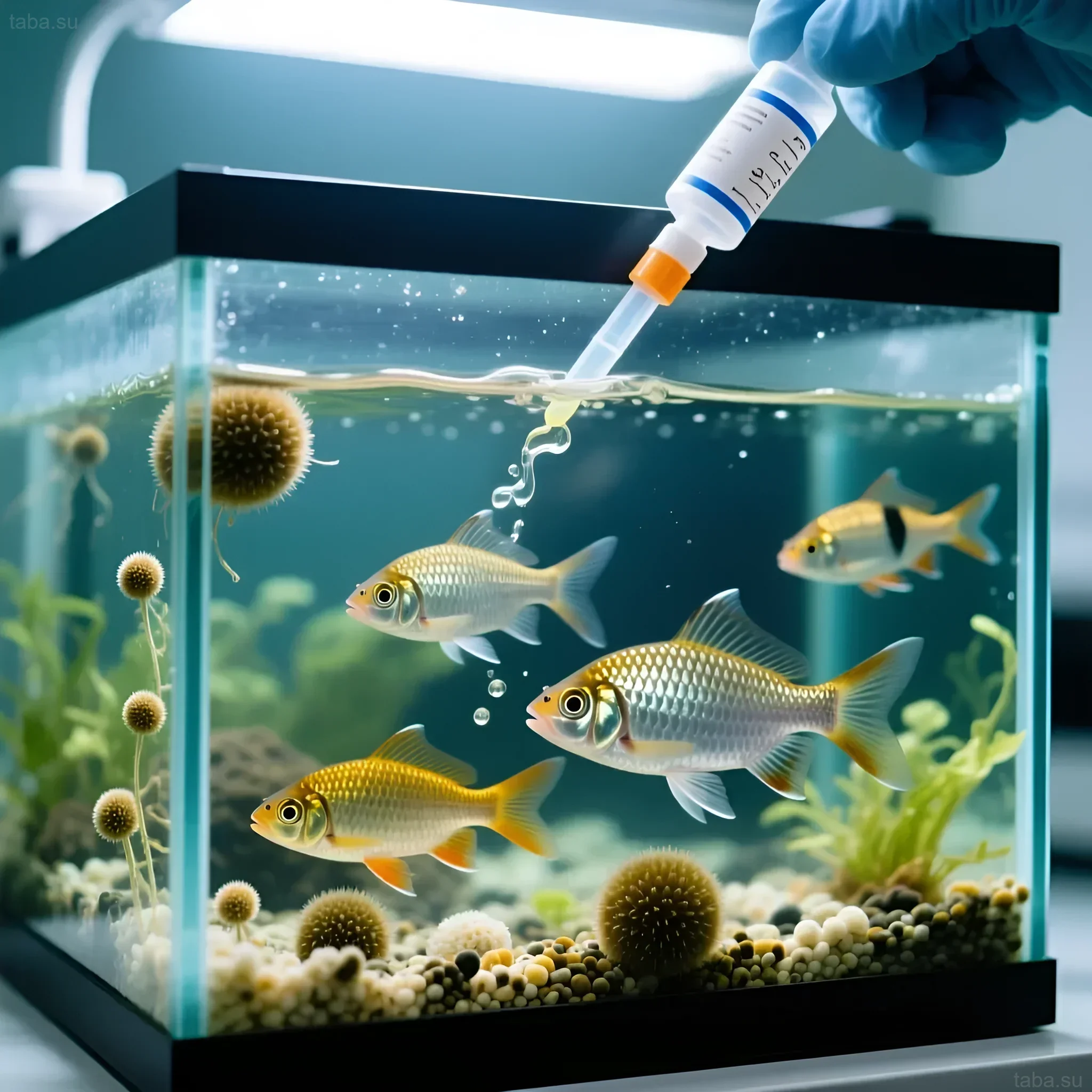
Ichthyophthirius treatment is always aimed at destroying the free-swimming stage (tomites). Since trophonts are protected under the skin, it is necessary to accelerate their exit and treat the water with chemicals.
Key Principles of Ich Treatment
- Temperature Increase: For most tropical fish (e.g., guppies – Poecilia reticulata), the temperature is raised to 28–30°C. This accelerates the parasite’s life cycle, reducing the time it spends in a protected state. Caution: Ensure your fish and plants can tolerate such temperatures.
- Chemical Treatment: Medications should be added daily or according to the manufacturer’s instructions throughout the entire treatment cycle (7–10 days) to “catch” all emerging tomites.
Recommended Medications
The most effective are considered to be medications containing:
- Malachite Green: Very effective against tomites. Often used in combination with formalin (e.g., Sera Costapur, Tetra ContraIck).
- Formalin: A strong antiseptic, requires careful dosing.
- Salt (NaCl): At a concentration of 1–3 grams per liter of water, it can help in the early stages and support fish osmoregulation, but is not a complete treatment for highly sensitive fish.
During treatment, UV sterilizers should be turned off and activated carbon removed, as they deactivate the medications.
Oodinosis Treatment: How to Get Rid of “Velvet Disease”
Oodinosis requires faster and often more aggressive intervention, as the parasites can quickly damage the gills. Since Piscinoodinium pillulare are dinoflagellates, they are sensitive to copper and light.
Key Principles of Velvet Disease Treatment
- Darkening the aquarium: Since oodiniums use photosynthesis, complete or partial darkening of the aquarium for 3–4 days significantly weakens the parasites.
- Copper-containing medications: Copper is the primary and most effective treatment for oodinosis (e.g., Cupramine). Important: Copper is toxic to many invertebrates (shrimp, snails) and some sensitive fish (e.g., loaches – Botia macracantha). Copper concentration must be strictly controlled using special tests.
- Temperature Increase: As with ichthyophthirius, raising the temperature to 28–30°C accelerates the life cycle.
If the aquarium contains sensitive fish or invertebrates, it is recommended to move the sick fish to a quarantine tank for copper treatment, and use milder agents in the main aquarium (e.g., acriflavine).
Prevention of Ichthyophthirius and Oodinosis: Creating a Healthy Aquarium
As in any area of aquaristics, prevention is always better than cure. Both diseases often arise against the backdrop of weakened fish immunity, caused by stress or poor keeping conditions.
Basic Prevention Measures
- Quarantine (absolutely mandatory): All new fish must be placed in a separate quarantine tank for at least two to three weeks. This allows for the detection of hidden infections (including Ich and Oodinium) that may manifest under the stress of transfer.
- Water parameter stability: Sharp fluctuations in temperature, pH, as well as high concentrations of ammonia (NH₃), nitrites (NO₂), and nitrates (NO₃) are major stressors. Regular water changes (25–30% weekly) and parameter testing reduce the risk of outbreaks.
- Temperature regime: Avoid sudden and significant temperature fluctuations. Use a reliable thermostat.
- Balanced nutrition: High-quality, varied food rich in vitamins (especially vitamin C) supports strong fish immunity.
FAQ: Answers to Frequently Asked Questions About Ichthyophthirius and Oodinosis
1. Can these diseases be transmitted to humans?
No. Ichthyophthirius (*Ichthyophthirius multifiliis*) and oodinosis (*Piscinoodinium pillulare*) are specific fish parasites and do not pose a health risk to humans or other pets.
2. How long does treatment last?
Ichthyophthirius treatment usually takes 7–14 days at 28°C, as it is necessary to wait for all trophonts to exit from under the skin. Oodinosis treatment also lasts at least 7 days, even if visible symptoms disappear earlier, to destroy all cysts.
3. Do I need to treat the aquarium if only one fish is sick?
Yes, absolutely. Both Ich and Oodinium have free-swimming stages that are already in the water, on the substrate, and on decorations. If the entire aquarium is not treated, the parasites will continue to multiply and infect the other inhabitants.
4. Can ichthyophthirius be treated by simply raising the temperature?
For some tropical strains of Ich, raising the temperature to 30–32°C can be effective, as at this temperature the parasite cannot complete its life cycle. However, this method does not guarantee complete eradication and is stressful for many fish and plants (e.g., Vallisneria – Vallisneria spiralis). It is always recommended to combine temperature increase with chemical treatment.
5. Is copper dangerous when treating oodinosis?
Copper (Cu) is very effective against oodinosis, but it is toxic if the therapeutic dose is exceeded. Furthermore, copper accumulates in the substrate. When using copper-containing medications, it is critically important to use test kits to monitor copper levels and avoid its use in aquariums with shrimp (*Neocaridina davidi*) or snails.