
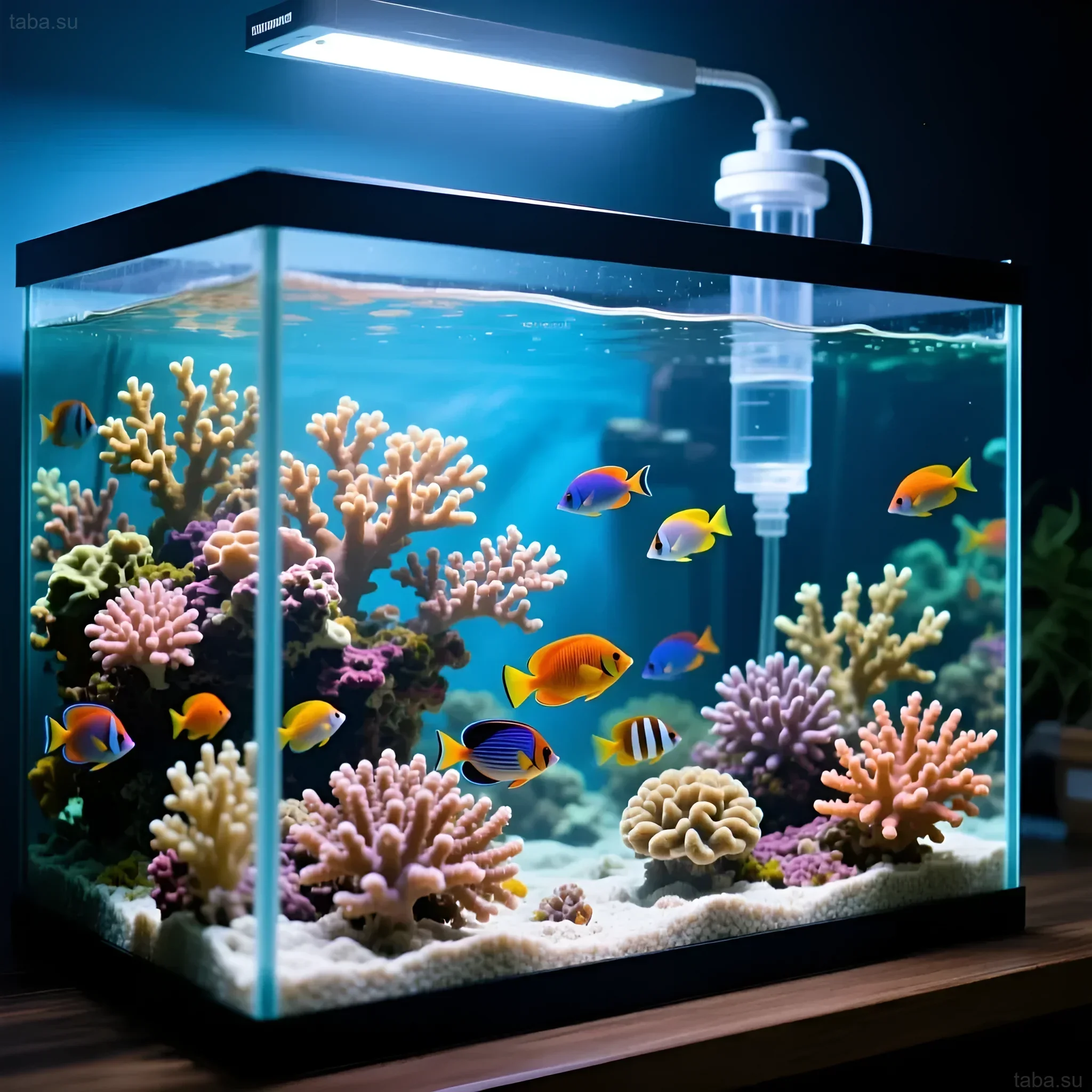
Maintaining stable water parameters is the cornerstone of successful aquaristics, whether it’s a freshwater system with sensitive shrimp (Caridina cantonensis) or a complex reef aquarium. One of the most insidious factors constantly threatening this stability is natural evaporation. Water leaves, but the dissolved substances within it – salts, minerals, trace elements – remain, leading to a gradual but steady increase in their concentration. Automatic Top-Off (ATO) systems were developed to address this problem, ensuring continuous and precise replenishment of evaporated moisture.
Automatic Water Top-Off in Aquariums: Why Salinity Control is Important?

In aquaristics, the principle of stability (homeostasis) is the golden rule. Any sharp change in the water’s chemical composition causes stress to its inhabitants. In the context of marine and even some freshwater systems, controlling the concentration of dissolved substances becomes critically important.
For marine aquariums, the concept of salinity is a measure of the total amount of dissolved salts (primarily sodium chloride) in the water, measured in parts per thousand (ppt) or specific gravity (S.G.). Most corals and fish, such as clownfish (Amphiprioninae), are stenohaline, meaning they can only tolerate a very narrow range of salinity. Fluctuations in salinity disrupt their osmotic balance, forcing their bodies to expend a huge amount of energy regulating water exchange, leading to illness or death.
For freshwater aquariums, although the term “salinity” is used less frequently, evaporation leads to an increase in the concentration of total dissolved solids (TDS), as well as hardness (GH and KH). This is especially important for keeping sensitive species, such as discus (Symphysodon) or delicate aquarium plants, which require soft water.
- Osmotic Shock: A sharp increase in salinity can cause dehydration of fish cells.
- Stress and Reduced Immunity: Constant, even minor, fluctuations in concentration weaken the inhabitants’ immune systems.
- Chemical Imbalance: In reef aquariums, the concentration of essential elements (calcium, magnesium, alkalinity) also increases, which can disrupt coral calcification.
How Water Evaporation Affects Aquarium Salinity: A Scientific Explanation
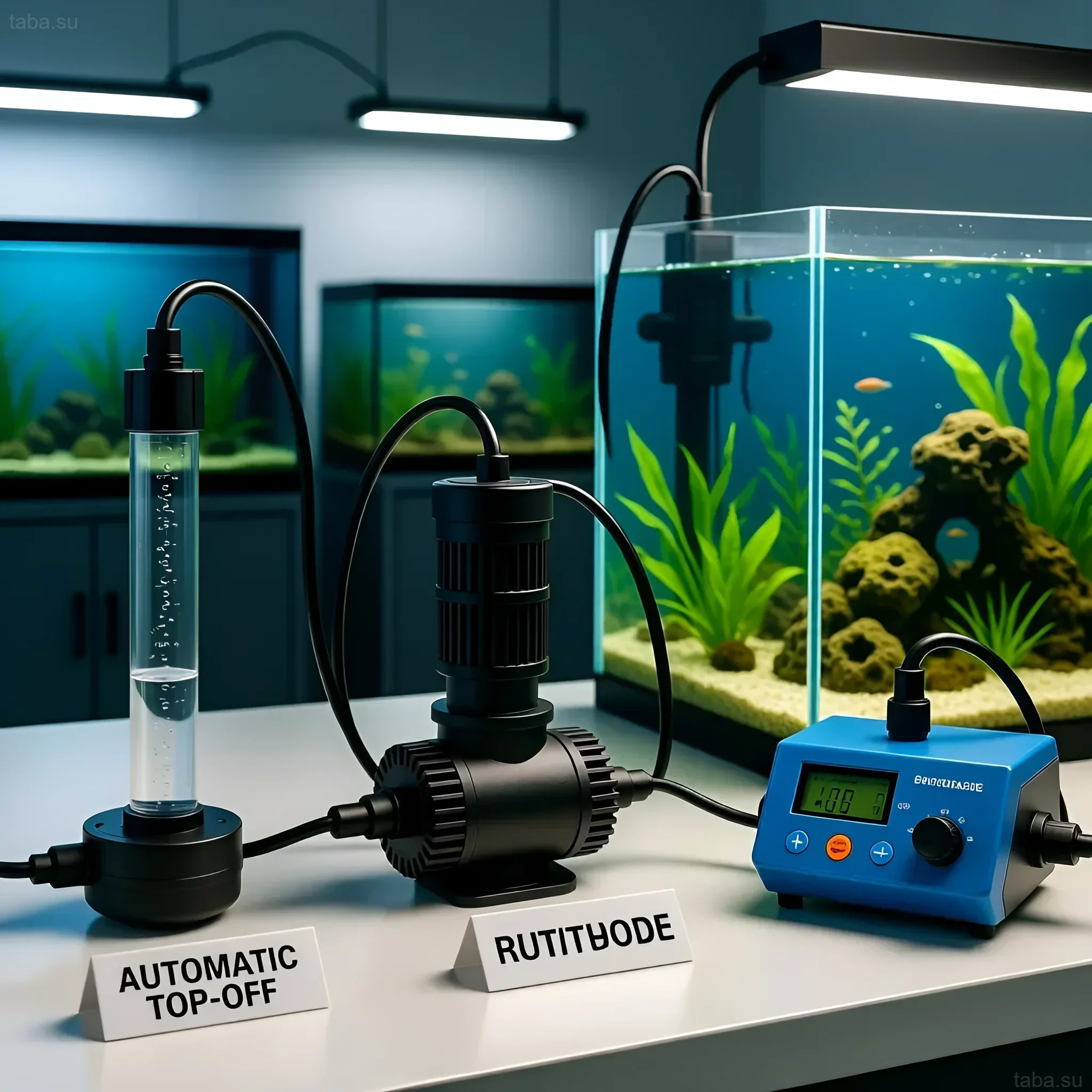
The physics of water evaporation is simple and constant: when heated or in contact with dry air, pure water molecules (H₂O) transition from a liquid to a gaseous state (vapor). This process is a form of natural distillation.
Key Point: Only water evaporates. Absolutely all dissolved substances (salts, minerals, heavy metals, organic compounds) remain in the aquarium. They cannot evaporate at room temperature.
Consider a 100-liter marine aquarium with a salinity of 35 ppt. If 5 liters of water evaporate in a week, the water volume decreases by 5%, but the total amount of salts remains the same. Thus, these salts will be dissolved in only 95 liters of water, leading to an increase in salinity above 35 ppt. If this process is not controlled, the salinity will steadily rise until it reaches a critical level.
An auto-top-off system solves this problem by automatically adding pure freshwater (typically reverse osmosis-purified water – RO/DI) to the aquarium. This pure water compensates for the loss of H₂O, thereby diluting the concentrated salts and returning the overall concentration to the original, stable level.
Important to understand: If regular tap water is used for topping off, it contains dissolved salts itself, which can, conversely, accelerate the accumulation of undesirable substances in the system.
Automatic Water Top-Off Systems: An Overview and How They Work
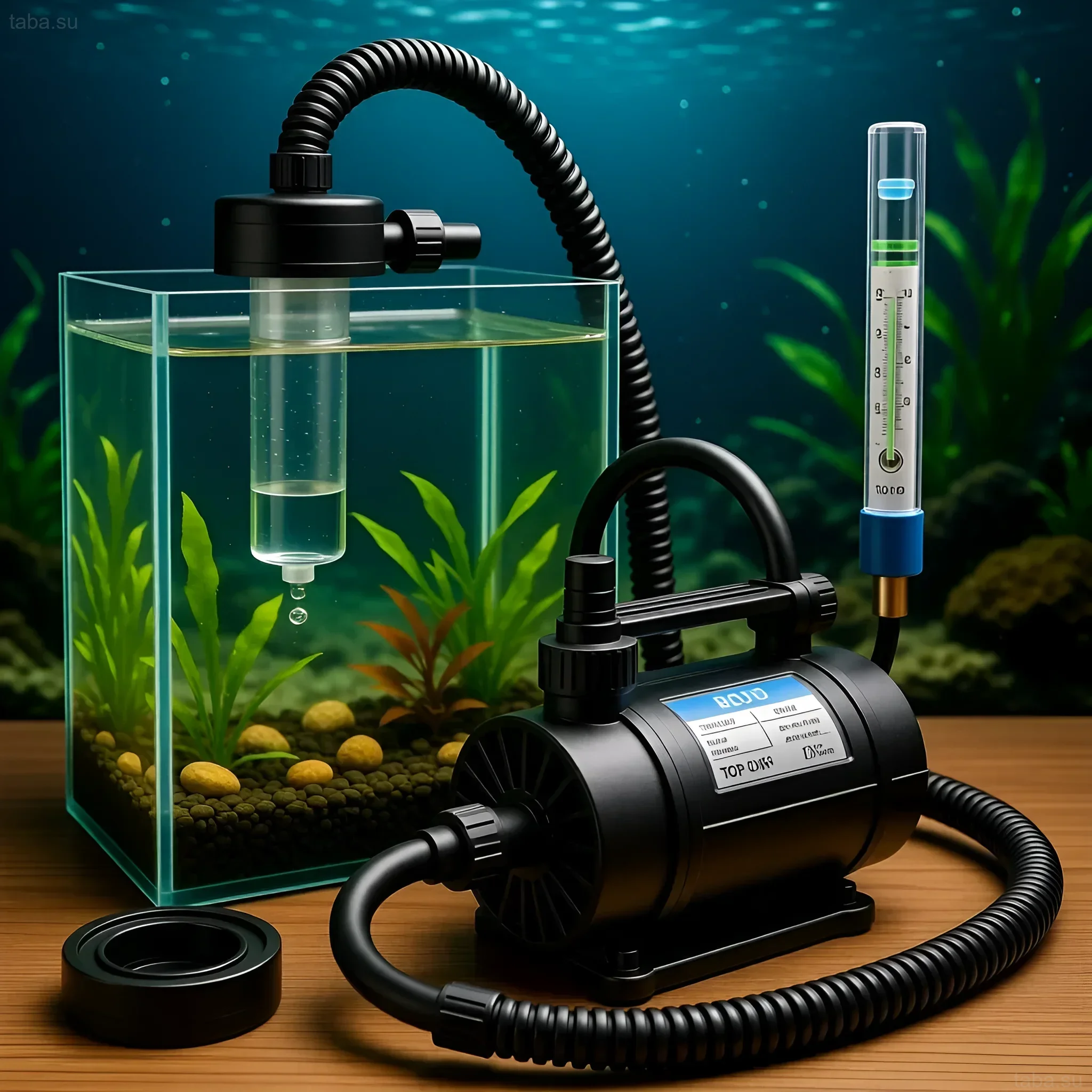
An Automatic Top-Off (ATO) system is an automated complex designed to maintain a constant water level in an aquarium or sump. Modern ATOs provide high reliability and accuracy.
Key Components of an ATO System:
- Reservoir (top-off container): Stores pure water (RO/DI). Its volume should correspond to the aquarium’s evaporation rate (a 3-7 day supply is usually sufficient).
- Level Sensor (sensor): Detects when the water level drops below the set point. There are two main types:
- Float switches: Mechanical devices, less reliable due to potential sticking.
- Optical/infrared sensors: Electronic, more accurate and sensitive to level changes.
- Controller (the system’s brain): Receives the signal from the sensor and controls the pump’s operation. Often includes safety timers.
- Pump: Transfers water from the reservoir to the aquarium or sump. It should be low-power to prevent overfilling.
How it Works: When the water level drops due to evaporation, the sensor (e.g., optical) detects that it is no longer submerged. The controller receives this signal and turns on the pump. The pump operates until the water level rises and the sensor is submerged again. Thus, the system works cyclically, maintaining the water level with millimeter precision.
Choosing Top-Off Equipment: What to Look For?
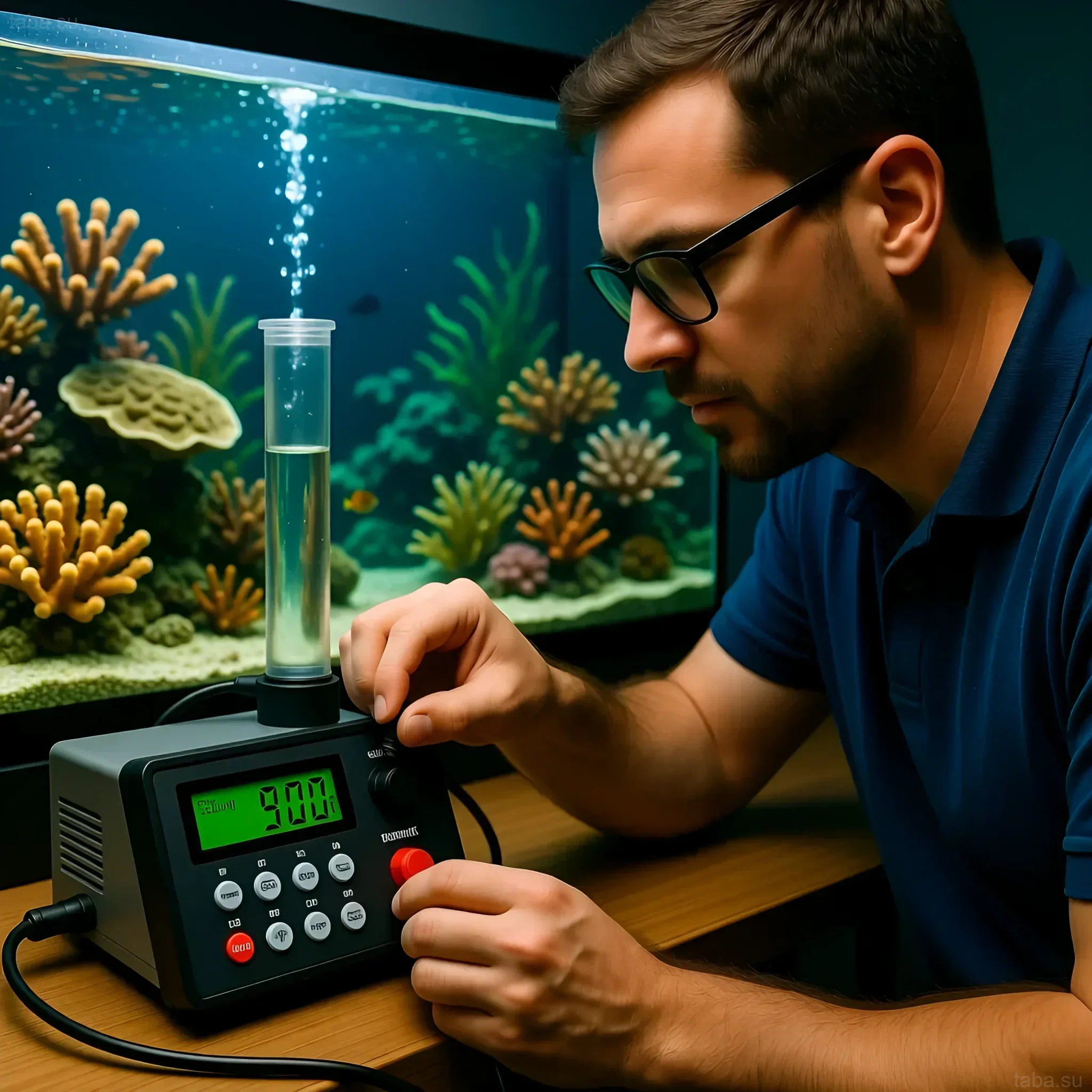
The choice of a suitable ATO system depends on the aquarium’s size, budget, and the required level of safety. For reef systems, where the cost of error is extremely high, the most reliable solutions are recommended.
Criteria for Choosing a Reliable ATO System:
1. Sensor Type and Quantity:
- Single Sensor: Suitable for small freshwater systems with low evaporation rates.
- Dual Sensor (Master and Slave): Essential for marine and large aquariums. The first (working) sensor controls the level, and the second (backup) – located slightly higher – acts as an overflow protection if the first sensor fails or sticks.
2. Safety Features:
- Safety Timer (Timeout): If the pump runs for longer than a set time (e.g., 5-10 minutes), the controller automatically shuts it off, assuming a sensor malfunction or overflow.
- Dry Run Protection: Prevents the pump from running when the reservoir is empty.
3. Pump Performance:
The pump should be powerful enough to lift water from the reservoir but not so powerful as to cause rapid overfilling in case of a short malfunction. Pumps with adjustable power or low-voltage DC pumps are preferred.
4. Installation Location:
If the aquarium has a sump (external technical compartment), the sensor is always installed in the compartment with a stable water level (usually the return pump compartment). If there is no sump, the sensor is installed directly in the display aquarium in the least visible location.
Setting Up and Calibrating an Automatic Top-Off System to Maintain Stable Salinity
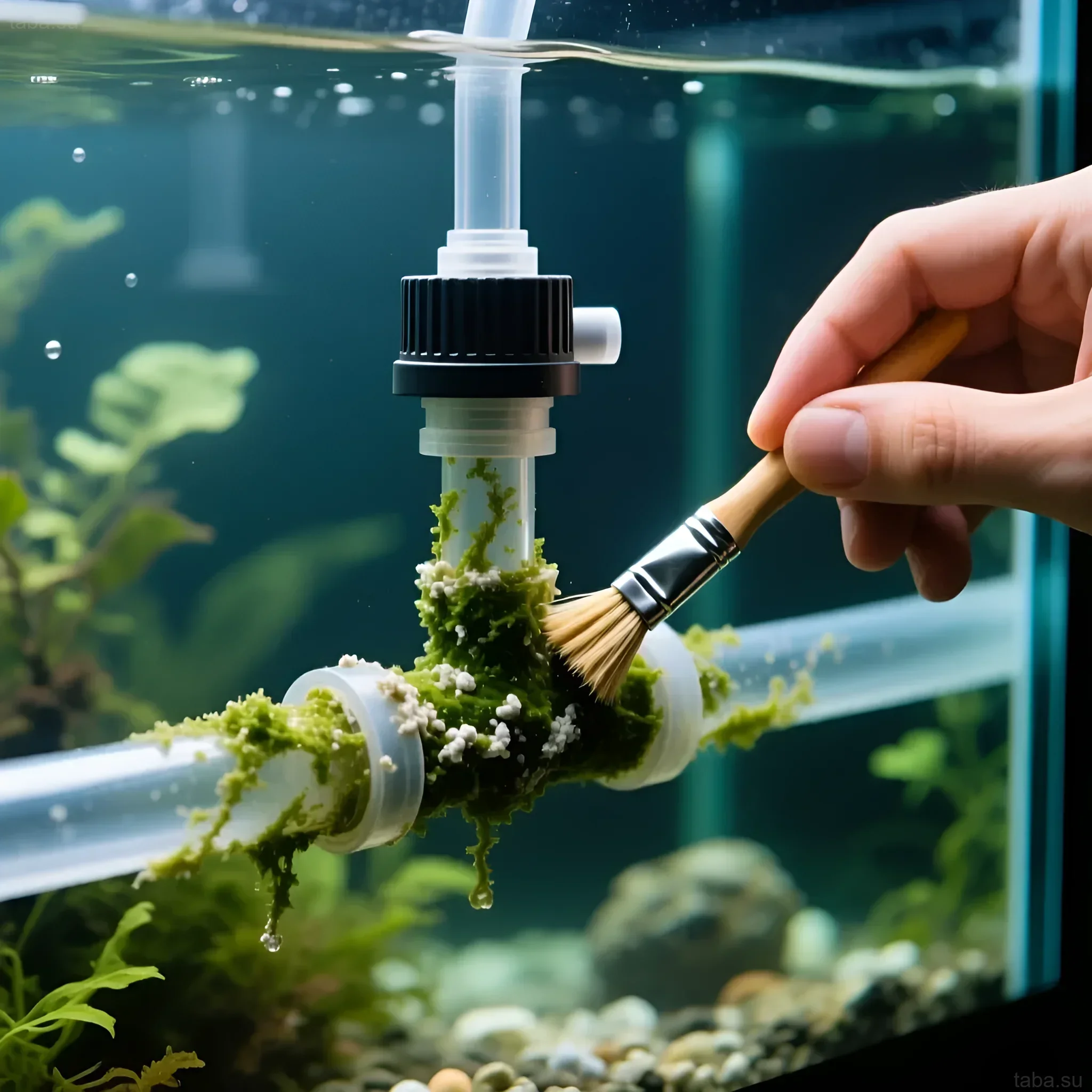
Proper ATO setup ensures that the system replenishes only the amount of water that has evaporated, without compromising the overall salt concentration.
Step-by-Step Calibration:
1. Set the Baseline Level:
Before installing the ATO, ensure the aquarium’s salinity (or TDS) is at the ideal level. For a marine aquarium, this is typically 1.025 S.G. (35 ppt). Measure salinity using a refractometer or an electronic salinity meter.
2. Sensor Placement:
Place the sensor (or the working sensor in a dual system) at the desired water level. Ensure the installation location is not subject to strong currents or splashes that could falsely trigger the pump.
3. Prepare Top-Off Water:
Always use pure, deionized water (RO/DI) for topping off. Never use saltwater for topping off a marine system, as this will lead to an exponential increase in salinity.
4. Testing and Monitoring:
After starting the system, check the salinity frequently for the first 24-48 hours. If the salinity remains stable (within 0.001 S.G. in a marine aquarium), the system is set up correctly. If salinity rises, it may indicate that the added water is not pure enough (contains salts) or the top-off system is adding too little water. If salinity drops, the system may be adding too much (though this is unlikely when using dual sensors).
Expert Tip: It is recommended to perform water changes on a schedule, and use the ATO solely to compensate for evaporation, not to refill volume after a water change.
Common Top-Off System Problems and Solutions
Even the most sophisticated ATO systems can malfunction. Most problems are related to sensor contamination or mechanical failures.
Problem 1: Systematic Overfilling (pump runs constantly)
- Cause: Sticking float switch, fouling of optical sensor with algae or salt deposits, or controller failure.
- Solution: Regularly (once a week) wipe sensors free of biofilm and salt deposits. If a float switch is used, ensure it moves freely. If the system has a safety timer, ensure it is activated.
Problem 2: Insufficient Top-Off (level drops)
- Cause: Pump cannot lift water (clogged), an air bubble in the tubing, or the top-off reservoir is empty.
- Solution: Check the water level in the reservoir. Clean the pump and check the tubing. Install a low-level sensor in the reservoir to receive an alert when refilling is needed.
Problem 3: Siphoning Effect
- Cause: The water supply hose is positioned such that after the pump shuts off, water continues to flow due to siphoning.
- Solution: Ensure the end of the water supply hose in the aquarium is above the water level in the ATO reservoir. Use a check valve to prevent backflow, although this may reduce pump performance.
FAQ: Answers to Frequently Asked Questions About Auto Top-Off and Salinity
Question: Is an auto top-off needed in a freshwater aquarium?
Answer: While salinity control is not critical, an ATO is extremely useful for freshwater systems. It maintains a stable water level, which is important for aesthetics and filtration (especially external filters). Most importantly, it prevents an increase in TDS, GH, and KH concentrations, which is critical for sensitive species like shrimp (Neocaridina davidi) or South American cichlids.
Question: What water should I use for topping off a marine aquarium?
Answer: You must use the purest water possible, free of salts and minerals. Water that has passed through a reverse osmosis with deionization system (RO/DI) is ideal. Using tap water will lead to the accumulation of silicates, phosphates, and other undesirable substances, causing algae blooms and increased salinity.
Question: How often should the ATO system turn on?
Answer: The more frequent and shorter the top-off cycles, the better for stability. Ideally, the ATO should turn on several times a day, adding small amounts of water. This minimizes temperature and density fluctuations at the point of addition.
Question: Can an auto top-off replace water changes?
Answer: No. ATO only compensates for pure water evaporation. It does not remove accumulated nitrates, phosphates, or other contaminants. Water changes remain an essential part of aquarium maintenance to remove these waste products.
Interesting Facts About Salinity and Its Impact on Aquarium Inhabitants
The relationship of living organisms to the salinity of their environment is one of the most fundamental aspects of their biology.
- Osmoregulation: Energy Expenditure. Fish living in saltwater (hypertonic environment) constantly lose water through their gills and skin. To compensate, they drink a lot of water and actively excrete excess salts. Fish living in freshwater (hypotonic environment), conversely, constantly absorb water and excrete it as a large volume of urine. Both processes require significant energy expenditure. Stable salinity minimizes this energy cost.
- Euryhaline Champions. Most aquarium fish are stenohaline (sensitive to changes). However, there are euryhaline species capable of living in a wide range of salinities. These include many livebearers (e.g., mollies Poecilia sphenops) and some catfish. It is these species that are often used as indicators for studying adaptation to environmental changes.
- Salinity and Density. Salinity directly affects water density. In marine aquariums, high density helps corals and invertebrates, such as giant clams (Tridacna), remain stably anchored. Changes in salinity can affect their ability to hold onto the substrate and the distribution of nutrients in the water column.