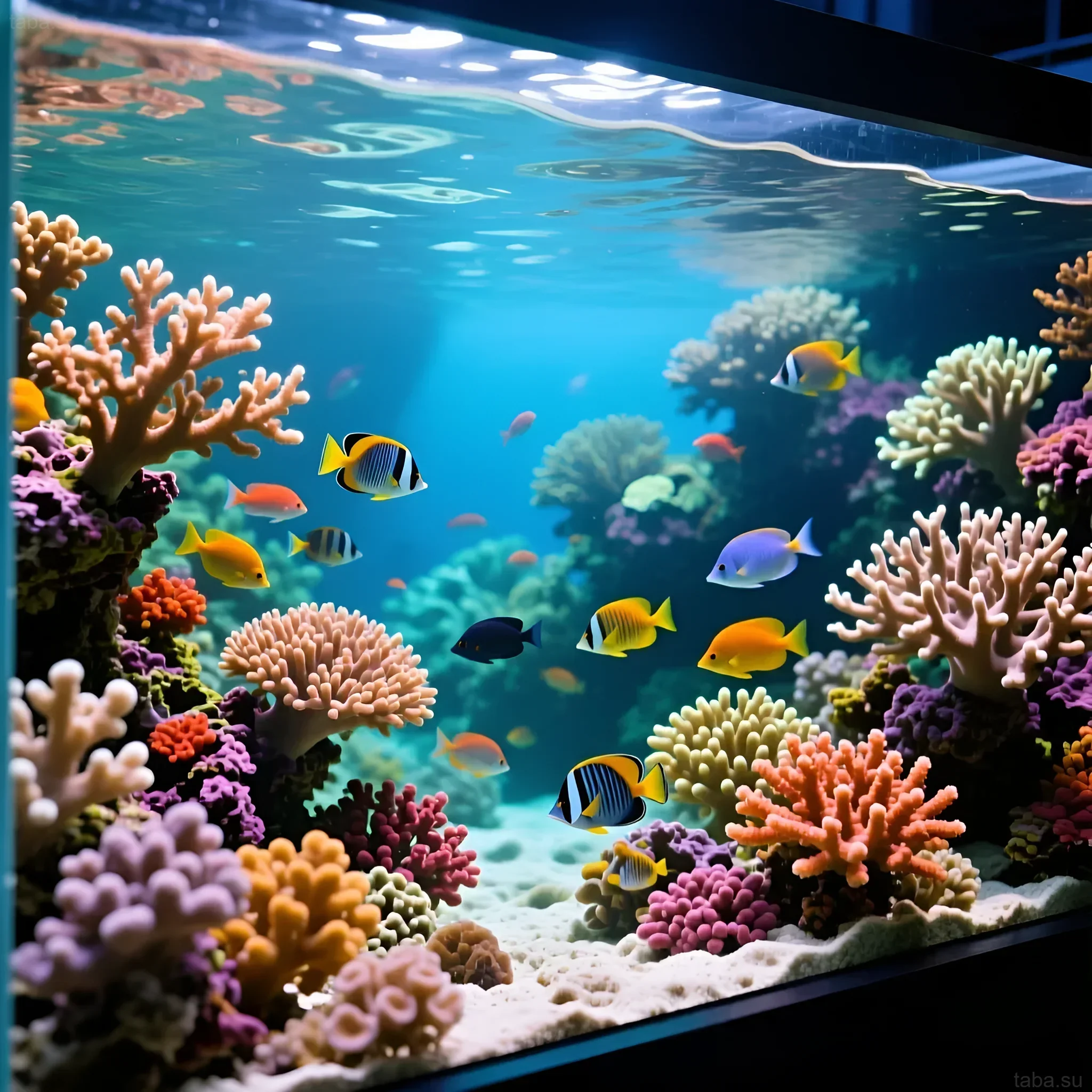
Maintaining a stable chemical environment is the cornerstone of successful reef aquaristics. Unlike freshwater systems, a marine aquarium with corals requires constant and precise control over three key elements, often referred to as the “Big Three”: Calcium (Ca), Magnesium (Mg), and Carbonate Hardness (kH). These parameters are not just important – they are the building blocks for the skeletons of hard corals and critically influence the overall ionic balance of the system. Experts at taba.su emphasize that understanding the interaction of these elements is the first step towards creating a thriving and sustainable reef.
Reef Chemistry: Why Calcium, Magnesium, and Carbonate Hardness Are So Important
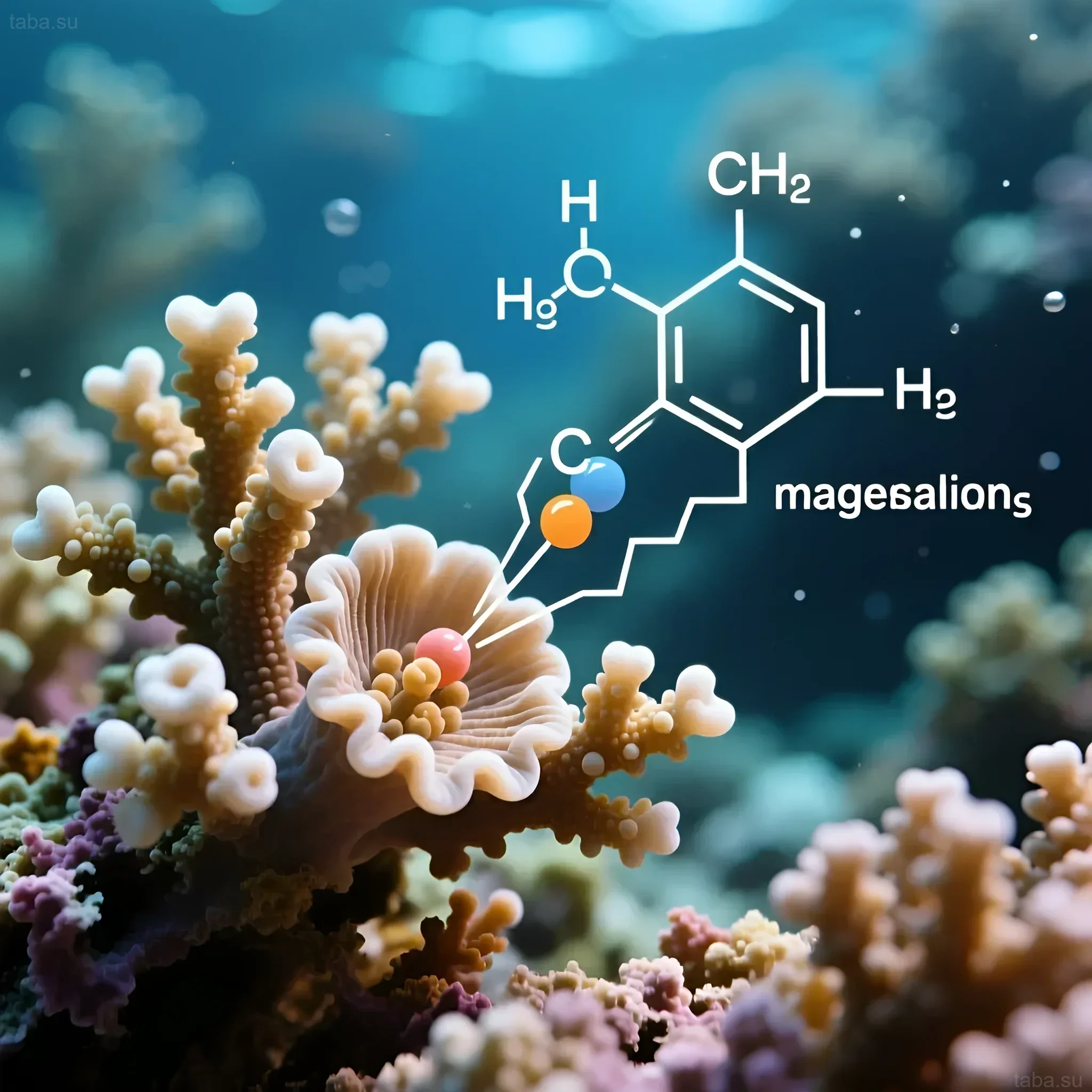
Each of the three elements plays its own unique yet interconnected role in the reef environment. Their balance mimics the conditions found in natural seawater, providing corals (especially stony corals, or Scleractinia) with the necessary resources for growth.
The Role of Calcium (Ca)
Calcium is the primary element used by corals to build their aragonite skeletons (calcium carbonate, CaCO₃). Without sufficient Ca levels, corals cannot grow, and their tissues may begin to degrade. Calcium consumption in a mature reef aquarium can be quite high, necessitating daily replenishment.
- Function: Building material for coral skeletons and coralline algae.
- Consumption: Proportional to the biomass of hard corals (SPS and LPS).
The Role of Carbonate Hardness (kH)
Carbonate hardness, or alkalinity, is measured in German degrees (dKH) or milliequivalents per liter (meq/L). It represents the concentration of bicarbonates and carbonates, which serve as the source of carbonate ions needed for calcium precipitation into coral skeletons. Furthermore, kH performs a crucial buffering function, stabilizing the water’s pH and preventing drastic acid-base fluctuations.
- Function: Providing carbonate ions for skeletogenesis and pH stabilization.
- Criticality: Low kH leads to unstable pH and cessation of coral growth.
The Role of Magnesium (Mg)
Magnesium is often called the “regulator” of a reef aquarium. While not used by corals in as large quantities as calcium, its presence is absolutely essential to prevent the premature precipitation of calcium and carbonates. If Mg levels are too low, Ca and kH can “fall out of solution” (forming insoluble calcium carbonate), leading to cloudy water and reduced availability of these elements for corals.
- Function: Maintaining the solubility of Ca and kH; necessary for the metabolism of some algae.
- Importance: Directly affects the effectiveness of Ca and kH dosing.
Ideal Reef Parameters: Ca, Mg, and kH Norms for Different Coral Types
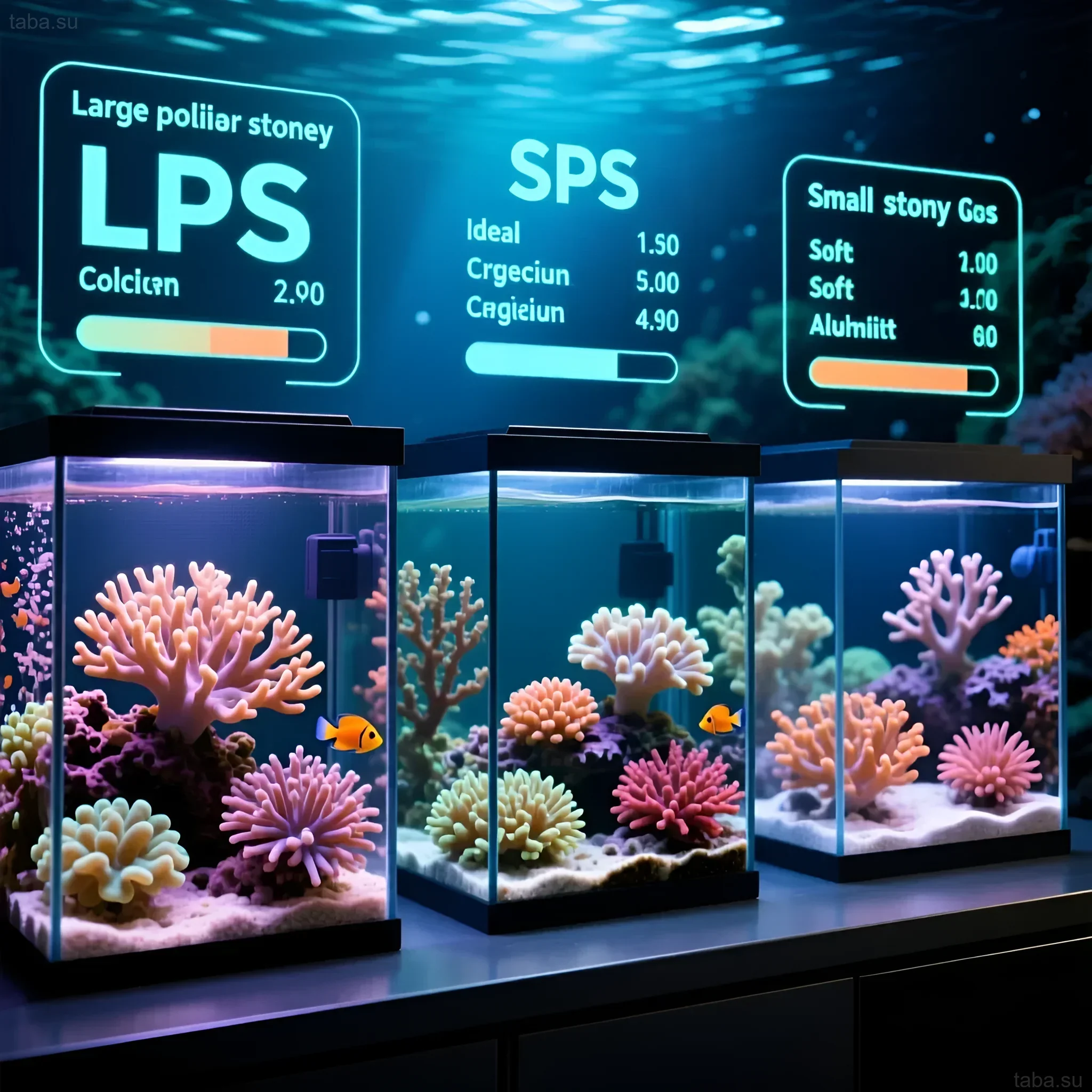
Ideal parameters for a reef aquarium are always slightly higher than in natural seawater to compensate for constant consumption and ensure optimal growth. However, these parameters depend on which corals (SPS, LPS, or soft) are predominant in the system.
Table of Ideal Parameters:
- Natural Seawater: Ca ≈ 420 ppm | Mg ≈ 1280 ppm | kH ≈ 7.0–8.0 dKH
Recommended Ranges for Aquariums
| Parameter | SPS-Dominant Reef (High Consumption) | LPS and Mixed Reef | Soft Corals and Fish |
|---|---|---|---|
| Calcium (Ca) | 420–460 ppm | 400–440 ppm | 380–420 ppm |
| Carbonate Hardness (kH) | 8.0–9.5 dKH | 7.5–9.0 dKH | 7.0–8.5 dKH |
| Magnesium (Mg) | 1300–1400 ppm | 1280–1350 ppm | 1250–1300 ppm |
Expert Note: For rapid growth of Acropora and other SPS corals, the upper limits of kH (up to 9.5 dKH) are often used, but increasing kH above 10 dKH significantly increases the risk of precipitation, especially at high Ca levels.
Testing and Monitoring: How to Measure Ca, Mg, and kH in an Aquarium

Accurate and regular testing is a mandatory condition for a successful reef aquarium. Since Ca, Mg, and kH are constantly consumed by corals, their levels can change daily.
Choosing Test Kits
For the “Big Three,” high-precision titration (drip) tests or, for professional monitoring, photometers are recommended.
- kH Test: Measured most frequently (at least 3–4 times a week) as it is the fastest-changing parameter.
- Ca Test: Measured 2–3 times a week.
- Mg Test: Measured less frequently (1–2 times a week or when Ca/kH is unstable) as magnesium is consumed more slowly.
The Importance of Consistent Measurements
To obtain reliable data, always perform tests at the same time of day. kH levels, for example, can slightly decrease overnight when photosynthesis stops and carbon dioxide accumulates.
What to Monitor During Testing:
- Uptake Rate: Measure the drop in Ca and kH over 24 hours. This allows for precise calculation of daily supplement dosage.
- Mg:Ca Ratio: Ideally, it should be around 3.1:1. If Mg is too low, attempts to raise Ca and kH will be unsuccessful.
Reef Parameter Correction: Methods for Raising and Lowering Ca, Mg, and kH
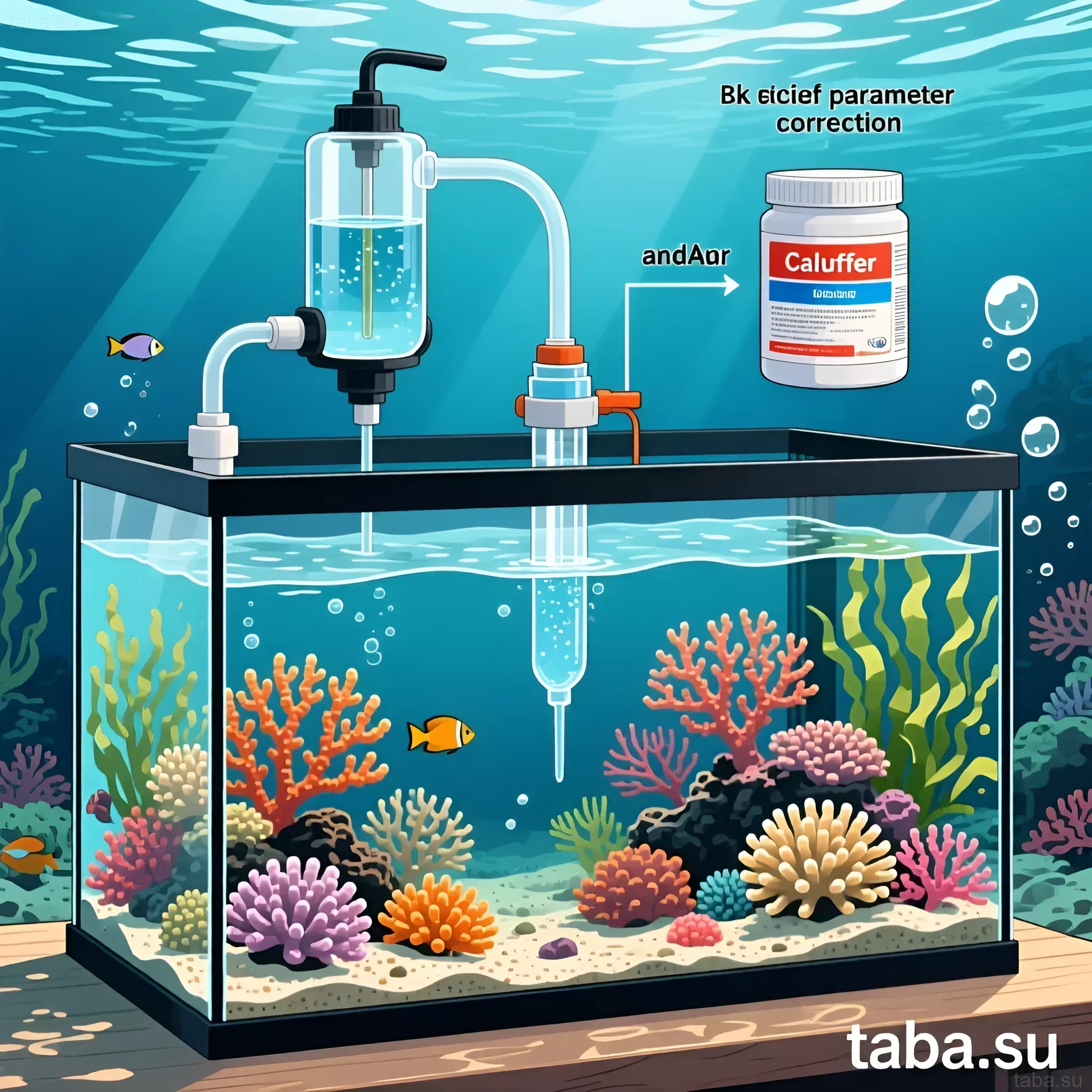
Depending on the aquarium’s volume and coral density, aquarists use various methods to maintain the stability of the “Big Three.” The choice of method depends on the daily consumption of elements.
1. Balling Method
The Balling method is the most popular and flexible dosing method. It involves adding three separate solutions:
- Solution 1: Calcium (calcium chloride, CaCl₂).
- Solution 2: Carbonate Hardness/Alkalinity (sodium bicarbonate, NaHCO₃).
- Solution 3: Supplementary salt (free of NaCl) to maintain ionic balance and magnesium.
Advantages: Allows precise adjustment of each element’s dosage according to the system’s consumption, using dosing pumps.
2. Kalkwasser (Limewater)
Kalkwasser is a saturated solution of calcium hydroxide (Ca(OH)₂). It simultaneously raises Ca and kH (in the form of hydroxide ions) and helps stabilize pH, especially at night, by compensating for CO₂ accumulation.
- Application: Usually dosed slowly, drop by drop, as top-off water (ATO).
- Limitation: Effective only for aquariums with low to moderate consumption.
3. Calcium Reactor
A calcium reactor is professional equipment designed for aquariums with high consumption (SPS-dominant reefs). The reactor uses CO₂ to lower the pH of the water inside the chamber, dissolving aragonite media (CaCO₃) and returning a Ca and kH saturated solution back into the system.
Magnesium Correction
Magnesium is added separately from the main supplements. Since Mg is consumed slowly, it is usually raised manually once a week or as needed, using magnesium sulfate or magnesium chloride. Important: Never raise Mg levels by more than 50 ppm per day to avoid shocking the corals.
Problems and Solutions: What to Do If Reef Parameters Are Unstable?
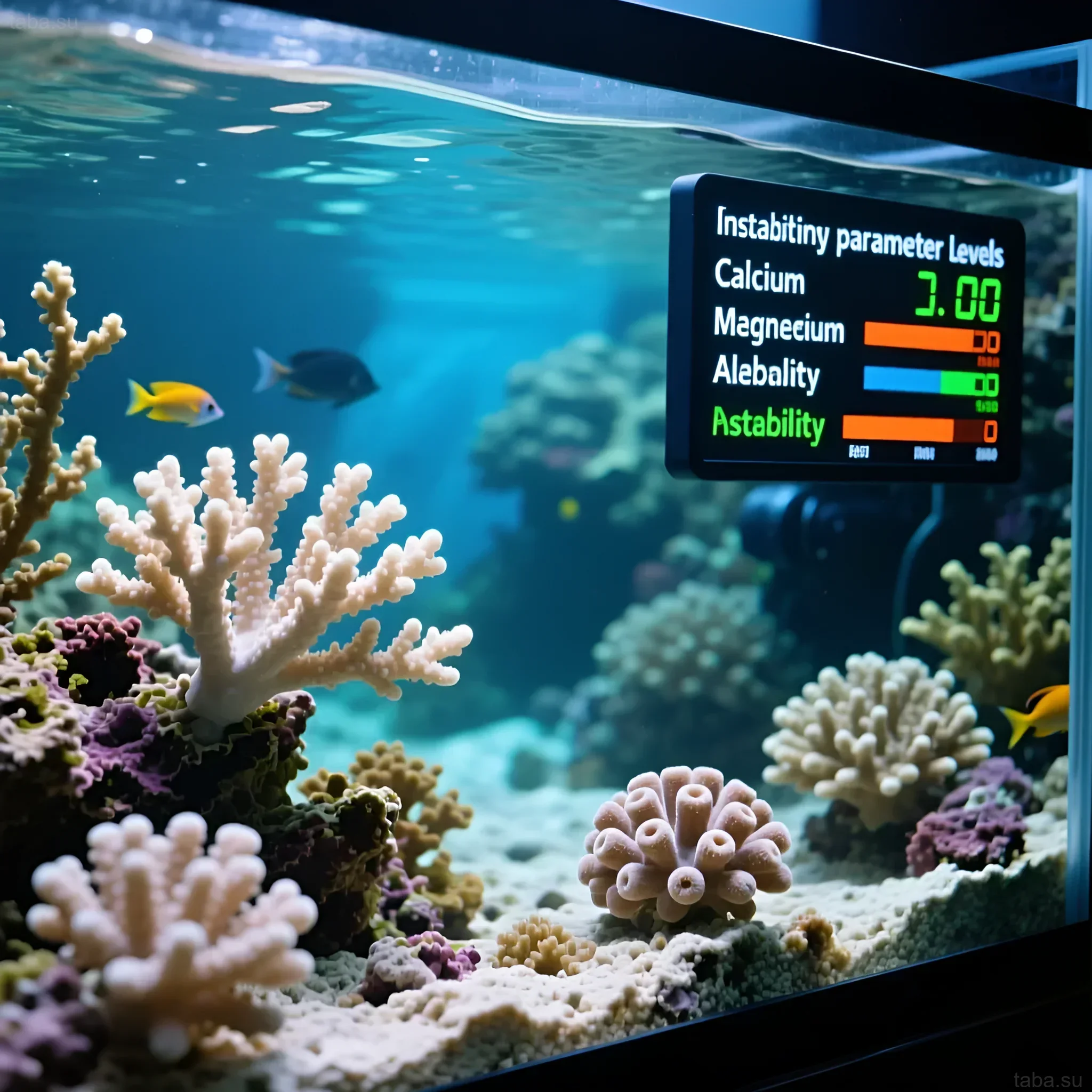
Instability of the “Big Three” is the most common cause of coral stress and mortality. Sharp fluctuations in kH (e.g., a drop from 9 to 6 dKH in 24 hours) can cause bleaching and tissue necrosis.
Problem 1: Rapid Drop in Ca and kH
- Cause: Insufficient dosing or a sudden increase in coral biomass.
- Solution: Increase daily supplement dosage. Recalculate system consumption. If you are using Kalkwasser, it may be time to switch to Balling or a reactor.
Problem 2: Consistently Low Magnesium (Mg) Level
- Cause: Insufficient Mg replenishment or using a low-magnesium salt. Low Mg leads to Ca/kH precipitation.
- Solution: Slowly raise Mg to the target range (1300–1350 ppm), then begin maintaining this level.
Problem 3: Precipitation (White Sediment)
- Cause: Adding Ca and kH supplements too quickly, or excessively high kH levels (above 10 dKH) combined with high Ca.
- Solution: Dose Ca and kH solutions in different areas of the aquarium with a time interval. Ensure Mg is within range.
Expert Tips: Secrets to Maintaining Ideal Reef Parameters
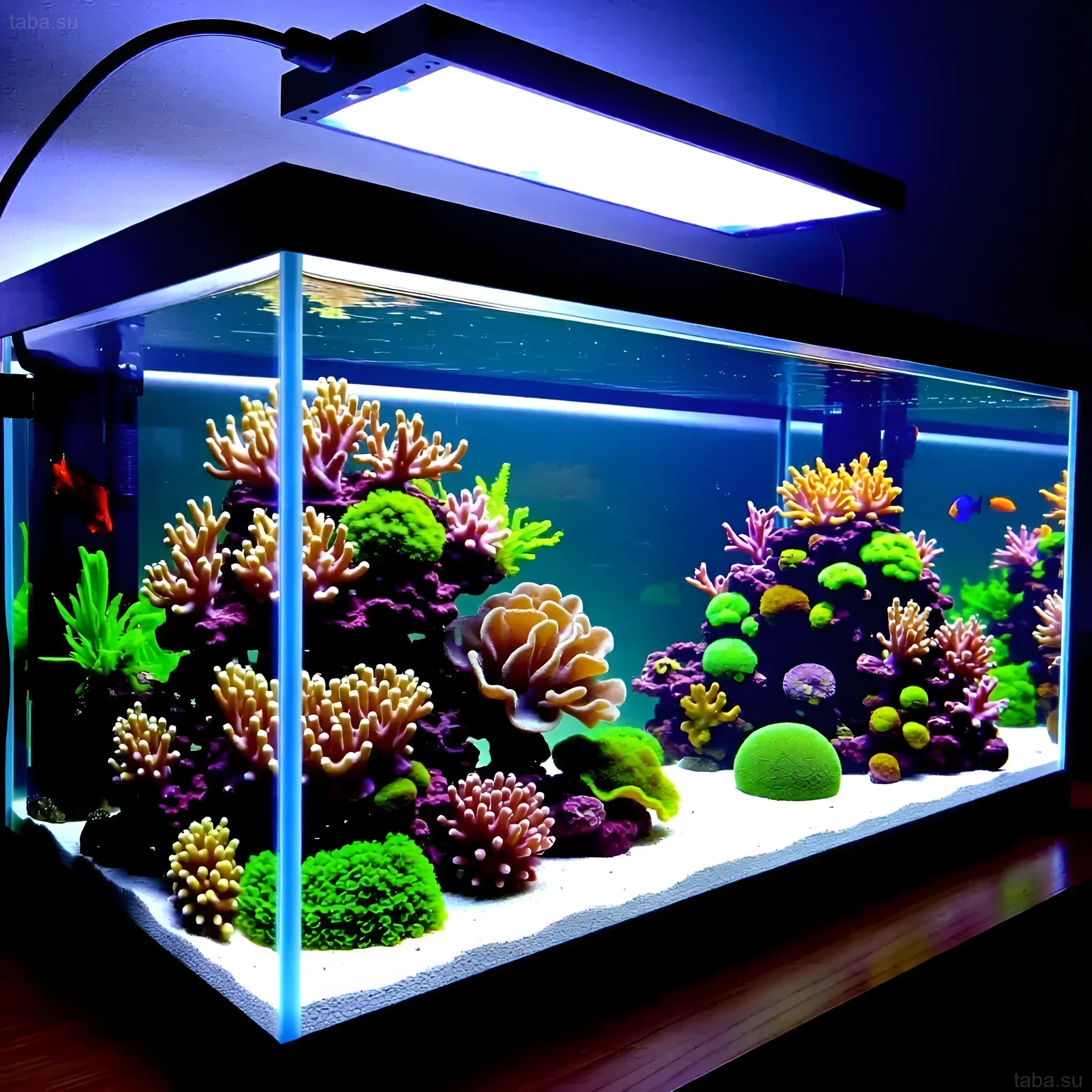
Maintaining stability requires discipline and attention to detail. Experienced aquarists focus not on achieving the highest possible values, but on the stability of the recommended range.
1. Establish a Dosing Protocol
Use automatic dosing pumps. Dose Ca and kH solutions in small quantities but frequently (e.g., 4–6 times per day). This minimizes fluctuations and stress for corals.
2. Always Dose Ca and kH Separately
Never mix calcium and carbonate solutions directly, as they will react immediately and precipitate. Dose them in different areas of the sump or aquarium, ensuring good circulation.
3. Do Not Try to “Fix” a Problem Quickly
If parameters have significantly deviated from the norm (e.g., kH dropped to 6 dKH), raise them slowly. It is recommended to increase kH by no more than 1 dKH per day to avoid shocking the corals.
4. Monitor the Ratio
Ensure the Mg:Ca ratio is within the normal range. If you are constantly struggling with low Ca or kH, check Mg first. Low magnesium is a hidden killer of stability.
FAQ: Answers to Frequently Asked Questions About Calcium, Magnesium, and Carbonate Hardness
Question: Why is my kH dropping even though I dose regularly?
Answer: The most likely reason is a sharp increase in coral consumption (growth spurt) or testing issues. Also, ensure your magnesium is not too low. If Mg is below 1200 ppm, it can block the uptake of Ca and kH, even though they might be precipitating faster than you dose them.
Question: Can I use freshwater aquarium supplements in a reef tank?
Answer: Absolutely not. Freshwater system supplements have a completely different chemical composition and concentration. Using them in a marine aquarium can lead to a catastrophic ionic imbalance.
Question: How to lower kH if it is too high?
Answer: The safest method is water changes. If kH is extremely high (over 12 dKH), stop dosing carbonate and allow corals to naturally consume the excess. If rapid reduction is needed, increase the frequency of water changes using fresh, properly mixed saltwater with target parameters.
Question: Should I check kH in freshly mixed saltwater?
Answer: Yes, absolutely. Different brands of marine salt have varying kH levels (typically from 7 to 12 dKH). Always check the parameters of the fresh water to ensure the water change will not cause a sharp spike or drop in kH in the main aquarium.