
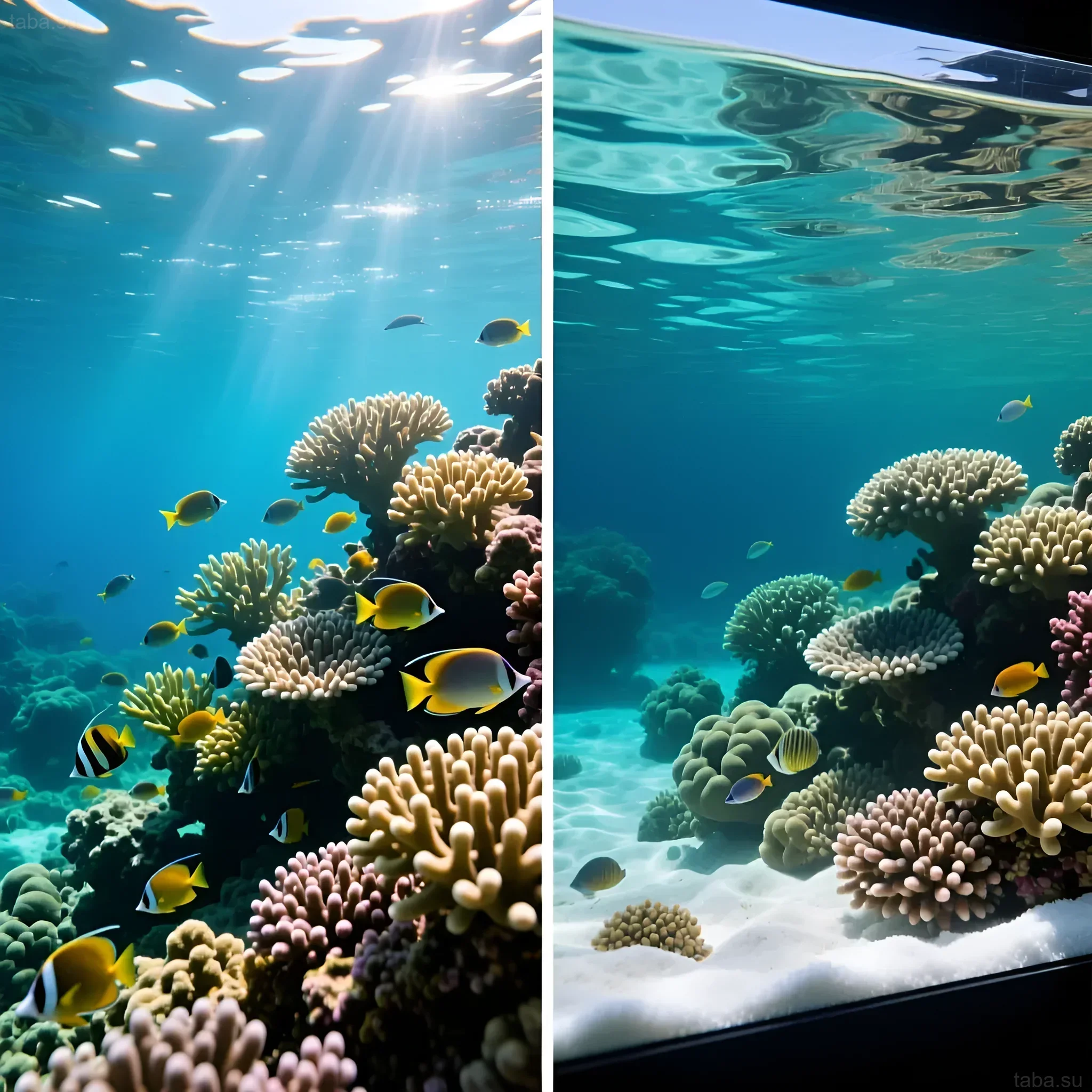
Maintaining a stable and biologically balanced aquatic environment is a fundamental requirement for the successful keeping of a marine aquarium. Unlike freshwater systems, where the main focus is on filtration and water changes, in marine aquariums, the quality and composition of artificial marine salt are critical elements. It is the salt that determines how closely we can recreate the natural ocean conditions necessary for coral growth and fish health.
Marine Salt for Aquariums: Why It’s So Important and How It Differs from Regular Salt?
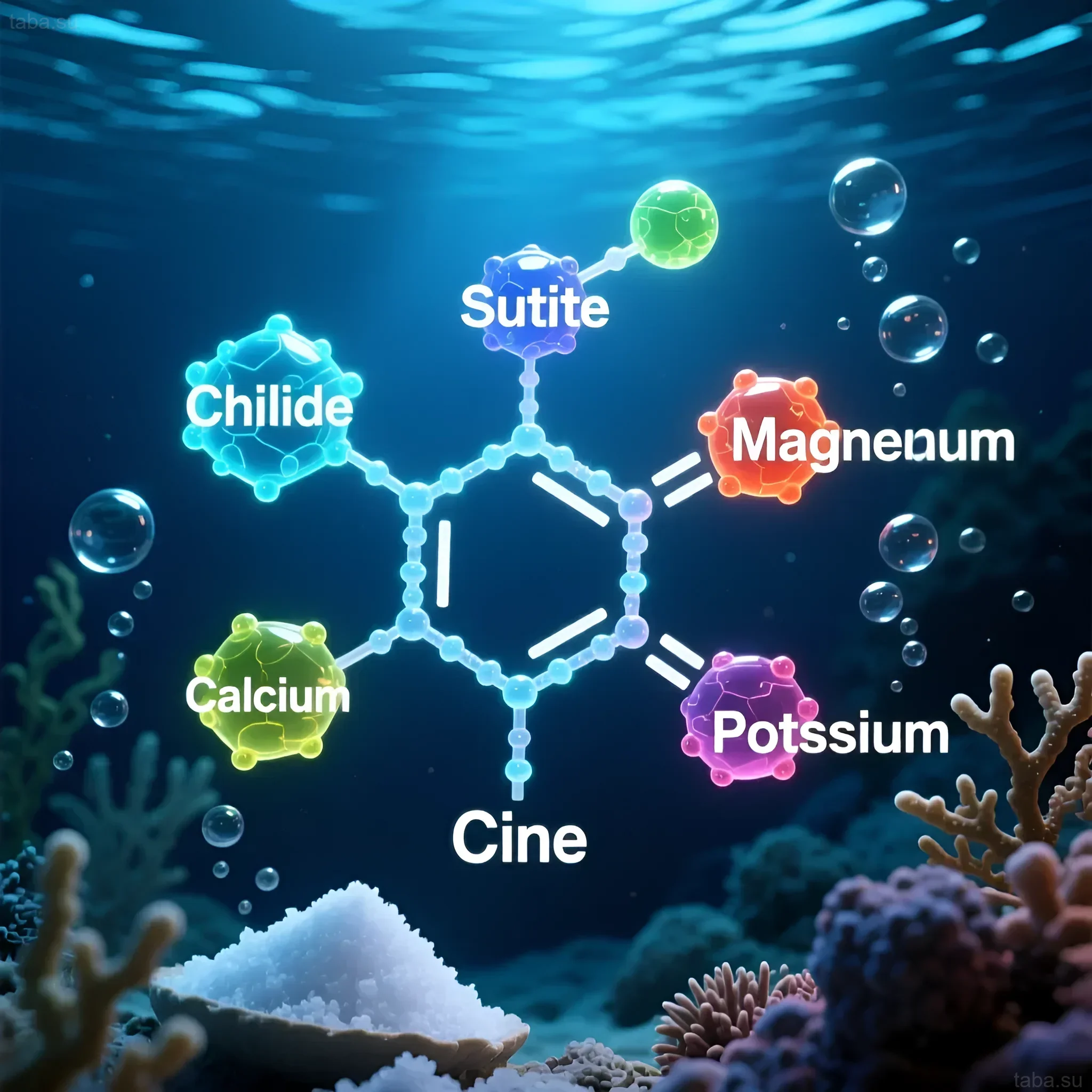
Artificial marine salt is not just sodium chloride (NaCl) dissolved in water. It is a complex, carefully balanced mixture of macro- and microelements that, when dissolved, should mimic natural seawater (NSW).
The importance of quality salt is due to the following factors:
- Maintaining Buffering Capacity: Salt ensures a stable level of carbonate hardness (KH/Alk), which prevents sharp fluctuations in pH.
- Supply of Building Materials: Corals, especially hard corals (SPS and LPS), actively consume calcium (Ca) and magnesium (Mg) to build their skeletons. The salt must supply these elements in the correct proportion.
- Balance of Trace Elements: The composition includes dozens of vital trace elements (e.g., iodine, strontium, potassium) necessary for invertebrate metabolism and coral coloration.
Difference from Regular Table Salt
Edible or technical salt consists almost entirely of sodium chloride (NaCl) and often contains anti-caking agents. Using such salt in a marine aquarium will lead to a catastrophic imbalance, as it lacks buffering elements (Ca, Mg, KH) and vital trace elements. High-quality aquarium salt is created using high-purity, pharmaceutical-grade components.
Marine Salt Composition: What Should Be in an Ideal Mixture?
The ideal marine salt should not just create the desired density (salinity) but also ensure the correct ionic balance, as close as possible to the natural standard (NSW).
Key parameters that should be provided:
- Salinity (Specific Gravity, S.G.): Typically 1.025 – 1.026 (or 35 ppt).
- Carbonate Hardness (KH): Depending on the aquarium type, from 7 to 12 dKH.
- Calcium (Calcium, Ca): 400 – 450 ppm.
- Magnesium (Magnesium, Mg): 1280 – 1350 ppm.
- pH: 8.1 – 8.4.
Special attention is paid to the ratio of calcium and magnesium. Magnesium is essential for the proper absorption of calcium by corals and to prevent its premature precipitation.
Red Sea Salt: Detailed Review and Advantages
Red Sea is one of the world leaders in the production of equipment and consumables for reef aquaristics. Their approach is based on creating salts specifically adapted for different types of reef systems.
Red Sea Philosophy: Targeted Blending
Red Sea offers two main salt lines, differing in their key element content levels:
- Red Sea Salt (Blue Bucket): A standard formula designed for fish-only (Fish-Only) aquariums or aquariums with soft corals, where calcium and alkalinity consumption is lower. This salt provides natural levels of KH (around 8 dKH) and Ca (around 420 ppm).
- Red Sea Coral Pro Salt (Red Bucket): A premium formula developed for systems with active hard coral growth (SPS/LPS). It has significantly elevated levels of calcium, magnesium, and alkalinity (KH up to 12 dKH). This is ideal for aquarists aiming for maximum coral growth and using high element consumption methods.
Key Advantages of Red Sea
- Fast Dissolution: Red Sea salt is known for its ability to dissolve quickly and completely, which is important for emergency water changes.
- High Purity: Pharmaceutical-grade components are used, guaranteeing the absence of phosphates and nitrates.
- Batch Consistency: Thanks to strict quality control, aquarists can be confident that each new batch of salt will have an identical composition.
Tropic Marin: Everything You Need to Know About Premium Salt
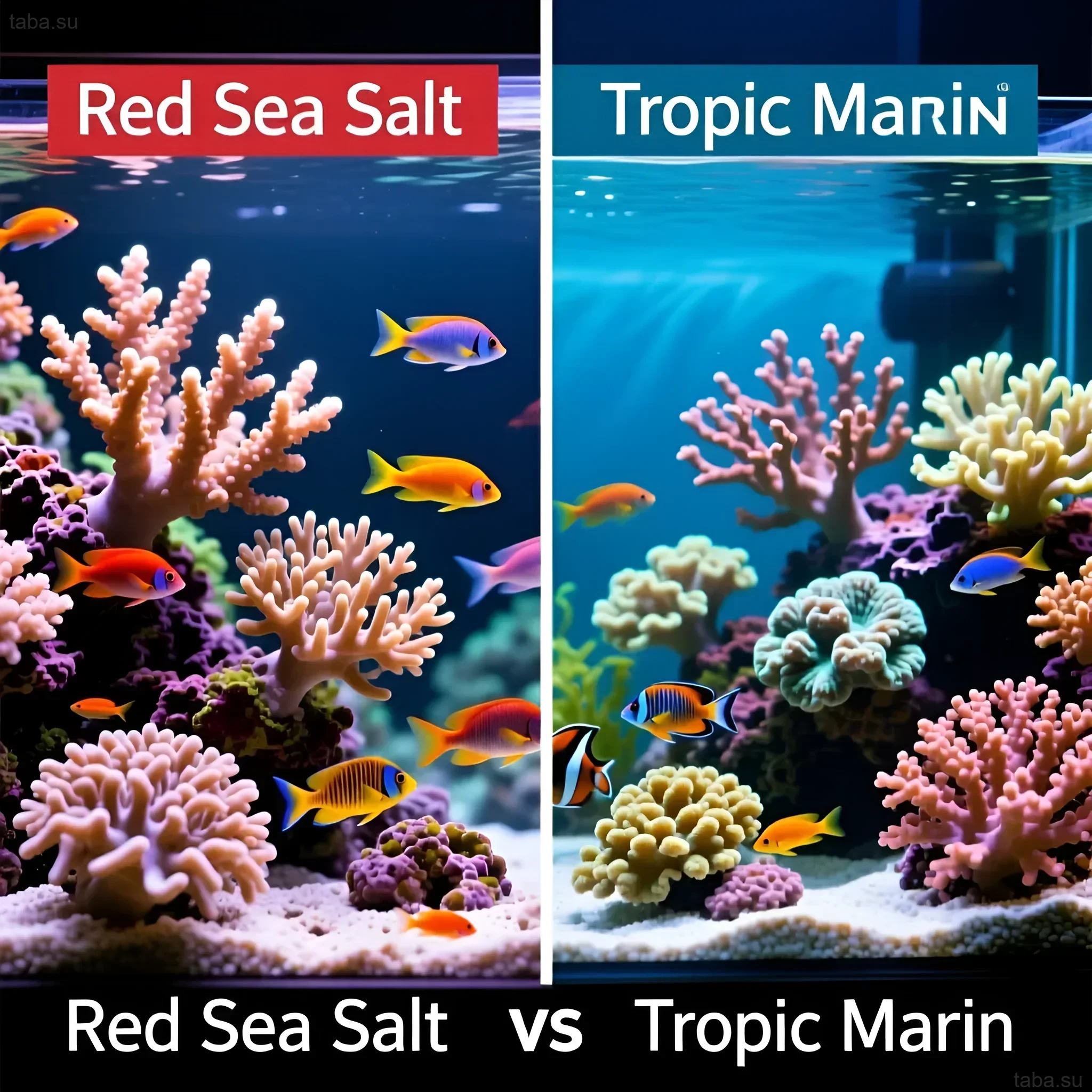
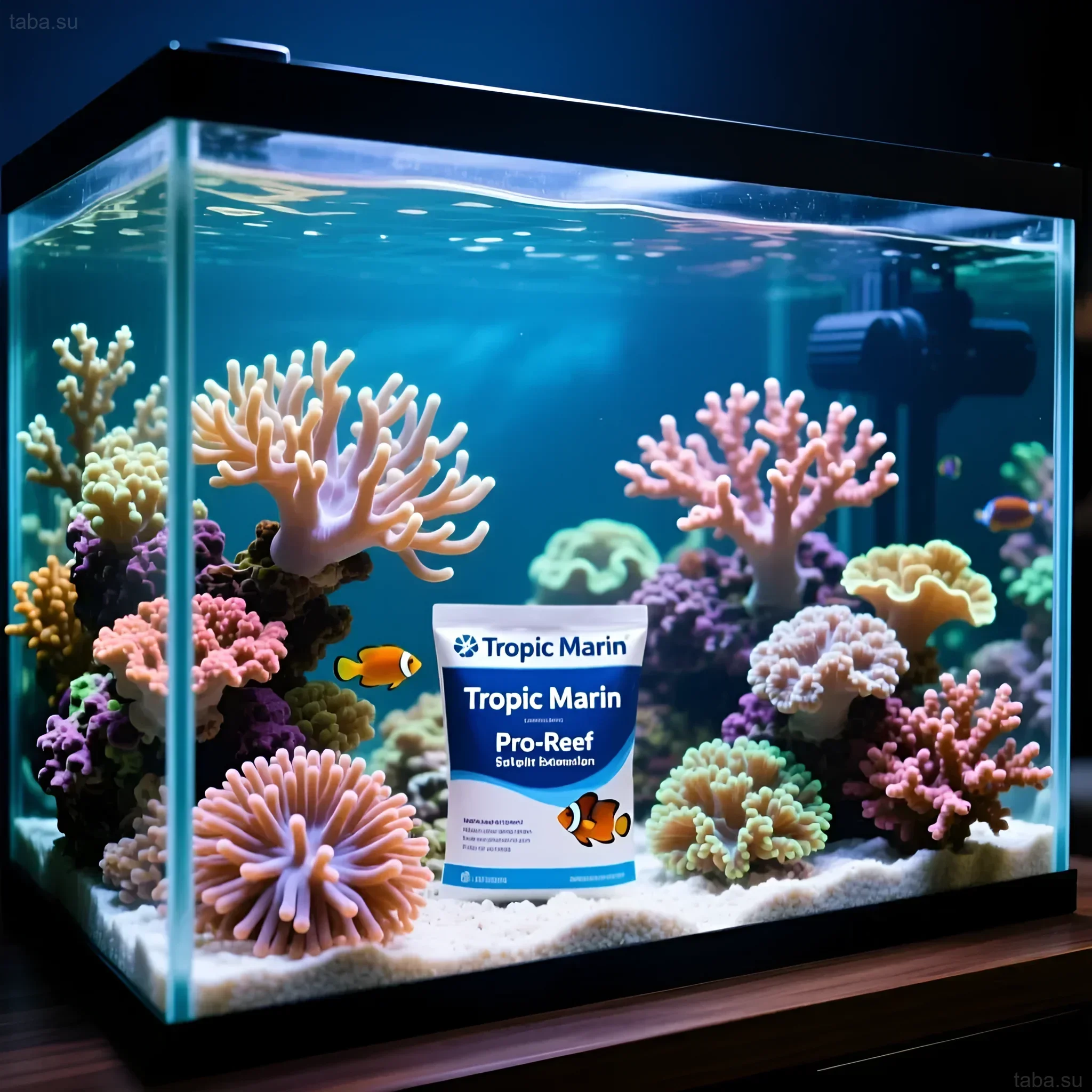
Tropic Marin is a German brand often associated with maximum purity and stability. Their salts are positioned as top-quality products using the principle of “homogeneous mixing.”
Tropic Marin Philosophy: Natural Balance and Purity
The main difference with Tropic Marin is that all 70+ elements in its composition are mixed dry in a process that ensures every salt crystal contains the full spectrum of components. This eliminates element segregation during transport and ensures perfect balance upon dissolution.
Key Tropic Marin Products:
- Tropic Marin Classic: A classic formula that creates water with ideal natural parameters (KH 8 dKH, Ca 420 ppm). It is suitable for all types of marine aquariums, including reef aquariums, where the aquarist prefers to dose elements (Ca, Mg, Alk) separately.
- Tropic Marin Pro-Reef: A formula with slightly elevated calcium and alkalinity levels (KH 9-10 dKH), specifically designed for modern reef aquariums with higher than average coral consumption.
Key Advantages of Tropic Marin
- Pharmaceutical Purity: Guaranteed minimal content of heavy metals and contaminants.
- Instant Readiness: Dissolved water can be used almost immediately after mixing, as it quickly reaches the ideal pH.
- Ideal Ionic Balance: The salt provides the most natural ionic balance, which is especially valued by aquarists keeping sensitive coral species (e.g., Acanthastrea or Goniopora).
Red Sea vs Tropic Marin: Comparison Table and Selection Recommendations
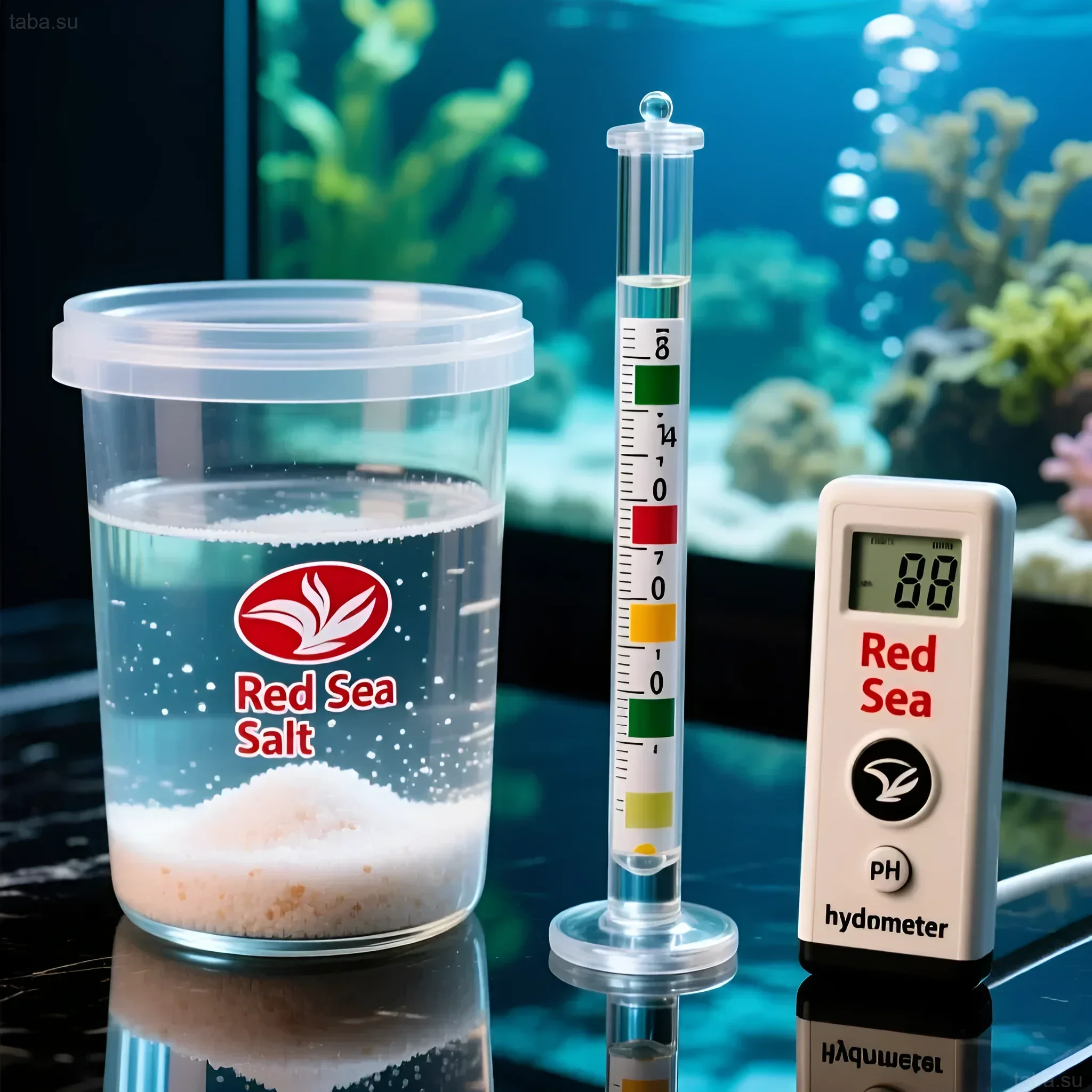
The choice between these two market leaders often comes down to personal preference and the specifics of your aquarium. Below is a comparison of their key characteristics (using their most popular reef formulas as examples).
Comparison of Red Sea Coral Pro and Tropic Marin Pro-Reef:
| Parameter | Red Sea Coral Pro | Tropic Marin Pro-Reef |
|---|---|---|
| Target KH (dKH) | 11.5 – 12.5 (High) | 9 – 10 (Natural+) |
| Target Calcium (ppm) | 450 – 480 | 430 – 440 |
| Dissolution | Very fast | Fast, no sediment |
| Application | Aquariums with high element consumption, SPS-dominant. | Mixed reefs, sensitive corals, aquariums with dosing. |
| Price Category | Medium/Above Medium | Premium |
Expert Recommendations for Selection
- Choose Red Sea Coral Pro if: You maintain an aquarium with a large number of hard corals (SPS) that require a high level of alkalinity for rapid growth. You prefer the salt itself to provide elevated Ca/Mg/KH levels, minimizing the need for constant dosing.
- Choose Tropic Marin (Classic or Pro-Reef) if: You maintain a mixed reef where maximum water stability and purity are the priority. You use complex dosing systems (e.g., Balling method) and need salt with an ideal ionic balance close to NSW to avoid imbalances.
How to Properly Use Marine Salt: Step-by-Step Instructions and Tips

Proper preparation of saltwater is the key to success. Using low-quality water or incorrect mixing can negate all the benefits of expensive salt.
Step 1: Water Preparation (RO/DI)
Always use deionized water obtained with a reverse osmosis (RO/DI) filter. Tap water contains chlorine, silicates, phosphates, and heavy metals that can cause algae blooms or harm corals.
Step 2: Salt Dosing
Never add salt directly to the aquarium! Add salt to a separate container with RO/DI water that has already been heated to aquarium temperature (24–26°C).
- Use the manufacturer’s recommended amount of salt. Typically, this is about 37–40 grams per liter of water to achieve a salinity of 35 ppt (1.026 S.G.).
- Always measure salt by weight, not by volume, as salt density can vary.
Step 3: Mixing and Aeration
Actively mix the water using a pump or aerator. This is necessary for complete dissolution of components and oxygenation of the water. Let the water mix:
- For Red Sea: 1–2 hours.
- For Tropic Marin: 30 minutes – 1 hour.
Step 4: Checking Salinity and Parameters
Use a calibrated refractometer or hydrometer to check the salinity. If the salinity is too low, add a little more salt; if it’s too high, add RO/DI water.
Important Tip: Never use water that has just been mixed if it appears cloudy. If there is sediment at the bottom, do not pour it into the aquarium. Sediment can contain undissolved elements that can cause local imbalances.
FAQ: Most Common Questions About Marine Salt
1. Can Different Brands of Marine Salt Be Mixed?
No, this is strongly not recommended. Different brands use different element ratios (especially Ca, Mg, and KH). Mixing can lead to unpredictable chemical reactions, precipitation of elements, and consequently, water parameter instability.
2. How Long Can Mixed Saltwater Be Stored?
Freshly mixed water is best used within 24–48 hours. If the water is stored longer, especially with active aeration, the pH level can start to drop due to carbon dioxide absorption from the air. The maximum storage period is no more than 1 week, and before use, it must be re-checked for salinity and KH.
3. What to Do If the Salt Doesn’t Dissolve Completely?
If a cloudy sediment remains after prolonged mixing, it may be due to:
- Too low water temperature (salt should be mixed at 24–26°C).
- Using tap water instead of RO/DI (impurities react).
- Adding too much salt too quickly.
If you use pure RO/DI water and the correct temperature, quality salt (Red Sea, Tropic Marin) should dissolve almost completely.
Interesting Facts About Marine Salt and Its Impact on Marine Life
While we often talk about the three main elements (Ca, Mg, KH), marine salt actually contains dozens of elements, each playing its unique role.
- Role of Potassium (K): Potassium is an important macronutrient that is critical for the metabolism of soft corals (e.g., Sarcophyton) and for the display of blue and purple pigments in SPS corals.
- Boron and Strontium: These elements, present in trace amounts, contribute to the proper formation of coral skeletons. Strontium deficiency can slow down the growth of Acropora.
- Stabilization: Ideal marine salt is designed to provide “ionic equilibrium.” If the balance between cations (positively charged ions) and anions (negatively charged ions) is disrupted in the water, it can cause physiological stress in fish, known as “unbalanced water syndrome.”
The choice between Red Sea and Tropic Marin is a choice between two excellent products, each offering stability, purity, and reliability. The key to success lies in understanding the needs of your specific reef and strictly adhering to water change protocols using clean RO/DI water.