
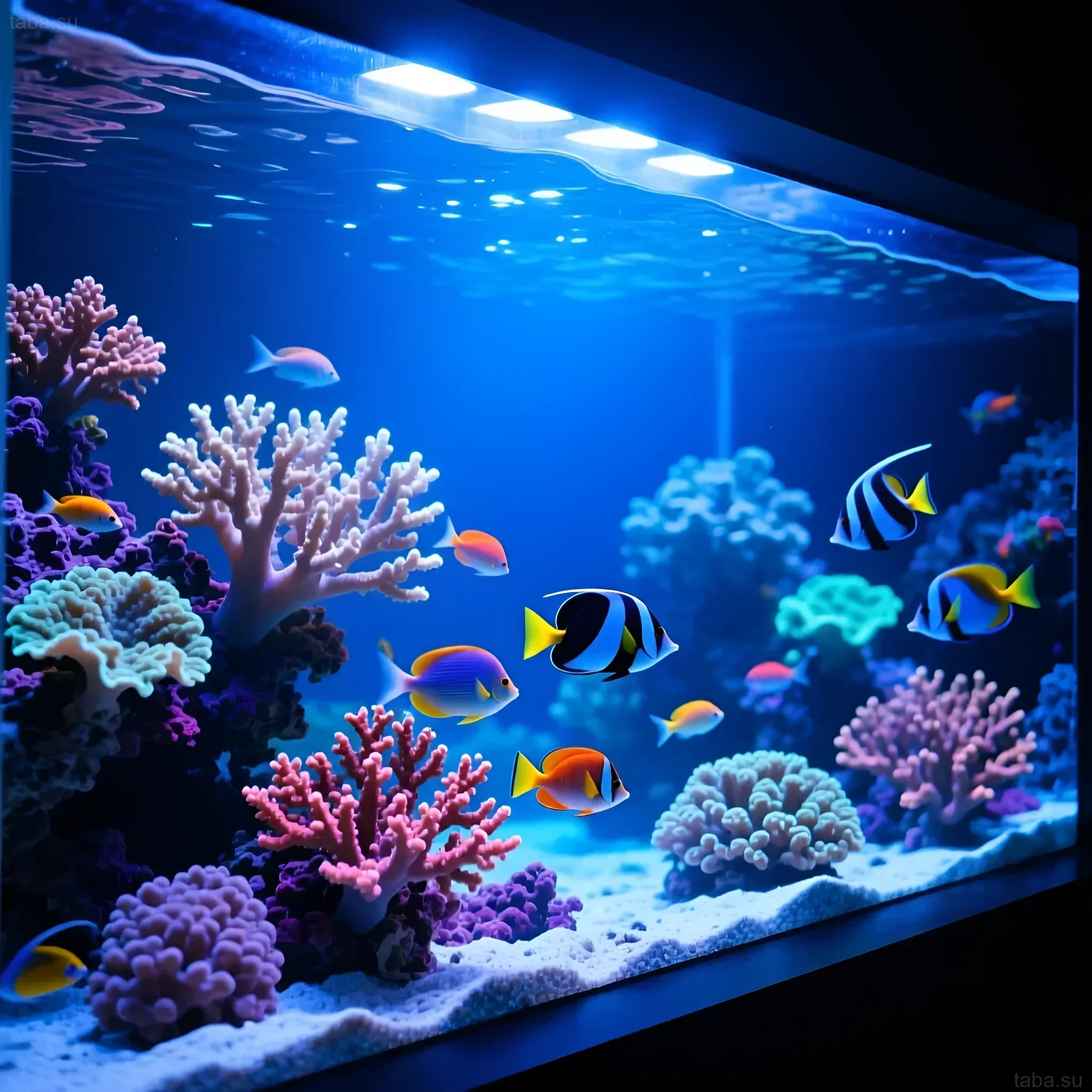
Lighting is one of the four pillars of a successful marine aquarium, alongside filtration, water chemistry, and flow. Unlike freshwater systems, where light spectrum is often chosen based on aesthetics or the needs of higher plants, in a reef aquarium, light is literal food for corals. Leading experts agree that the blue spectrum, known as Actinic, plays a key role in the life of reef organisms. Understanding its functions is the first step to creating a thriving, healthy reef.
Introduction: Why Does a Marine Aquarium Need Blue Light?
Marine aquarists, especially those keeping hard corals (SPS and LPS), face the necessity of recreating tropical ocean conditions. The main task of light in a marine aquarium is to provide photosynthesis for symbiotic algae called zooxanthellae, which live in coral tissues. It is the Actinic spectrum that most closely matches the light that penetrates to reef depths.
Blue light performs two critically important functions:
- Biological Function: Coral nutrition through zooxanthellae.
- Aesthetic Function: Enhancing fluorescent pigments, making corals bright and “glowing.”
Basics of Marine Aquarium Optics: Light and Photosynthesis
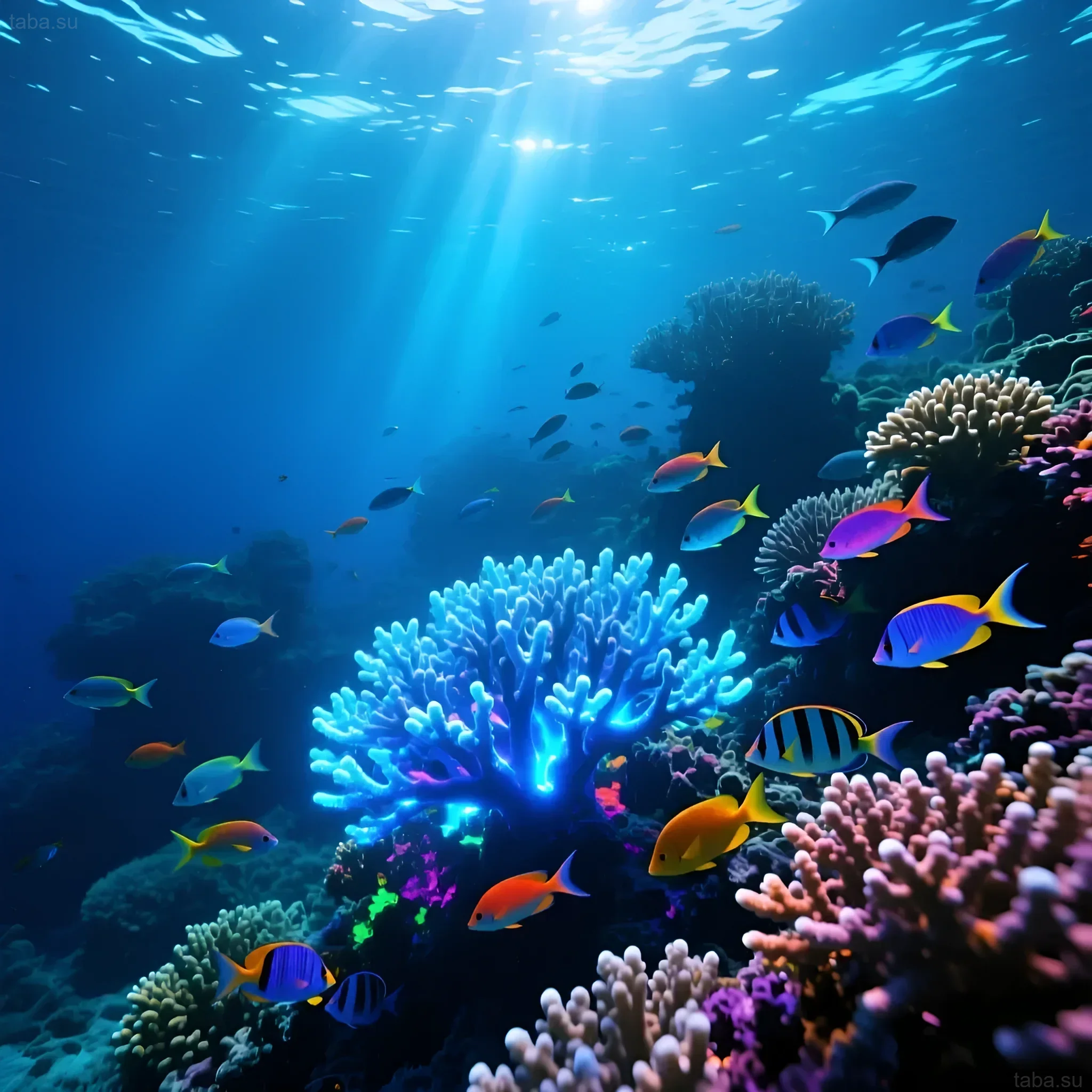
To understand why blue light dominates in a marine aquarium, we need to turn to the physics of light absorption by water.
Light Penetration in Water
Water has unique optical properties that affect the spectrum reaching the reef. White light consists of all the colors of the rainbow. When it enters the water column, longer wavelengths (red, orange, yellow) are quickly absorbed and scattered. Thus, at a depth of just 5–10 meters, red light is practically absent.
- Red Light (600–700 nm): Absorbed first.
- Green Light (500–570 nm): Penetrates deeper but is scattered.
- Blue and Violet Light (400–490 nm): Penetrates to the maximum depth, dominating the coral habitat.
PAR and Kelvin
Specific metrics are used in marine aquaristics:
- PAR (Photosynthetically Active Radiation): Measures the amount of light available for photosynthesis (in the 400–700 nm range). For corals, not only intensity (lumens) is important, but specifically PAR.
- Color Temperature (Kelvin): In a marine aquarium, the optimal temperature is in the range of 14,000K – 20,000K. Such high Kelvin values indicate a predominance of the blue spectrum.
Actinic Spectrum: What It Is and Why It’s Necessary
The term “Actinic” (from Greek “active”) in aquaristics refers to a narrow range of wavelengths that is most effective in stimulating photosynthetic pigments within zooxanthellae.
Actinic Spectrum Range
The Actinic spectrum typically covers wavelengths in the range of 400 to 470 nanometers (nm). This range includes:
- Ultraviolet/Violet (400–420 nm): Stimulates corals’ protective and fluorescent pigments.
- Royal Blue (450–470 nm): The peak absorption of chlorophyll “a” – the primary pigment of zooxanthellae. This is the most important range for coral growth and health.
The Role of Chlorophyll
Zooxanthellae contain several types of chlorophyll. Chlorophyll “a” and “c” have two main absorption peaks: one in the red spectrum (which is absent at depth) and one, much stronger, in the blue-violet range (430–460 nm).
Conclusion: Actinic light is the energetic basis for 90% of the nutrition corals receive, including Acropora, Montipora, and Euphyllia.
Types of Actinic Spectrum Lamps and LEDs for Marine Aquariums
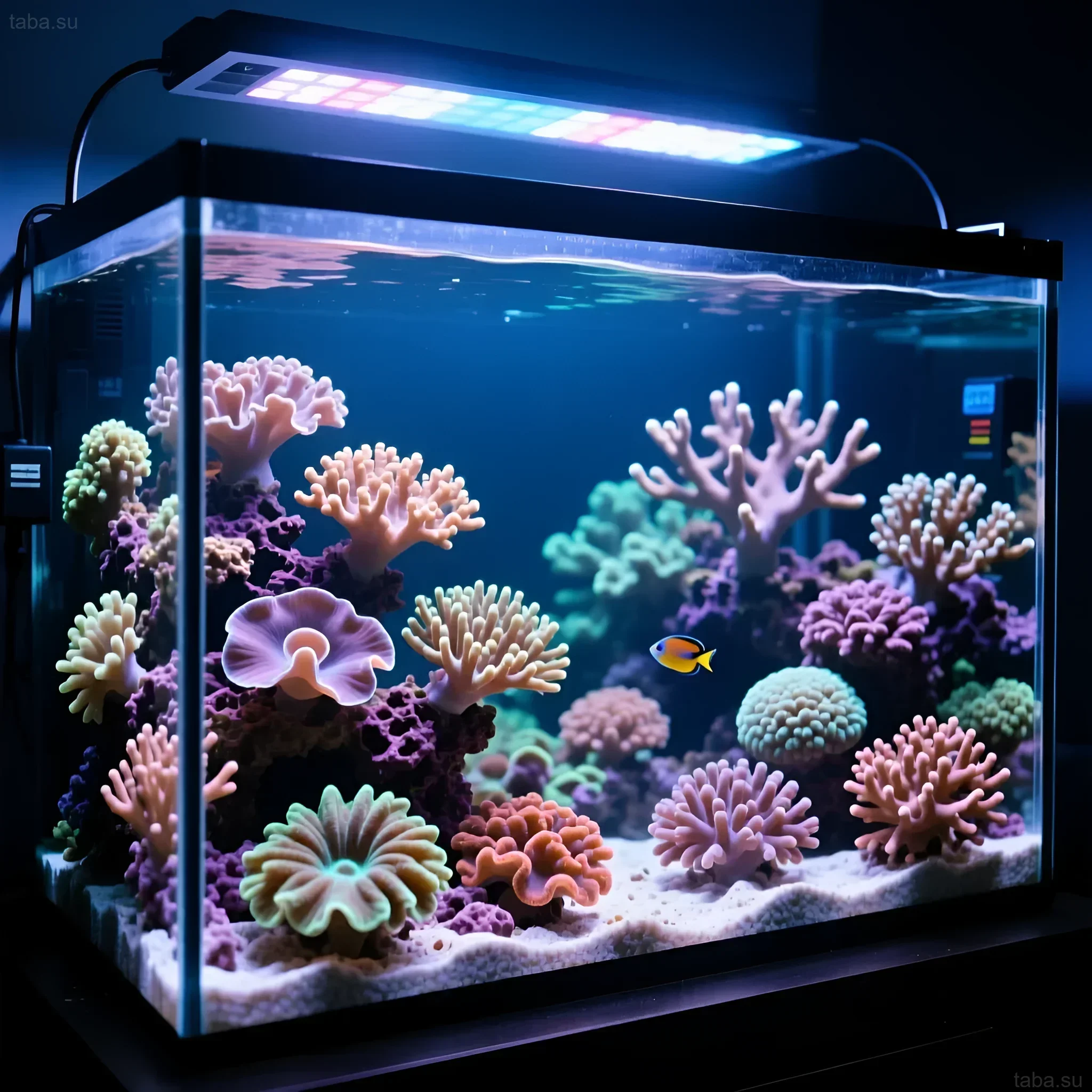
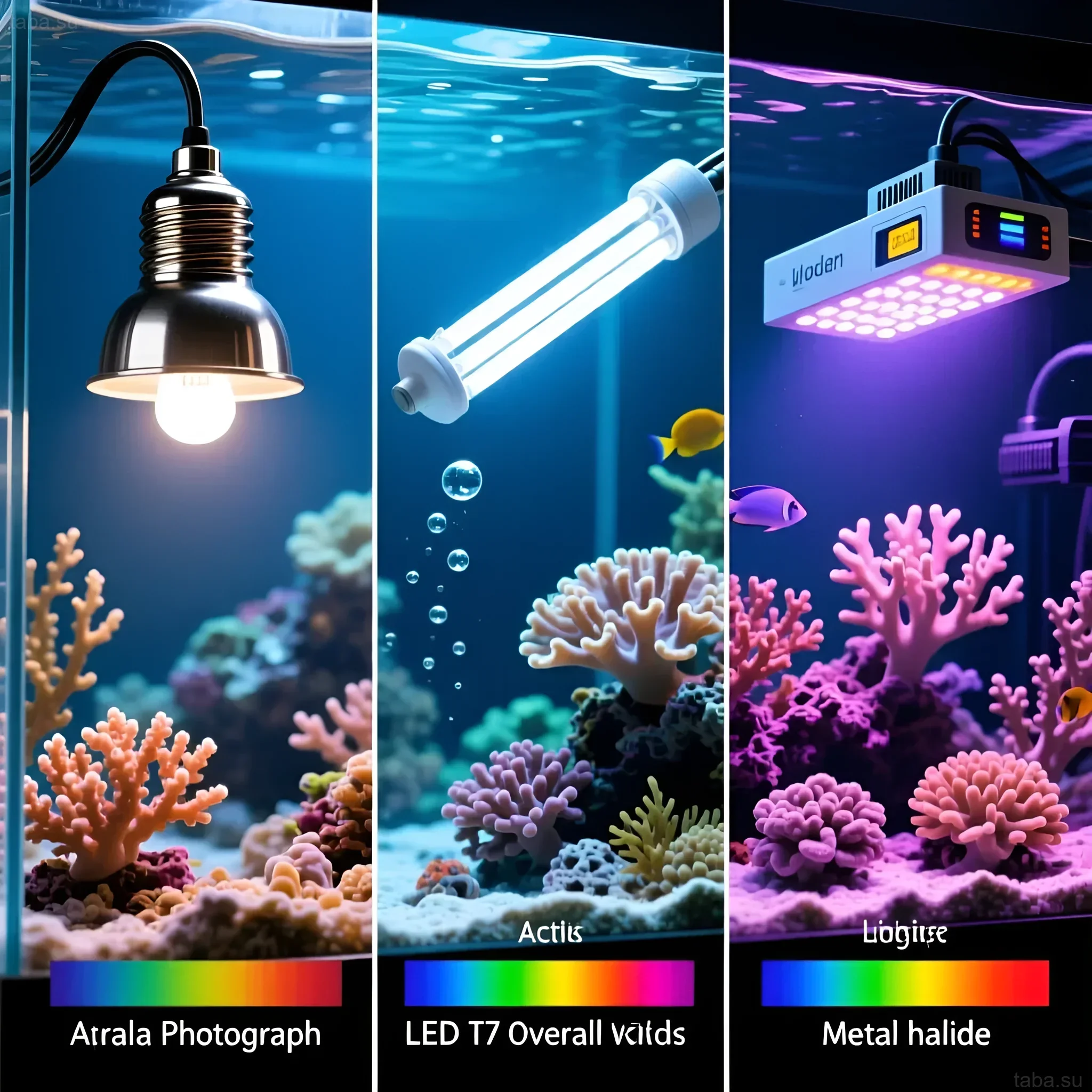
Modern aquaristics offers several technologies for delivering the Actinic spectrum. The choice depends on budget, aquarium size, and the types of corals kept.
1. LED Systems
LEDs have become the standard due to their efficiency and precise spectrum control capabilities. Key Actinic elements in LED fixtures include:
- Royal Blue Diodes (450–470 nm): Provide maximum photosynthetic response.
- UV/Violet Diodes (400–420 nm): Enhance fluorescence (pop effect) and promote the production of protective pigments (Chromoproteins) in corals.
- Advantage: Ability to program sunrises, sunsets, and moon phases, where blue light is used for smooth transitions.
2. T5 HO (High Output) Fluorescent Lamps
Despite the dominance of LEDs, T5 lamps remain popular due to their even light distribution and relatively low cost.
Special lamps are used to achieve the Actinic spectrum:
- Actinic Blue: Pure blue spectrum, focusing on the 420–460 nm range. Used in combination with white lamps.
- Blue Plus (or similar): A combination of Actinic and a broader blue spectrum. Often used in a 2:1 or 3:1 ratio (blue to white).
3. Metal Halide Lamps (HQI)
These lamps provide high intensity (PAR) but require supplementation with the Actinic spectrum, as their standard white light often has an insufficient blue peak.
- HQI lamps are usually combined with T5 Actinic or LED strips to supplement the necessary blue range.
How to Properly Select Actinic Spectrum Lighting for Your Aquarium?
Selecting Actinic lighting is a balance between the biological needs of corals and the visual aesthetics preferred by the aquarist.
1. Determining Coral Needs
The amount of blue light directly depends on the type of corals:
- Soft Corals: Can be satisfied with lower PAR and a smaller proportion of Actinic (e.g., 1:1 blue/white).
- Large Polyp Stony Corals (LPS, e.g., Trachyphyllia): Require moderate PAR and a balanced spectrum (e.g., 1.5:1 blue/white).
- Small Polyp Stony Corals (SPS, e.g., Acropora): Require very high PAR and a significant predominance of the Actinic spectrum (2:1 or even 3:1 blue/white).
2. Blue to White Light Ratio
Experts recommend maintaining a color temperature above 14,000K. If you are using an LED system with independent channels, the following power ratio (not runtime!) is recommended:
| Coral Type | Recommended Actinic (Royal Blue/Violet) to White Ratio |
|---|---|
| Soft Corals | 1:1 to 1.5:1 |
| LPS Corals | 1.5:1 to 2:1 |
| SPS Corals | 2:1 to 3:1 |
3. Actinic Operating Mode
Blue light is used not only during peak hours. It plays a key role in simulating natural cycles:
- Sunrise/Sunset (Ramping): The Actinic channel should turn on first (30–60 minutes before white) and turn off last. This reduces stress on fish and corals and mimics the natural environment.
- Moonlight: Using very low intensity Actinic (less than 1% PAR) at night for observation and maintaining natural cycles important for the spawning of some species.
Lighting Maintenance and Optimal Spectrum Preservation
Even the most expensive Actinic system requires regular maintenance to preserve its effectiveness and spectral purity.
Calibration and Replacement
Light degrades over time, which critically affects zooxanthellae. Loss of intensity or spectral shift can lead to coral bleaching.
- T5/HQI: Fluorescent lamps lose up to 30% of their efficiency per year. They must be replaced every 9–12 months, even if they are still lit.
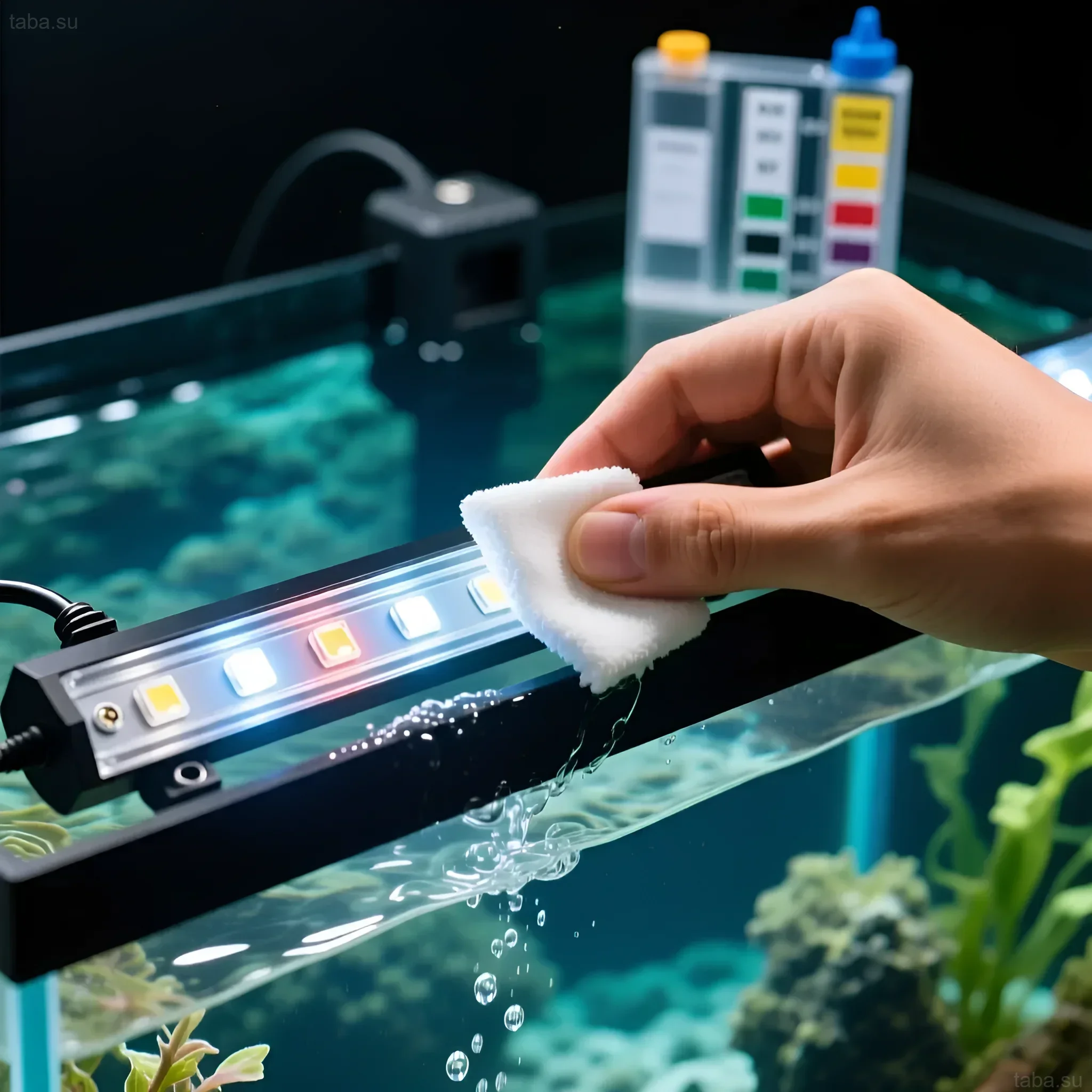
- LED: Although LEDs last longer, their lenses and protective covers get dirty from salt and calcium deposits. Regular (monthly) cleaning of lenses with clean water or special solutions is mandatory.
- PAR Monitoring: Using a PAR meter is the best way to ensure that the Actinic light at the bottom of the aquarium meets the needs of the corals.
Algae Control
Excessive Actinic light intensity, especially combined with excess nutrients (nitrates, phosphates), can trigger an outbreak of nuisance algae or cyanobacteria.
Important: If algae are actively growing under Actinic light, it may indicate that the spectrum is too shifted towards the yellow or green range, or that the aquarium requires additional water chemistry control.
FAQ: Answers to Frequently Asked Questions About Blue Light in Marine Aquariums
Can Actinic Light Cause Coral Bleaching?
Yes. Bleaching occurs when a coral expels zooxanthellae from its tissues due to stress. If you abruptly increase the intensity of Actinic light (especially Royal Blue) or switch to a new, more powerful fixture, it can cause light shock. New fixtures should always be introduced gradually, increasing power by 5–10% per week.
Can Only Actinic Light Be Used Without White Light?
Theoretically, Actinic light (450–470 nm) provides most of the energy needed by zooxanthellae. However, for optimal coral health and color, a full spectrum is necessary. White light (including a small proportion of red and green) helps corals produce additional pigments and, importantly, allows the aquarist to observe the true colors of the reef.
What is “Actinic Shock”?
This is a phenomenon where an inexperienced aquarist turns on the aquarium lights at full power using the blue spectrum and sees corals rapidly contract. Actinic light is very intense for coral eyes, and they need time to adapt to the new light levels. Use a gradual “sunrise.”