
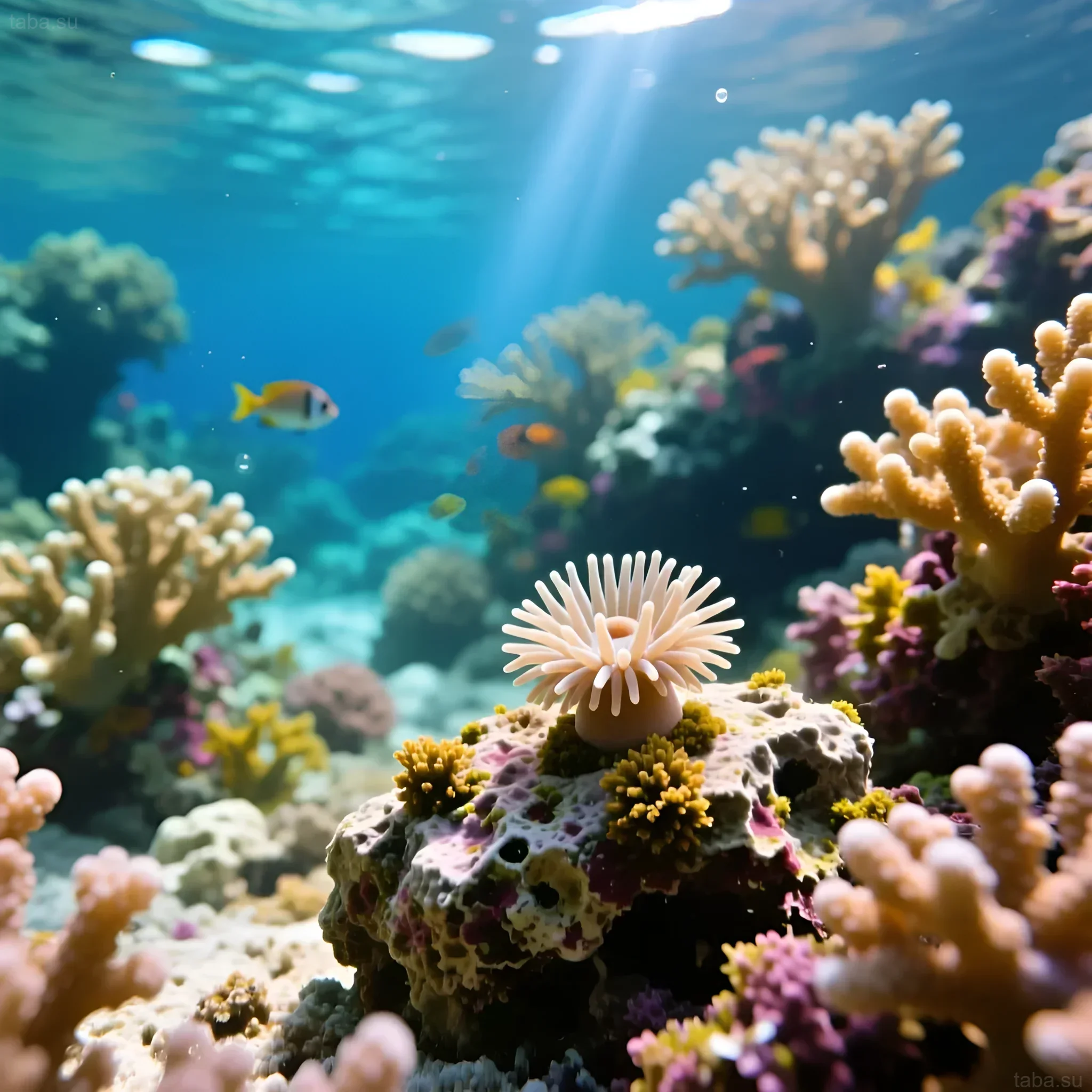
Aiptasia, known in the aquarist community as the Glass Rose (lat. Aiptasia), is one of the most common and insidious pests encountered by marine aquarium owners. This small polyp, with its high reproduction rate and potent stinging cells, can quickly infest live rock and cause serious damage to corals and other invertebrates. The expert community of taba.su has prepared a comprehensive guide to help effectively identify, control, and completely eradicate this problem using proven mechanical, chemical, and biological methods.
What is Aiptasia and Why is it Dangerous for an Aquarium?
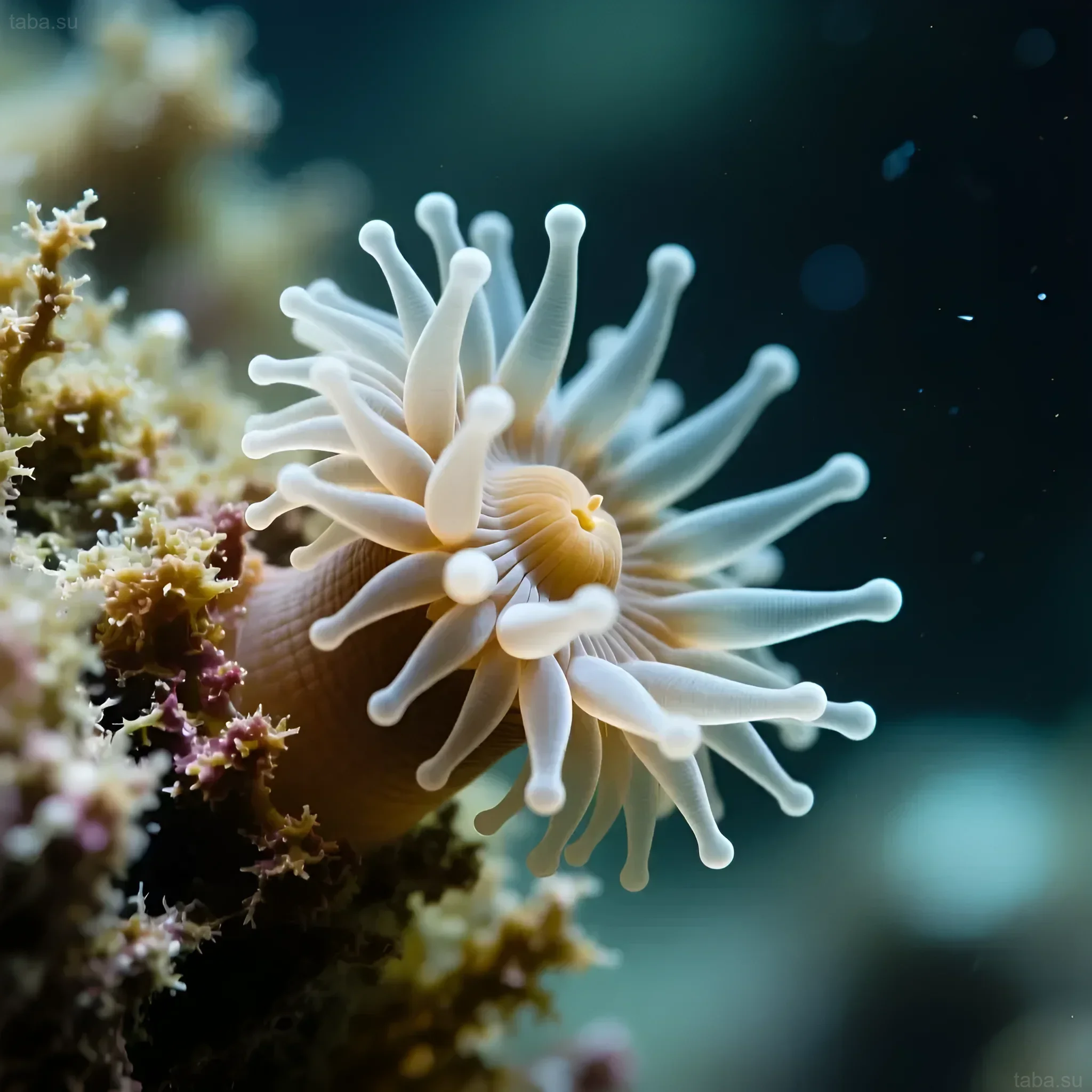
Aiptasia is a small anemone (polyp) that externally resembles a miniature, translucent anemone. In nature, it is an important element of the ecosystem, but in the confined space of an aquarium, it transforms into an aggressive weed capable of rapid, uncontrolled growth.
Key characteristics of Aiptasia:
- Appearance: Translucent body, often brownish or beige, with long, thin tentacles that frequently have white tips.
- Size: Can range from a few millimeters to 3–4 centimeters in diameter.
- Reproduction: Reproduces both sexually and asexually through fragmentation (pedal laceration). This means that even a tiny piece of a polyp detached during an unsuccessful removal attempt can give rise to a new colony.
What makes the Glass Rose dangerous?
The main threat of Aiptasia is its aggression towards other aquarium inhabitants, especially sessile invertebrates:
- Nematocysts (stinging cells): Aiptasia tentacles contain potent stinging cells used to paralyze small prey. Upon contact, they burn and damage the tissues of nearby corals (LPS and SPS), causing necrosis and subsequent death.
- Competition for space: Aiptasia rapidly colonizes live rock, substrate, and even glass, depriving corals of necessary space for growth and light.
- Uncontrolled spread: The high reproduction rate allows Aiptasia to transform a clean aquarium into a “garden” of polyps within weeks.
Causes of Aiptasia Appearance in an Aquarium: How Does This Weed Get In?
Aiptasia does not appear spontaneously. Like most marine pests, it enters the system with new elements brought from the outside. Understanding the pathways of infestation is critical for prevention.
Main sources of infestation:
Most often, Aiptasia enters the aquarium as microscopic polyps or larvae attached to:
- Live rock: This is the most common route. The rock may appear clean, but its pores may already harbor larvae or small, inconspicuous polyps.
- New corals (frags): The base on which the coral is attached (frag plug), or the coral skeleton itself, can be a carrier of Aiptasia.
- Mollusk shells: Less commonly, it can be introduced with snails or other invertebrates.
- Water from transport bags: Although this is the least likely route, it is always recommended not to add water from the bag to the main aquarium.
Mechanical Methods of Controlling Aiptasia: Manual Removal
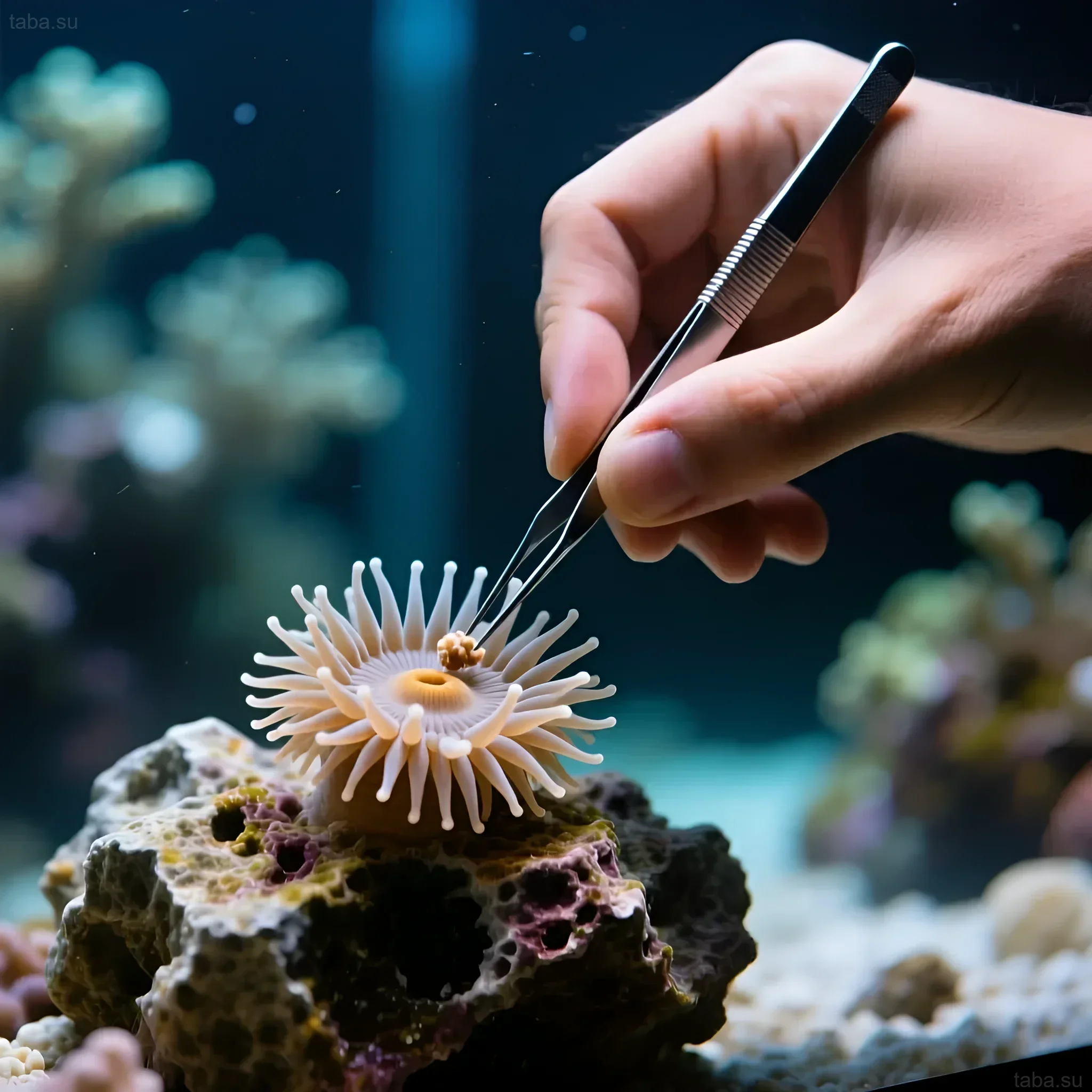
Mechanical removal is the first thought that comes to an aquarist’s mind, but this method requires extreme caution. If the polyp is not completely removed, it will not only recover but may also reproduce.
When to use mechanical removal:
- When there are only 1–2 polyps.
- If the polyp is on an easily removable piece of rock or on the glass.
Safe removal technique:
The main rule: do not squeeze or tear the polyp. If the body is damaged, Aiptasia releases spores into the water, leading to an explosive growth of new polyps.
- Isolation: If possible, remove the rock with the polyp from the aquarium.
- Removal: Use a very sharp scalpel or blade to cut the polyp entirely at its base.
- Base treatment: It is recommended to immediately cauterize the spot where the polyp was with boiling RO water or a small amount of kalkwasser (calcium hydroxide) to ensure the destruction of remaining tissue.
Important: If Aiptasia is deeply embedded in the pores of live rock, mechanical removal is strongly discouraged due to the high risk of fragmentation.
Chemical Methods of Control: Vinegar and Other Agents
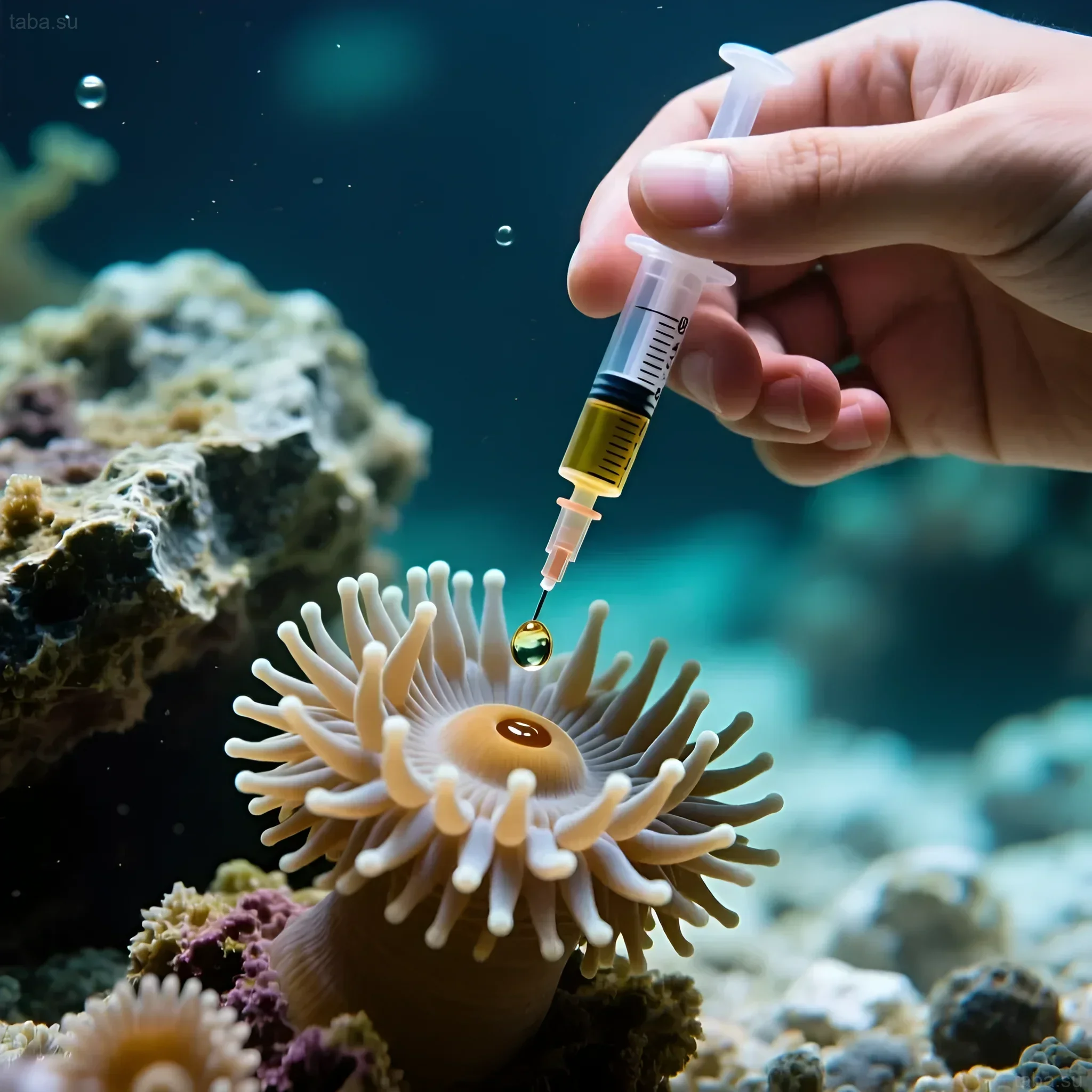
Chemical injections are the most popular and effective method for dealing with single or small clusters of Aiptasia, especially when polyps are in hard-to-reach places.
Acetic Acid Injection (Table Vinegar)
Regular table vinegar (9% acetic acid) is an accessible and effective agent for destroying Aiptasia. The acid instantly destroys the polyp’s tissues, preventing fragmentation. However, strict adherence to dosage is necessary to avoid harming the overall aquarium system.
Vinegar eradication process:
- Tool: Use an insulin syringe (with a fine needle) of 1–2 ml capacity.
- Preparation: Draw pure table vinegar (9%) into the syringe.
- Injection: Bring the needle as close as possible to the oral disc of the Aiptasia. Carefully and slowly inject 0.5–1.0 ml of vinegar directly into the polyp’s body. The polyp should immediately contract and turn white.
- Caution: Ensure that the vinegar does not come into contact with neighboring corals. Turn off the circulation pumps for 15–20 minutes to keep the chemical localized.
Limitations of the method:
Vinegar cannot be used for mass eradication, as a large amount of vinegar entering the water can drastically lower the aquarium’s pH. It is recommended to treat no more than 5–7 large polyps per day.
Commercial Preparations
There are several specialized preparations on the market, such as Aiptasia-X (Red Sea), Joe’s Juice, and Kalkwasser Paste. These agents are usually thick pastes or gels that are applied to the polyp, physically and chemically destroying it.
- Aiptasia-X: A gel-like preparation that the polyp perceives as food and ingests. It contains components that cause internal destruction. Its advantage is a low risk of fragmentation.
- Kalkwasser Paste: A thick mixture of calcium hydroxide (limewater) mixed with RO water to a paste consistency. It is applied to the polyp with a syringe or pipette, creating a local burn and a sharp increase in pH at the point of contact.
Biological Control Methods: Wurdemann’s Shrimp and Other Allies
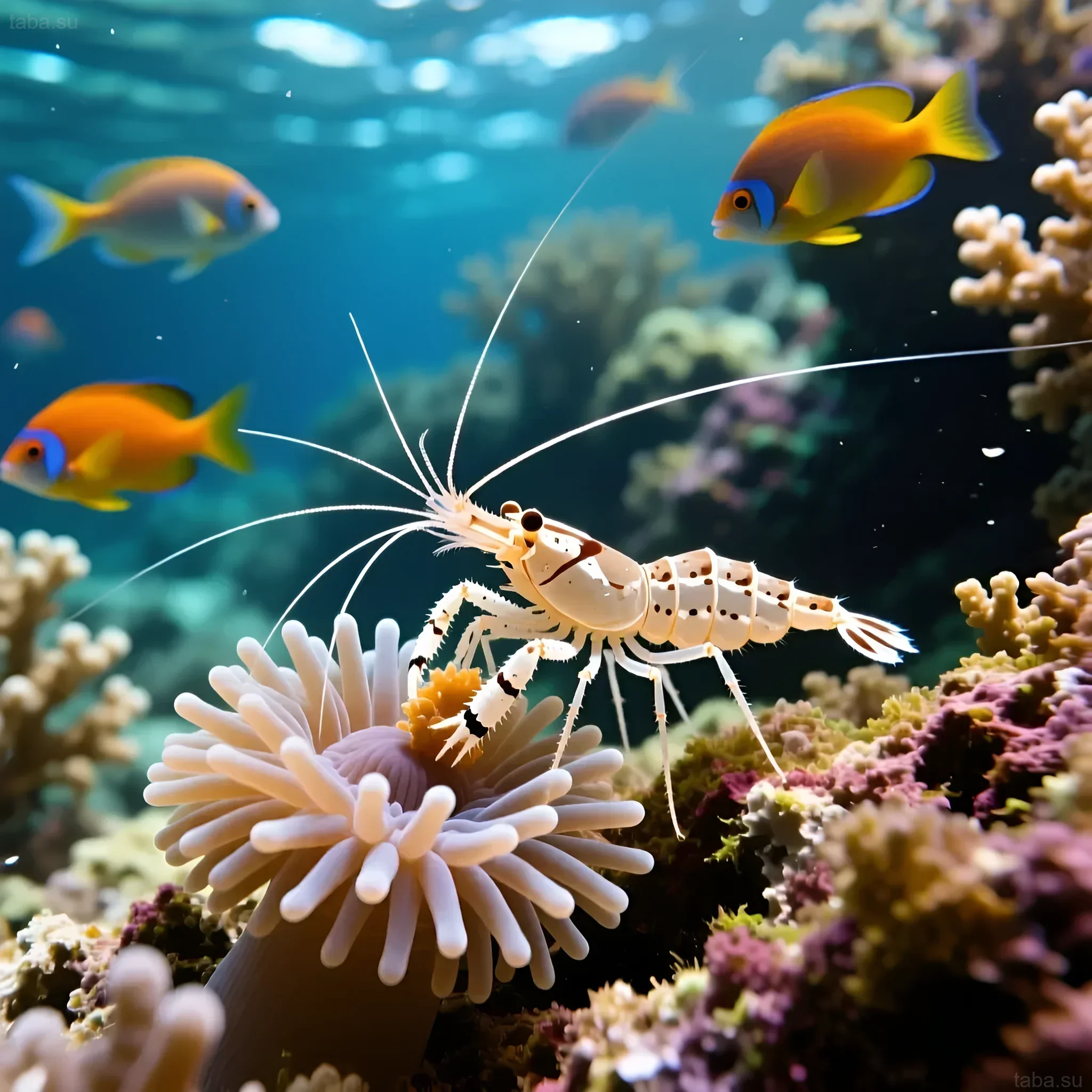
Biological control is the gentlest and often the most effective long-term solution, especially for extensive infestations. It involves populating the aquarium with natural predators of Aiptasia.
Wurdemann’s Shrimp (Lysmata wurdemanni)
The Wurdemann’s shrimp, or Peppermint Shrimp, is considered the gold standard for biological control. Unlike other shrimp, Lysmata wurdemanni actively feeds on Aiptasia.
Advantages of Wurdemann’s Shrimp:
- Effectiveness: The shrimp penetrate the most inaccessible crevices of live rock where chemical methods are powerless.
- Safety: They are safe for most corals, fish, and other invertebrates.
- Dosage: For a small aquarium (up to 200 liters), it is recommended to introduce 2–4 individuals. In larger systems, 5–8 shrimp may be needed.
Important nuance: There are several species of shrimp that resemble Wurdemann’s. Ensure you are purchasing specifically Lysmata wurdemanni, as some closely related species may ignore Aiptasia or even nip at corals.
Berghia Nudibranch (Berghia verrucicornis)
A slightly less common but extremely effective predator is the Berghia nudibranch. This is a specialized predator that feeds exclusively on Aiptasia.
- Specialization: Berghia does not eat corals, fish, or other anemones.
- Slow action: The slugs work slower than shrimp and are difficult to spot as they are nocturnal.
- Reproduction: Complete eradication of a colony often requires introducing several individuals that can reproduce in the aquarium.
Surgeonfish and Other Species
Some fish can also assist in control, although their effectiveness is less predictable:
- Copperband Butterflyfish (Chelmon rostratus): Known for its fondness for polyps, including Aiptasia. However, this fish is demanding in terms of care and does not always readily switch to Aiptasia if other food is available.
- Nile Puffer (Tetraodon fahaka): Some pufferfish species may eat Aiptasia, but they are not suitable for reef aquariums as they also destroy corals.
Preventing Aiptasia: Easier to Prevent Than to Cure
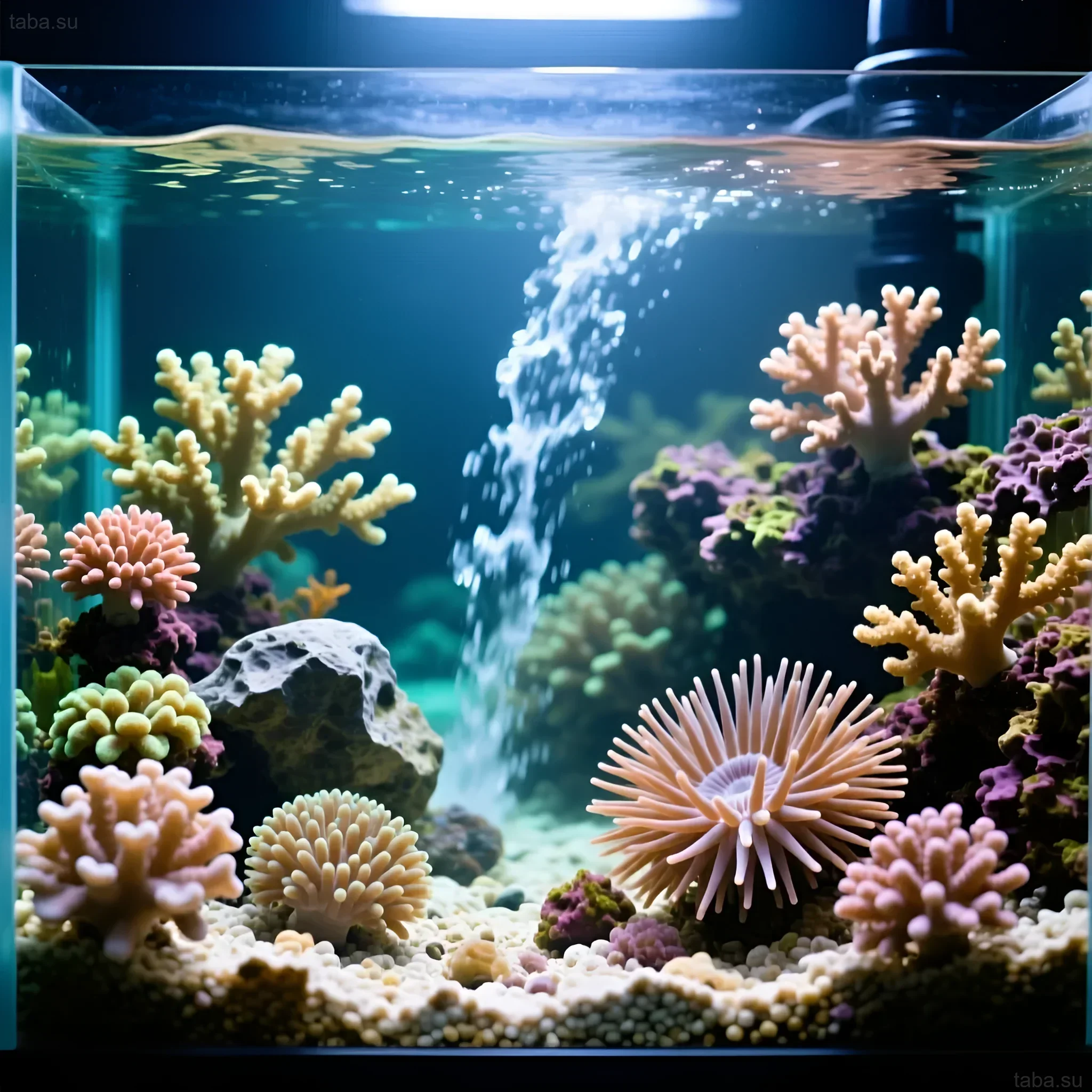
The best way to combat Aiptasia is to prevent its introduction. Strict quarantine and inspection of all new system elements are mandatory measures.
Key prevention measures:
- Quarantine Tank: All new live rock and corals should undergo quarantine in a separate container for 4–6 weeks. During this period, Aiptasia, if present, will grow to a noticeable size and can be eradicated.
- Coral inspection: Before placing a frag into the main system, thoroughly inspect its base (plug). If even a hint of Aiptasia is observed, remove the polyp with vinegar or trim a part of the plug.
- Using dry rock: If you are setting up a new system, preference should be given to artificial or dry rock, which are guaranteed to be pest-free.
- Biological supervision: Even in a clean aquarium, it is beneficial to keep 1–2 Wurdemann’s shrimp. They will act as “sanitarians” and destroy any young polyps that may appear.
FAQ: Answers to the Most Popular Questions About Aiptasia
1. Is Aiptasia dangerous to fish?
In general, Aiptasia does not pose a direct threat to healthy, mobile fish. However, its stinging cells can damage the mucous membrane or eyes of small, slow-moving fish, and can cause serious harm to fry.
2. What to do if Aiptasia appears on the glass?
If a polyp has attached itself to the glass, it can be carefully scraped off with a blade or a magnetic scraper. Since the glass has no pores, the risk of fragmentation is lower than when removing from live rock. After scraping, it is recommended to immediately siphon out the remnants to prevent them from entering the flow.
3. Can Aiptasia die on its own?
No, Aiptasia is an extremely resilient organism. It can survive in a wide range of conditions and even with insufficient food. If not purposefully eradicated, it will only grow and reproduce.
4. Can boiling water be used for eradication?
Yes, boiling water (or very hot RO water) is an effective agent for localized eradication. The technique is similar to vinegar injection: hot water is injected with a syringe directly into the polyp’s body. This causes immediate protein denaturation and death. The method is safe for the system if small volumes are used.
5. Why won’t Wurdemann’s shrimp eat Aiptasia?
There are several reasons why shrimp may ignore Aiptasia:
- Incorrect species: A shrimp was purchased that looks similar but is not Lysmata wurdemanni.
- Overfeeding: If the shrimp are receiving abundant food from the aquarist, they lose the motivation to hunt Aiptasia. It is recommended to slightly reduce feeding.
- Polyps are too large: Some shrimp prefer to hunt young, small polyps. Large, old individuals may be too big or aggressive for them.