
Aquarium keeping, despite all its beauty and tranquility, inevitably faces challenges, one of which is fish diseases caused by parasites. An experienced aquarist’s arsenal should always include a universal and reliable remedy capable of quickly containing an outbreak of disease. Such a remedy, time-tested and used in thousands of aquariums, is Antipar – a complex preparation combining the power of methylene blue and malachite green.
This material is a comprehensive guide to the use of Antipar, its chemical composition, spectrum of action, and essential precautions that must be observed for successful treatment and preservation of aquatic life health.
Antipar: Saving the Aquarium from Parasites – A Complete Guide

Antipar is one of the most popular and effective remedies for combating ectoparasites, fungal, and bacterial infections in freshwater aquariums. Its popularity is due to its broad spectrum of action and relative safety when dosage is observed.
The key feature of Antipar lies in its dual composition. Two active components work synergistically, enhancing each other’s action and ensuring high efficacy against protozoa, which are the primary causative agents of diseases such as ichthyophthiriasis (white spot disease).
Before starting treatment, taba.su specialists strongly recommend conducting an accurate diagnosis of the disease. Despite its universality, Antipar is not a panacea for all ailments, and its use must be justified.
What is Antipar and How Does it Work: Methylene Blue and Malachite Green in Tandem
Antipar’s effectiveness is ensured by a unique combination of two synthetic dyes, each performing its specific function:
- Malachite Green Oxalate: This is a powerful fungicide and protozoacide. Its primary action is to disrupt cell membranes and inhibit the nuclear division process of protozoan parasites. It is highly effective against the free-swimming stage (tomites) of Ichthyophthirius, but it is also highly toxic, especially to catfish and scaleless fish.
- Methylene Blue: Often called “blue dye.” This component acts not only as a mild antiseptic but, more importantly, reduces the overall toxicity of malachite green. Methylene blue improves fish respiration by acting as an oxygen acceptor and helping to combat methemoglobinemia, which often develops in weakened individuals.
The synergistic action of these components allows for lower, safer concentrations of malachite green for fish while maintaining high therapeutic efficacy.
What Parasites Can Be Treated with Antipar? A Broad Spectrum of Action
Antipar demonstrates high effectiveness in combating the most common and dangerous freshwater fish diseases caused by protozoa and fungi. It is effective at specific stages of the parasite’s life cycle (most often at the free-swimming stage).
The main diseases for which Antipar is used:
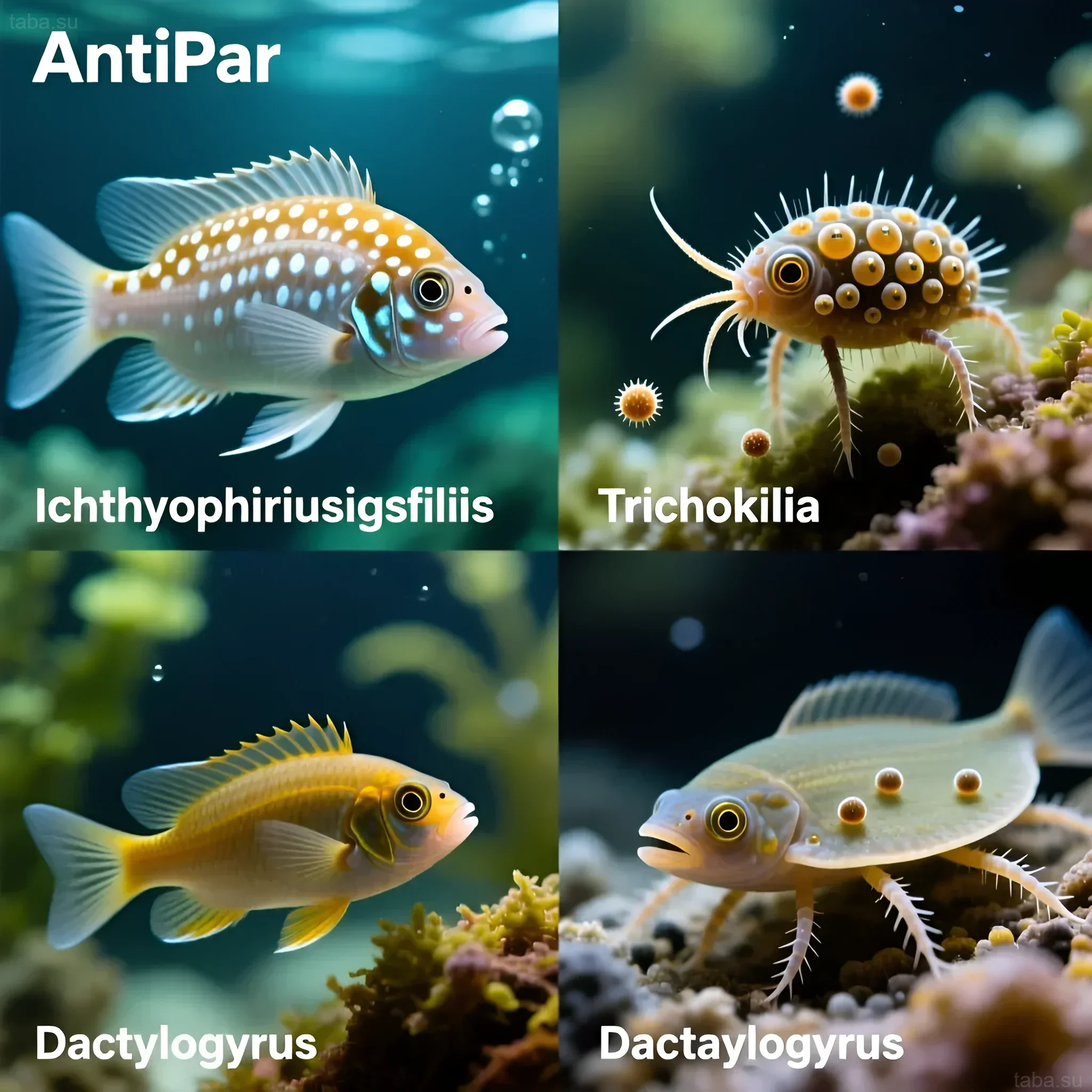
- Ichthyophthiriasis (“White Spot Disease” or “Ich”, Ichthyophthirius multifiliis): The most common disease caused by ciliates. Antipar effectively destroys the free-swimming forms of the parasite.
- Oodinosis (Oodinium pillularis): Known as “velvet disease.” A parasite that covers the fish’s body with a golden or brown coating. Antipar is one of the primary treatments.
- Costiasis (Costia or Ichthyobodo necator): Flagellates that cause clouding of the skin and mucous membranes.
- Chilodonelliasis (Chilodonella): Ciliates that affect the gills and skin, leading to difficulty breathing.
- Gyrodactyliasis and Dactylogyrosis (Gyrodactylus spp. and Dactylogyrus spp.): Flatworms (monogenean flukes) that affect the skin and gills. Antipar can be used in combination therapy, although more specific drugs are often required against these worms.
- Fungal Infections (Saprolegnia spp. and Achlya spp.): Mold-like fungi that infect damaged skin areas or eggs.
It is important to remember that water temperature plays a critical role in the effectiveness of treating ichthyophthiriasis. Raising the temperature to 28–30°C accelerates the parasite’s life cycle, making it vulnerable to Antipar.
Antipar Application Instructions: A Step-by-Step Guide for Beginners and Experienced Aquarists
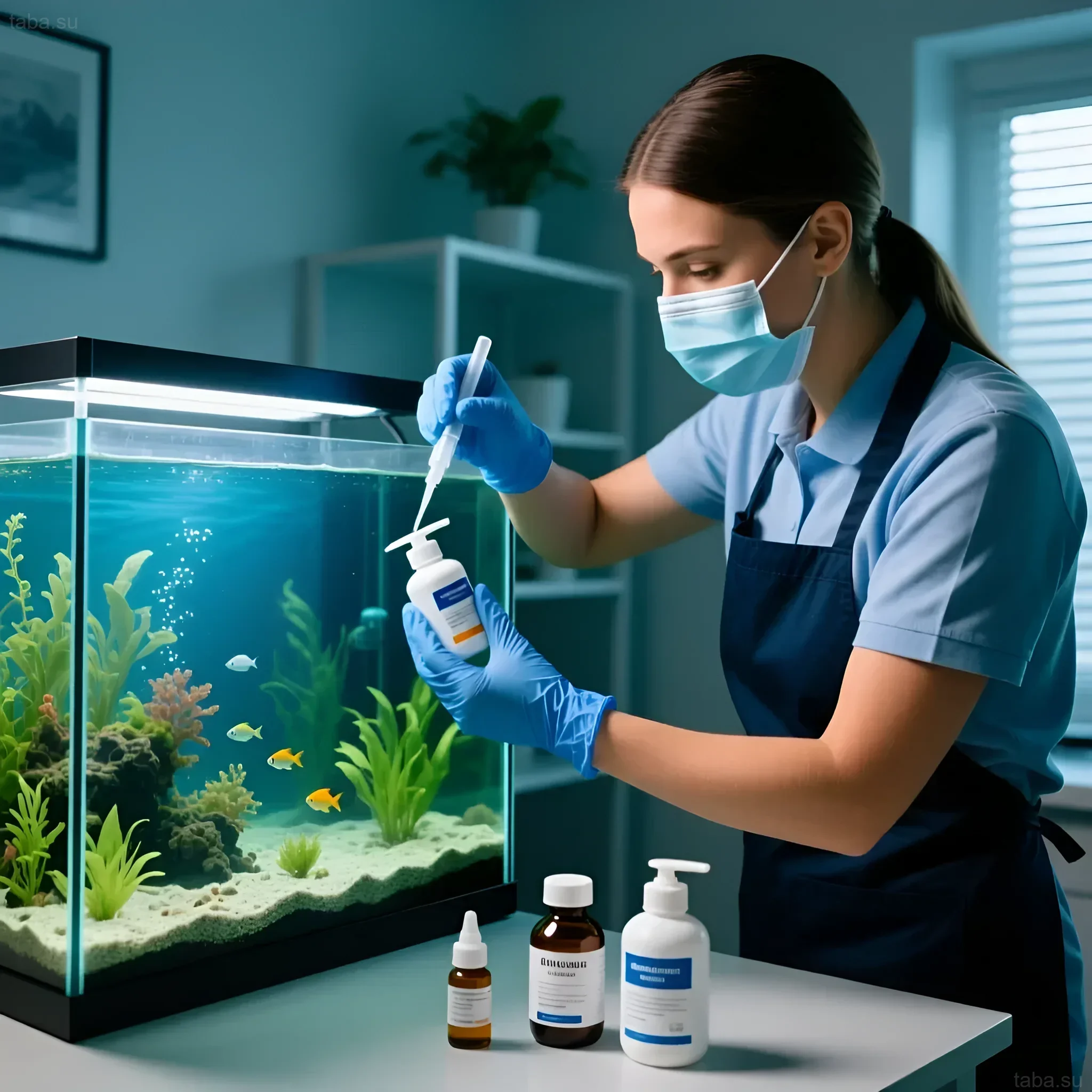
To achieve maximum results and minimize stress for the fish, it is essential to strictly follow the treatment protocol. Antipar can be used in both a community aquarium and a quarantine tank.
Preparation for Treatment
- Remove Filter Media: Be sure to remove activated carbon, zeolite, and any other chemical sorbents, as they will instantly neutralize the medication.
- Aeration: Increase aeration (oxygen supply). Antipar can reduce dissolved oxygen levels, and sick fish need it particularly badly.
- Turn off UV Sterilizer: Ultraviolet light destroys the active components of the medication, making treatment ineffective.
- Water Parameters: Check pH and hardness. The medication works best in soft and neutral water, but sudden parameter fluctuations are unacceptable.
Standard Dosage and Treatment Course
The standard dosage recommended by most manufacturers is 1 ml of the preparation per 50 liters of aquarium water.
Step-by-Step Instructions:
- Measure the required volume of Antipar based on the net volume of the aquarium (excluding substrate and decorations).
- Dilute the measured dose in a small amount of aquarium water (200–500 ml).
- Slowly, in portions, add the solution to the aquarium in areas with strong current (e.g., near the filter outlet) for quick and even distribution.
- The first stage of treatment lasts 3–5 days. Water changes are not recommended during this period.
- On the 5th day (or as recommended by the manufacturer), a partial water change (30–50%) should be performed, and a full or half dose of the medication should be administered again if symptoms persist.
- A full course of treatment can last 7–10 days, depending on the severity of the disease (e.g., for ichthyophthiriasis).
Completing the Course
After all symptoms have disappeared:
- Perform several large water changes (30–50% each) over 2–3 days.
- Install activated carbon in the filter to completely remove any remaining dyes from the water.
- Add preparations to restore biological filtration (bacterial starters), as Antipar partially suppresses beneficial nitrifying bacteria.
Precautions When Using Antipar: Safety for Fish and Aquarist
Despite its high effectiveness, Antipar is a potent chemical agent. Its use requires care and adherence to safety rules.
Sensitive Aquatic Life
Some aquarium inhabitants are extremely sensitive to malachite green, even as part of Antipar. In these cases, it is recommended to use half the dosage or treat in a separate quarantine tank.
- Scaleless Fish: Catfish (e.g., Corydoras spp., Ancistrus spp.). Their skin is more permeable to dyes.
- Characins and Small Tetras: Some species of neons (Paracheirodon innesi) and cardinals.
- Fry and Eggs: High concentrations of the drug can be fatal to developing eggs and fry.
- Invertebrates: Shrimp (e.g., Neocaridina davidi) and snails (Ampullariidae) tolerate Antipar very poorly. It is recommended to remove them from the community aquarium during treatment.
Effect on Plants
Antipar, especially malachite green, can negatively affect some delicate aquarium plants (e.g., mosses or Cryptocoryne). In most cases, hard-leaved plants (Anubias, Vallisneria) tolerate treatment satisfactorily but may experience slowed growth.
Safety for the Aquarist
When handling Antipar, follow general safety rules for chemical reagents:
- Wear gloves to avoid staining your skin.
- Avoid getting the product in your eyes or on mucous membranes.
- Store out of reach of children and pets, away from direct sunlight.
Antipar: Possible Side Effects and How to Avoid Them
Although Antipar is considered relatively safe, side effects may occur with improper use or individual fish sensitivity.
Discoloration
The most obvious side effect is the blue-green discoloration of the water. This color can also stain silicone seams, plastic decorations, and equipment. Over time, after regular water changes and the use of activated carbon, the discoloration will disappear.
Suppression of Biofiltration
Antipar is a strong antiseptic and does not distinguish between pathogenic and beneficial microflora. It inevitably suppresses colonies of nitrifying bacteria (Nitrosomonas and Nitrobacter) in the substrate and filter.
How to Avoid Suppression:
- Do not exceed the recommended dosage.
- Minimize fish feeding during treatment to reduce the load on the biofilter.
- After treatment, use special preparations to restore bacterial balance.
Fish Stress and Poisoning
With overdose or prolonged exposure to particularly sensitive fish, signs of poisoning may be observed:
- Rapid breathing (fish “gulping” air at the surface).
- Reddening of gills and fins.
- Loss of coordination, apathy.
If signs of poisoning are observed, immediately perform an emergency 50% water change and add activated carbon to the filter for rapid neutralization of the medication.
FAQ: Answers to the Most Popular Questions About Antipar
1. Can fish be fed during Antipar treatment?
Yes, but feeding should be reduced to minimal portions (about 1/3 of the usual amount). This is necessary to reduce the organic load on the aquarium, as biofiltration is weakened.
2. Is it necessary to increase water temperature?
When treating ichthyophthiriasis (white spot disease), raising the temperature to 28–30°C is critically important. This accelerates the parasite’s emergence from its cyst, making it vulnerable to Antipar. When treating fungal infections or oodinosis, if not prescribed by a veterinarian, the temperature can be kept at the standard level.
3. Can Antipar be used for prevention?
No, Antipar is a therapeutic agent, not a prophylactic one. Regular use of dyes harms beneficial microflora and can lead to parasite resistance. Prevention should consist of quarantining new fish and maintaining cleanliness.
4. What to do if Antipar did not help?
If symptoms persist after a full course of treatment (7–10 days), it may indicate several problems:
- Incorrect diagnosis (the disease may be bacterial or viral).
- Parasites have developed resistance to malachite green.
- Failure to follow dosage or the presence of sorbents in the filter.
In this case, you should either switch to a different medication (e.g., formalin-based or other antibiotics) or consult an ichthyopathologist.
Interesting Facts About Antipar and Combating Parasites in Aquariums
The chemical dyes included in Antipar have a long history of use not only in aquaristics but also in medicine.
- Methylene Blue (Methylthioninium chloride) was one of the first synthetic dyes used as an antiseptic in the late 19th century. In medicine, it is still used to treat methemoglobinemia in humans. In aquaristics, it is often used for treating fish eggs, as it has pronounced antifungal properties and increases embryo survival.
- Malachite Green, despite its effectiveness, is restricted in some countries for use in the food industry due to its potential carcinogenicity. It is permitted in aquaristics, but its toxicity requires strict adherence to dosages.
- Ichthyophthiriasis, which is the primary target of Antipar, is known as “white spot disease” or “ich” due to the visual similarity of the parasites to grains of semolina. It is important that Antipar only acts on the free-swimming stage of the parasite (the tomites), so treatment must be continuous to “catch” all individuals emerging from cysts.
- Complex preparations like Antipar, which combine two or more active substances, are used to reduce the risk of resistance development in parasites, making treatment more reliable.