
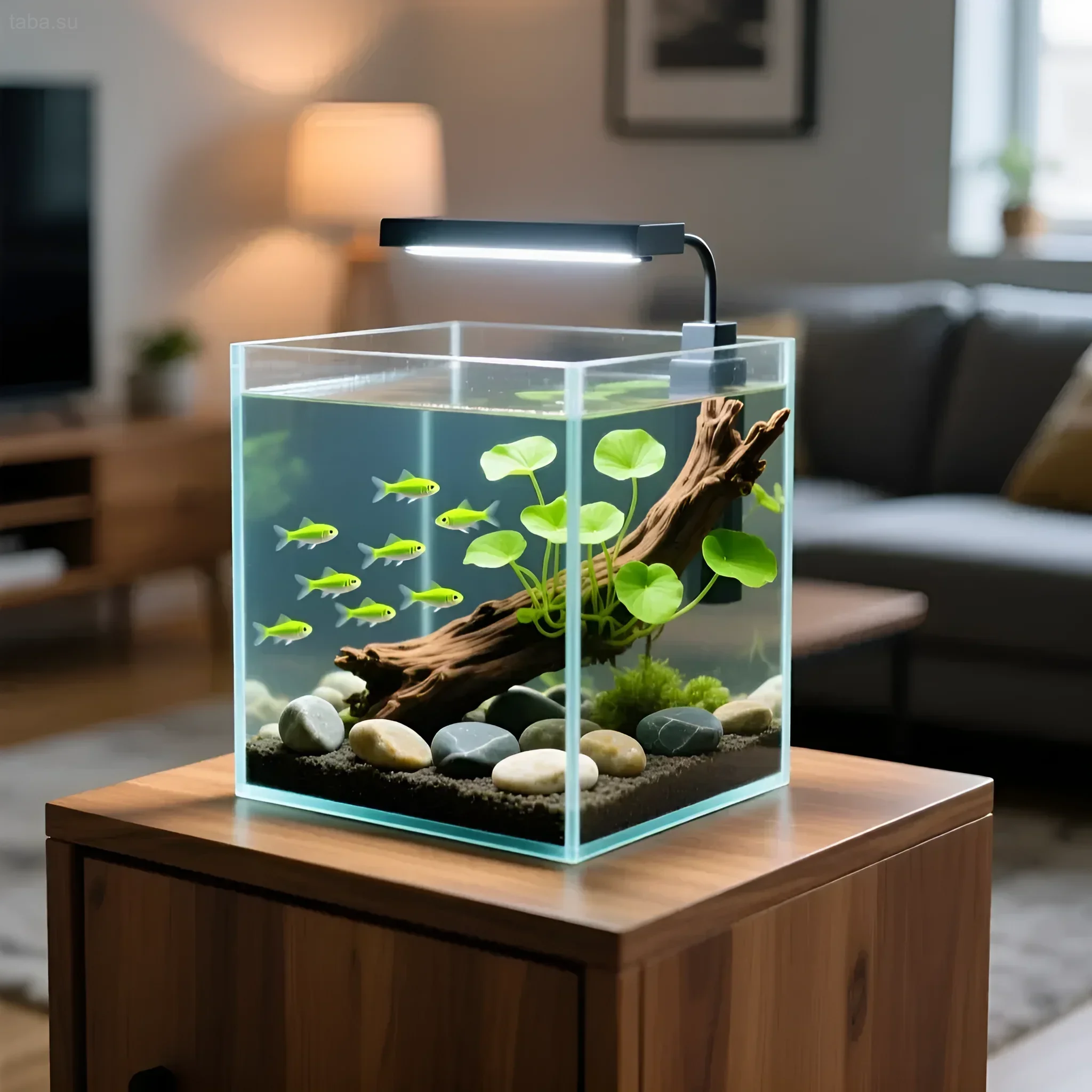
In the world of aquaristics, there are many shapes and sizes of tanks, but in recent years, the so-called cube aquarium, or Nano Cube, has gained particular popularity. This shape, characterized by equal or nearly equal length, width, and height, offers unique aesthetic and practical possibilities, especially for those with limited space or who wish to create a miniature, detailed biotope.
Cube Aquarium (Nano Cube): What is it and why is it so popular?
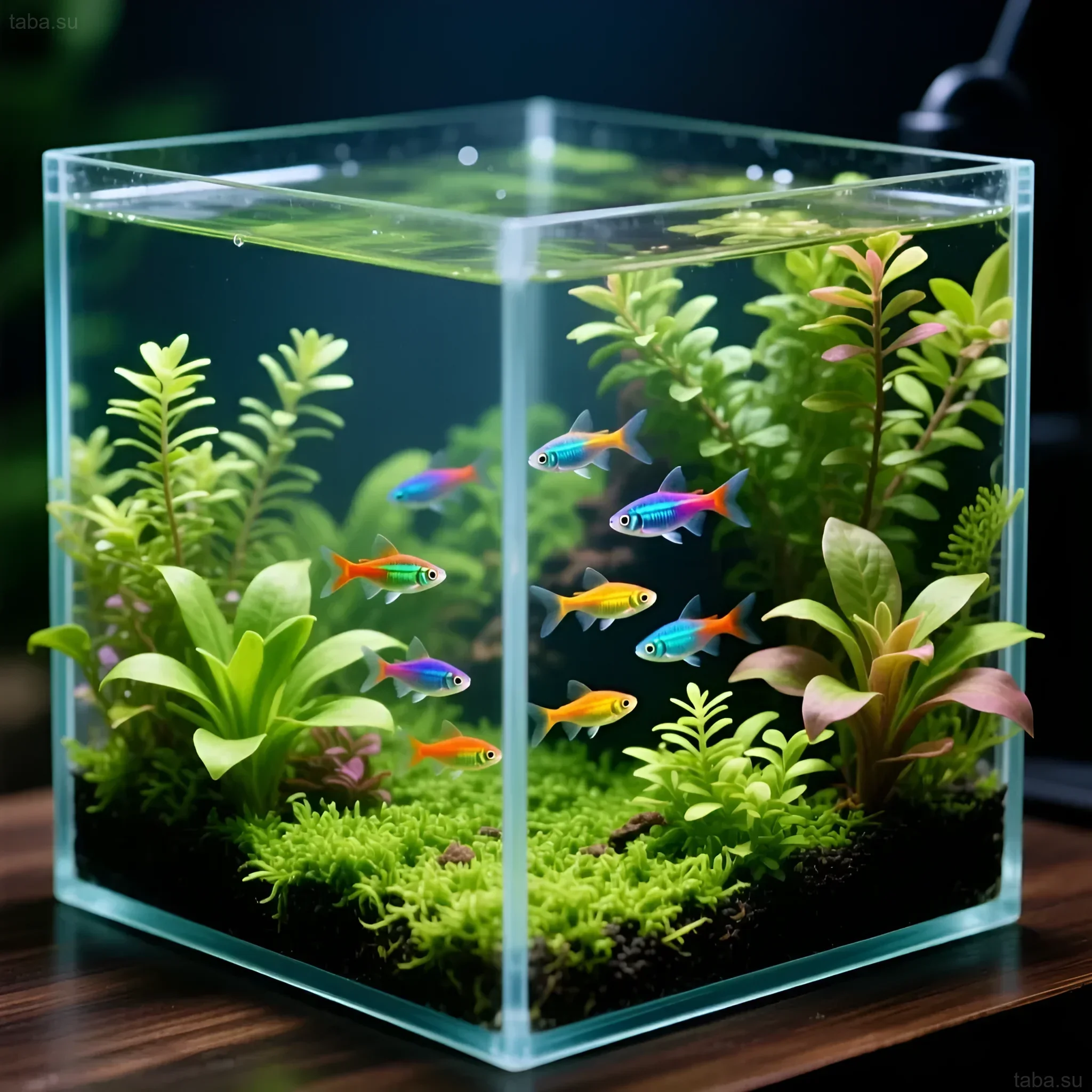
A cube aquarium is a tank whose geometry is close to an ideal cube. While traditional aquariums are usually rectangular (length significantly exceeding width and height), a cube strives for a 1:1:1 proportion. The term “Nano Cube” is often used for aquariums with a volume of up to 60 liters.
The popularity of the cubic shape is due to several key factors:
- Compactness: Nano cubes easily integrate into interiors, taking up minimal space on a desk, shelf, or nightstand.
- Aquascaping Aesthetics: The cubic shape is ideal for creating impressive underwater landscapes where depth and vertical elements play a key role.
- Focus on Details: The small volume allows the aquarist to focus on the quality of the design, using expensive or rare decorative elements and plants.
- Ready-made Kits: Many manufacturers (e.g., Dennerle, Tetra) offer ready-made “Nano Cube” kits that include all necessary equipment, simplifying the start for beginners.
Typical Nano Cube Sizes (Volume):
- 10–20 liters: Ultra-nano, ideal for shrimp and snails.
- 30 liters: The most popular size for creating a complete nano biotope.
- 60 liters: The maximum size still considered “nano,” allowing for small schools of fish.
Advantages of the Cube Aquarium: Compactness and Aesthetics in One
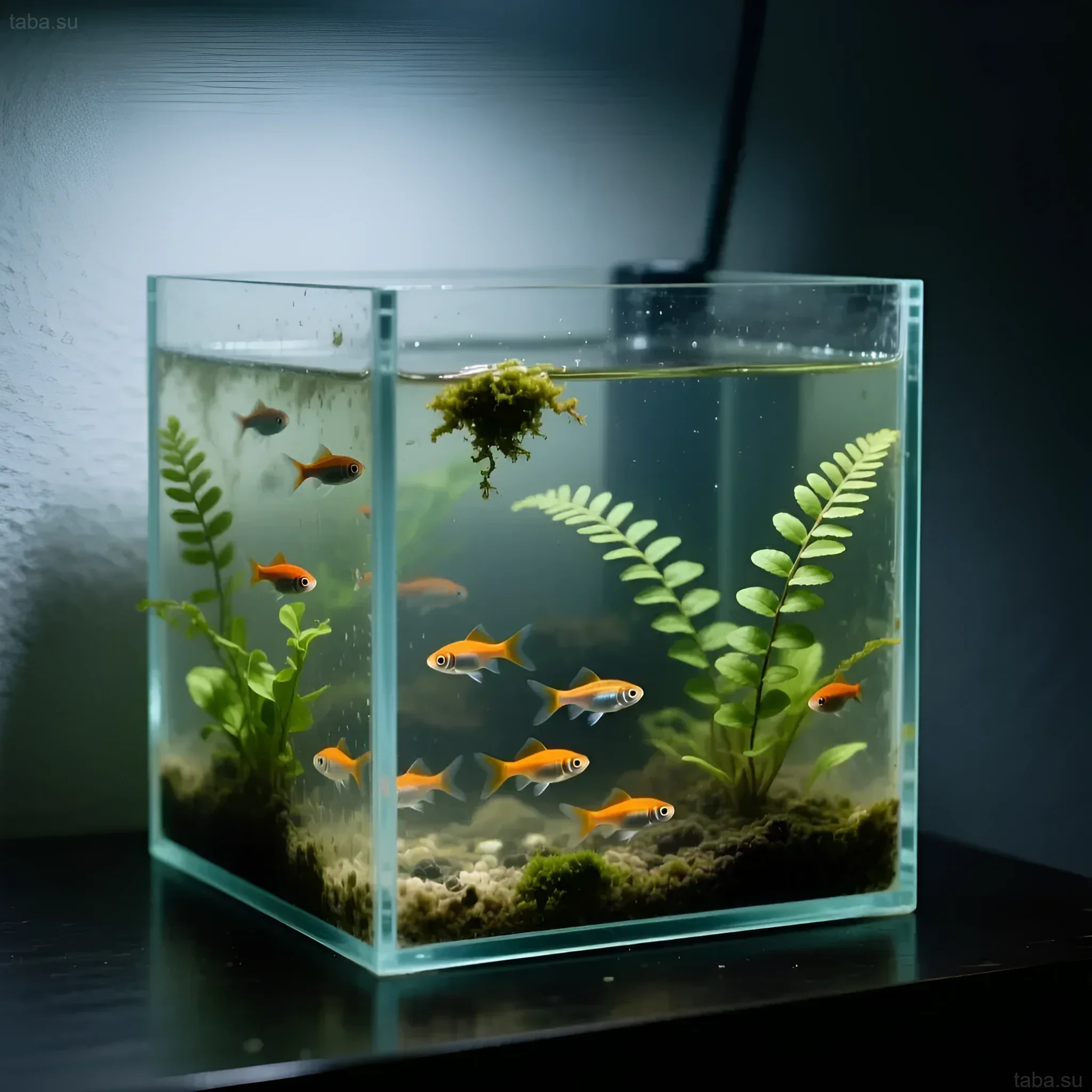
Choosing a cubic shape offers a number of unique advantages that are not always available with standard rectangular tanks.
Design Advantages
The cube provides the aquascaper with the opportunity to create a deep and multi-layered landscape, using vertical compositions and the “endless space” effect.
- Increased Depth: Equal width and length create excellent perspective. This is critically important when using the “golden ratio” technique and creating the illusion of a large space (e.g., when imitating a mountain landscape).
- 360-Degree View: If the cube is placed in an open area, it can serve as a central interior element, visible from all sides.
- Vertical Zoning: The height of the cube allows for effective use of tall plants (e.g., Rotala rotundifolia) and driftwood that extends upwards, which is impossible in low aquariums.
Practical Advantages
- Space Saving: A cube requires minimal installation space. It’s an ideal choice for offices, small apartments, or as an additional aquarium.
- Lower Setup Costs: Less substrate, decor, and generally less powerful equipment (though specialized) are needed.
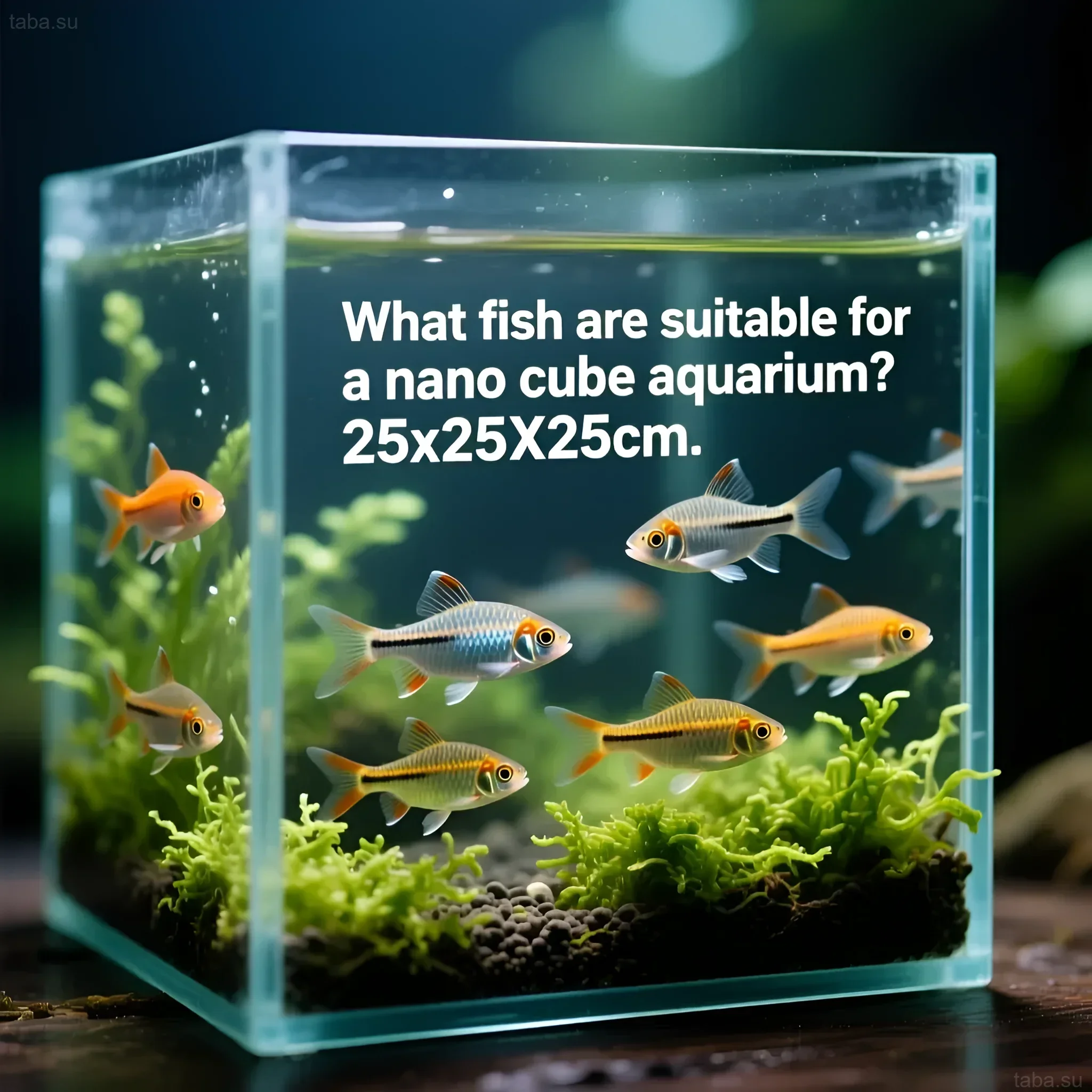
- Ideal for Specific Inhabitants: Cubes are excellent for keeping invertebrates and very small fish species: Cherry Shrimp (Neocaridina davidi), Otocinclus (Otocinclus affinis), or Dwarf Rasboras (Boraras maculatus).
Disadvantages of the Cube Aquarium: Limitations and Difficulties to Be Aware Of
Despite their aesthetic appeal, the cubic shape and small volume impose serious limitations, especially for beginner aquarists.
Stability and Biology Issues
The biggest disadvantage of nano aquariums is their low stability. The smaller the water volume, the faster its parameters change.
- Rapid Parameter Fluctuations: Sharp changes in temperature, pH, or nitrate concentration occur much faster than in a 200-liter aquarium. The slightest feeding error can lead to an ammonia spike.
- Limited Surface Area: If the aquarium’s width and length are equal, the water surface area, through which gas exchange (oxygen saturation and CO₂ release) occurs, may be insufficient for a dense population.
- Risk of Overheating/Overcooling: The small volume reacts quickly to room temperature, especially in summer.
Stocking Limitations
- Difficulty in Fish Selection: Most popular aquarium fish (e.g., angelfish, large tetras, goldfish) are strictly unsuitable for cubes under 60 liters.
- Need for Frequent Water Changes: To maintain stability, water changes (up to 20–30% of the volume) must be done more often – every 3–5 days, instead of weekly.
- Maintenance Difficulties: A deep cube with a small width can be inconvenient for cleaning the bottom and back walls, especially if the aquarist has short arms.
Cube Aquarium Equipment: Choosing Filters, Lighting, and Heaters
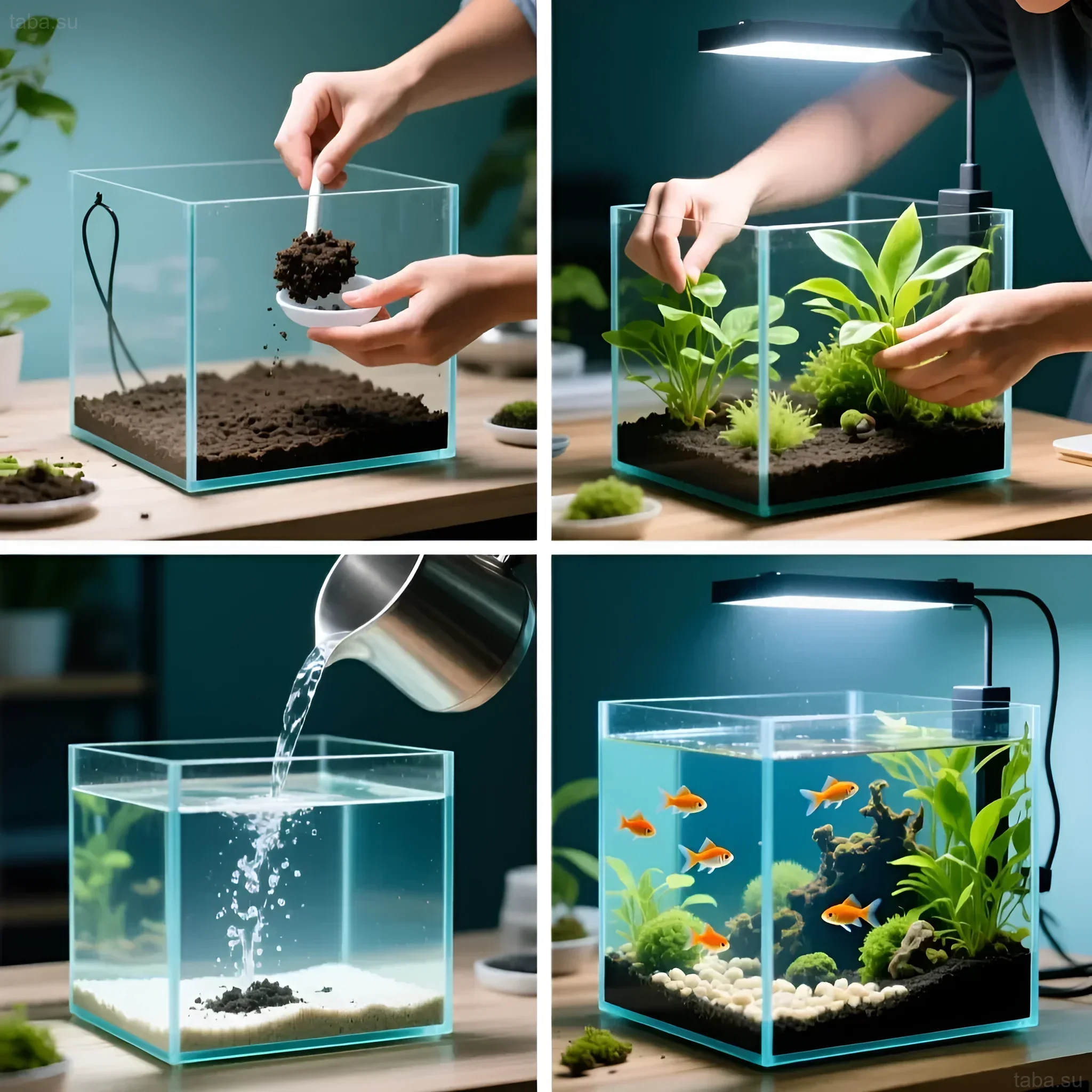
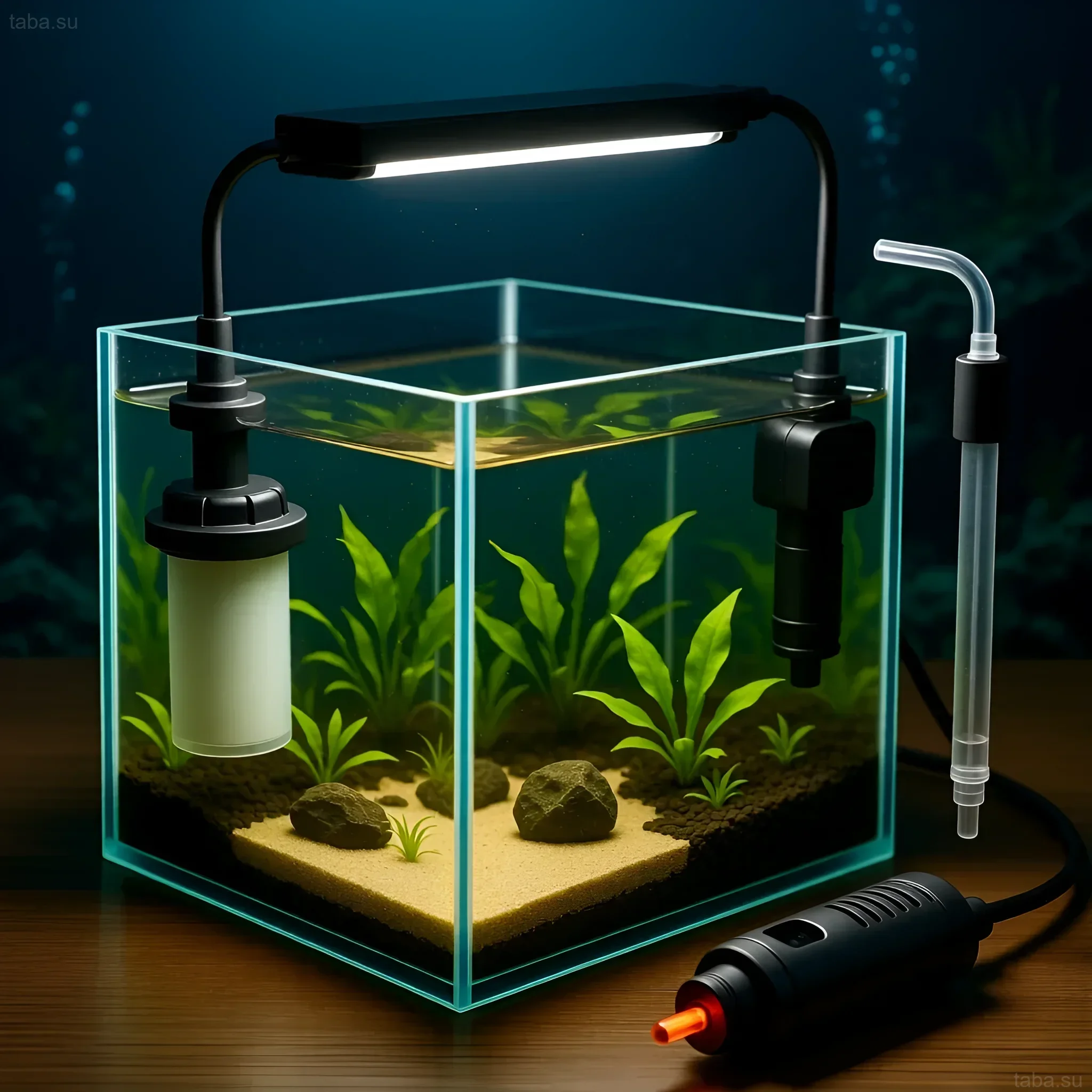
Choosing equipment for a Nano Cube requires special attention, as it must be not only effective but also as compact as possible to avoid disrupting the aesthetic composition.
Filtration
In cubes, preference is given to small and quiet solutions.
- Hang-on-Back (HOB) Filters: An ideal choice. They save space inside, provide excellent aeration, and are easy to maintain. It’s important to choose models with adjustable flow to avoid creating a “tsunami” in a small volume.
- Internal Nano Filters: Good for mechanical filtration, but can take up too much space and spoil the view. Sponge filters safe for shrimp are recommended.
- External (Canister) Filters: Rarely used, only for cubes of 60+ liters where high biological filtration is required.
Lighting
Since cubes are often used for aquascaping, the lighting should be powerful and suitable for growing demanding plants.
- LED Lights: The most popular. They are compact, do not heat the water, and provide the necessary spectrum (often with RGB adjustment).
- Mounting Type: Bracket or “leg” lights that attach directly to the glass edges are preferred, freeing up space above the aquarium.
Heating
Due to rapid temperature fluctuations, a heater in a cube is essential, even if the room is warm.
- Wattage: Low-wattage heaters (10–25 W) or special nano heaters are chosen, which are often fully submersible in the substrate or hidden behind decorations.
Setting Up and Decorating a Cube Aquarium: A Step-by-Step Guide for Beginners

Setting up a cube requires careful preparation to minimize risks associated with instability.
Step 1: Choosing Substrate and Soil
In nano aquariums, active nutrient substrates (soil) are often used, which help stabilize water parameters and provide nutrients for carpeting plants (e.g., Eleocharis parvula).
- A nutrient base layer is placed on the bottom (optional).
- On top, the main substrate (1–3 mm fraction) is added in a layer of 4–6 cm.
Step 2: Hardscape
In a cube, hardscape (rocks and driftwood) plays a key role. Due to the equal height and width, you can create a vertical composition or an “island” (Iwagumi or Ryuboku styles).
- Use driftwood that extends upwards, creating the illusion of a “forest.”
- Rocks should be proportional to the volume. Avoid excessively large elements that will “eat up” all the space.
Step 3: Planting
Preference is given to slow-growing and nano species that do not require frequent trimming.
- Foreground: Carpeting plants (Hemianthus callitrichoides “Cuba”, Marsilea hirsuta).
- Midground: Epiphytes attached to driftwood and rocks (Anubias nana (Anubias barteri nana), Microsorum (Microsorum pteropus)).
- Background: Slow-growing tall plants (e.g., Ludwigia repens).
Step 4: Filling with Water and Starting the Cycle
Fill with water very slowly to avoid disturbing the substrate. The nitrogen cycle (starting biological filtration) in a nano cube takes the standard 3–6 weeks. Never add fish immediately!
Cube Aquarium Care: Maintaining Cleanliness and Ecosystem Health
Caring for a nano cube is more demanding in terms of regularity than caring for larger aquariums. Experts recommend adhering to the principle: “less is more, but more often.”