
Dinoflagellates, or simply “Dinos,” are one of the most difficult and unpleasant phenomena faced by marine reef aquarium owners. These microscopic organisms can transform a thriving ecosystem into a chaotic, brown landscape in a matter of days. Unlike more harmless algae, dinoflagellates can release potent toxins that pose a serious threat to corals, fish, and invertebrates. Understanding their biology and choosing the right strategy to combat them is key to saving your aquarium.
Dinoflagellates in a Marine Aquarium: What Are They and Why Are They Dangerous?

Dinoflagellates (Dinoflagellata) are a diverse group of single-celled protists that possess two flagella, enabling them to move actively through the water column. While many of them, such as zooxanthellae, are coral symbionts, other species are aggressive pathogens capable of rapid exponential growth.
The danger of dinoflagellates to an aquarium lies in several factors:
- Toxicity: Some species, like Ostreopsis or Gambierdiscus, release potent neurotoxins that can cause stress, illness, and even death in fish, as well as poisoning corals.
- Coral Suppression: Dinoflagellates form dense, slimy mats that physically suffocate and irritate corals, leading to tissue necrosis (RTN/STN).
- Resilience: Unlike cyanobacteria, dinoflagellates can enter dormant stages (cysts) and survive unfavorable conditions, making them very resistant to standard treatment methods.
Key representatives found in aquariums:
- Prorocentrum: Often form brown, bubbly coatings.
- Amphidinium: Tend to form thick, gelatinous masses.
- Ostreopsis: Known for their high toxicity and tendency to form “threads” of bubbles.
How to Identify Dinoflagellates: Symptoms and Visual Signs
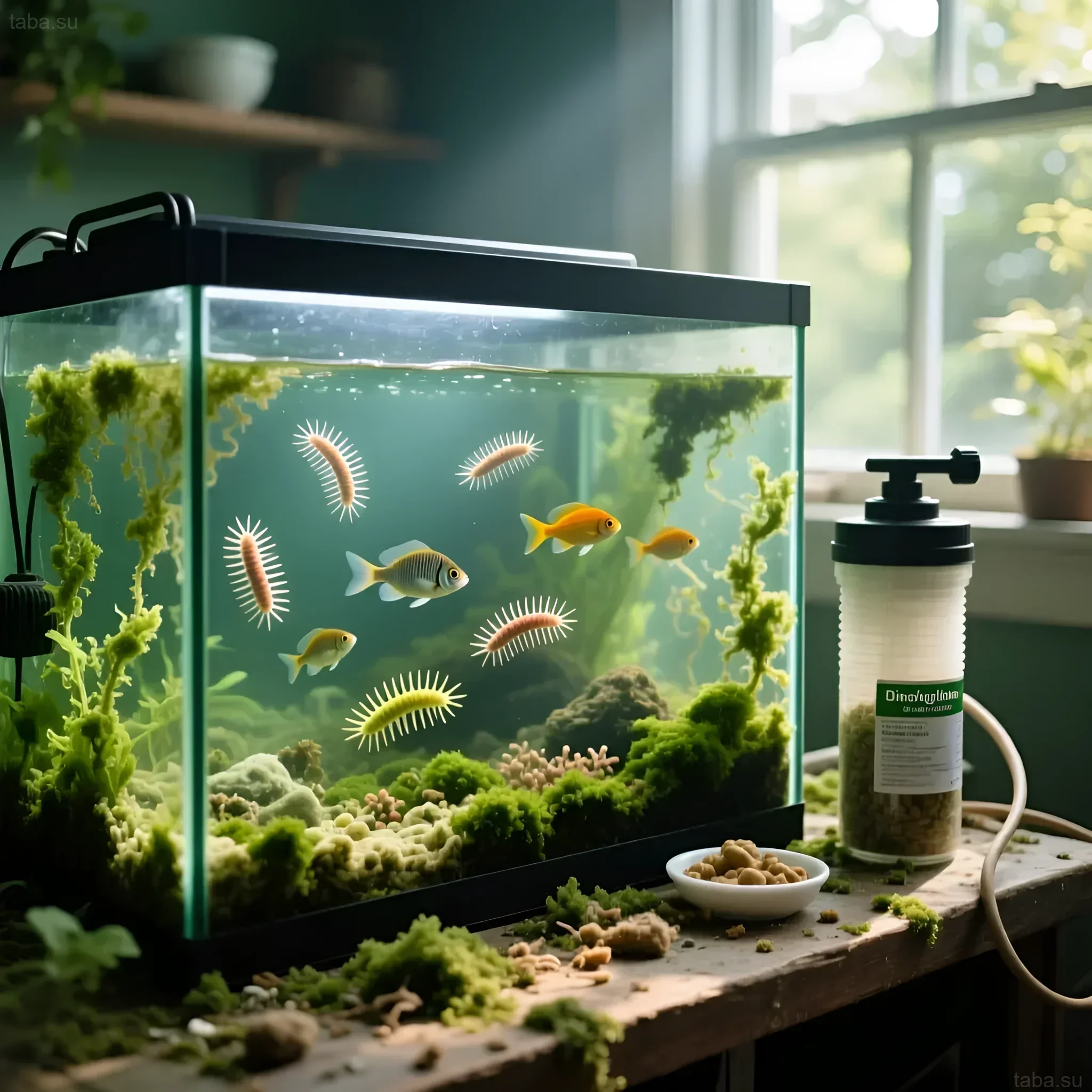
Visually identifying dinoflagellates is the first step in combating them, but it’s not always reliable. Dinos are often mistaken for cyanobacteria or diatoms. The main difference is their behavior.
Visual Characteristics of Dinos
- Color and Texture: From light brown to dark brown or rusty. Often have a glossy, “slippery,” or slimy appearance.
- Bubbles: A characteristic sign is the accumulation of small air bubbles trapped within the slimy mat. These bubbles often make the coating resemble a spiderweb.
- Behavior: During the day, when the lights are on, the coating usually covers the sand and rocks tightly. At night, when the lights are off, many dinoflagellate species detach from the substrate and rise into the water column, as they are motile organisms. In the morning, they settle back down.
Distinguishing from Other Problems
Comparison with Cyanobacteria (Cyano):
- Cyano are dark red or burgundy, sometimes blue-green.
- Cyano usually form dense, easily removable sheets that do not rise into the water at night.
- Cyano smell “earthy” or “swampy”; Dinos have no distinct odor.
Confirming the Diagnosis:
The only reliable way to distinguish Dinos from other growths is through microscopy. A sample of the coating under 400x magnification will reveal characteristic cell shapes with two flagella. If you see cells resembling soccer balls, lemons, or having horned protrusions, they are definitively dinoflagellates.
Factors Contributing to Dinoflagellate Blooms: Why Do ‘Dinos’ Appear in Your Aquarium?
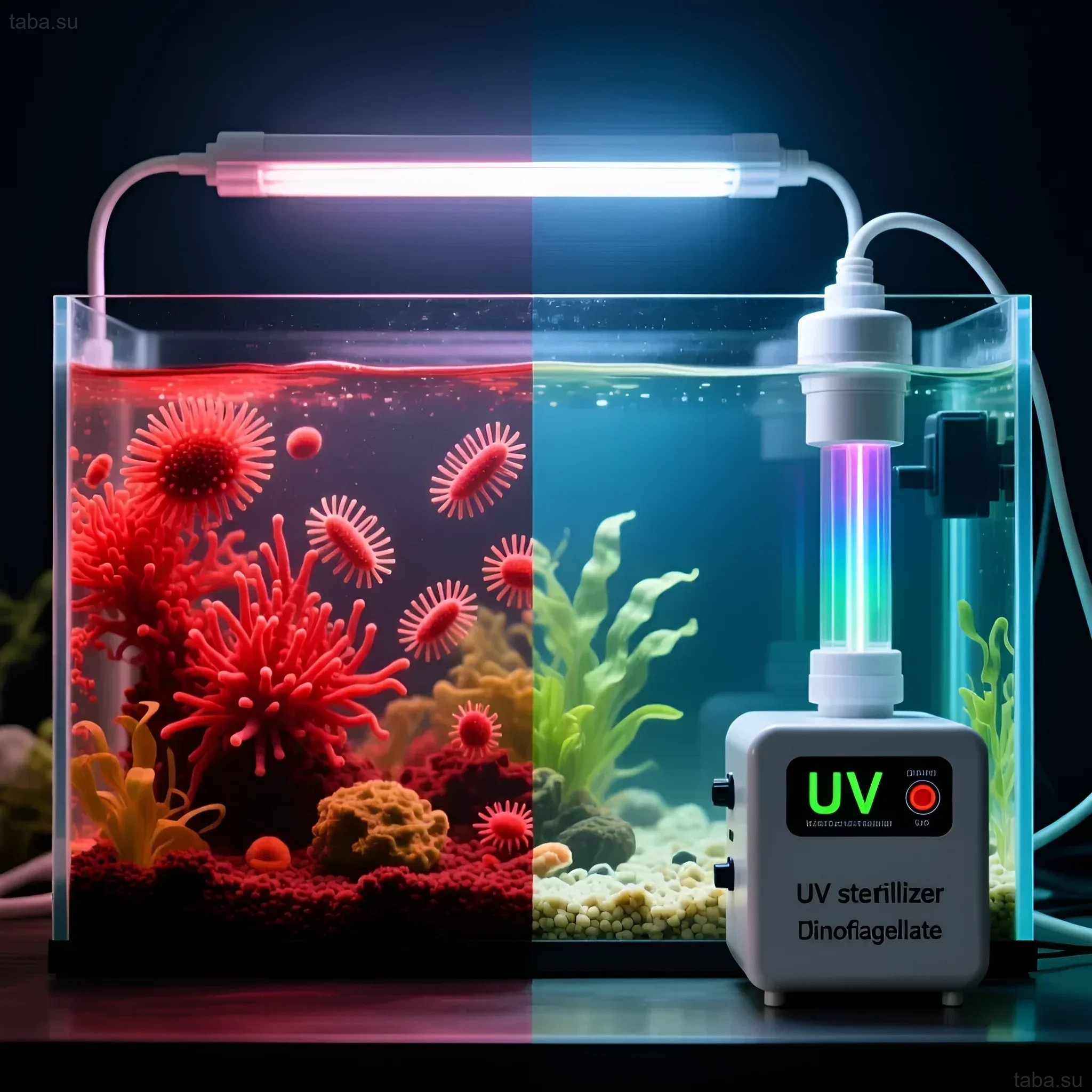
Dinoflagellate blooms rarely occur in old, stable systems. They most often affect new aquariums or those that have recently undergone significant stress. The primary causes are related to imbalances in nutrient levels and microflora.
ULNS Syndrome (Ultra-Low Nutrient System)
This is the most common trigger. Although aquarists strive for minimal nitrate (NO3) and phosphate (PO4) levels, completely zeroing them out (especially phosphates) creates ideal conditions for Dino growth. Dinoflagellates can utilize organic phosphorus and nitrogen, while competitors (beneficial bacteria and macroalgae) are deprived of essential inorganic nutrients.
Key Risk Factors:
- Unstable Nutrients: Sharp spikes in PO4/NO3 or prolonged maintenance of PO4 at 0.00 ppm.
- High DOC (Dissolved Organic Carbon): Accumulation of dissolved organic carbon (from overfeeding, dead organisms, insufficient skimming) serves as food for many Dino species.
- Immature Substrate: In new aquariums where the sand is not yet colonized by sufficient beneficial microfauna (copepods, amphipods), Dinos can multiply unchecked.
- Insufficient Circulation: Stagnant zones, especially on the bottom, promote Dino settling and attachment.
- Incorrect Lighting: Old lamps or incorrect spectrum can contribute to the growth of undesirable protists.
Methods for Combating Dinoflagellates: From Simple to Complex
Combating dinoflagellates requires a comprehensive, multi-stage approach. There is no single “magic” solution, as different Dino species react differently to treatment. Before starting treatment, it is essential to accurately identify the Dino species.
Stage 1: Mechanical Removal and Stabilization
- Siphoning: Siphon the coating from sand and rocks daily. Important: Dinos should not be returned to the aquarium, so use a fine-mesh filter sock on the overflow, which needs regular cleaning.
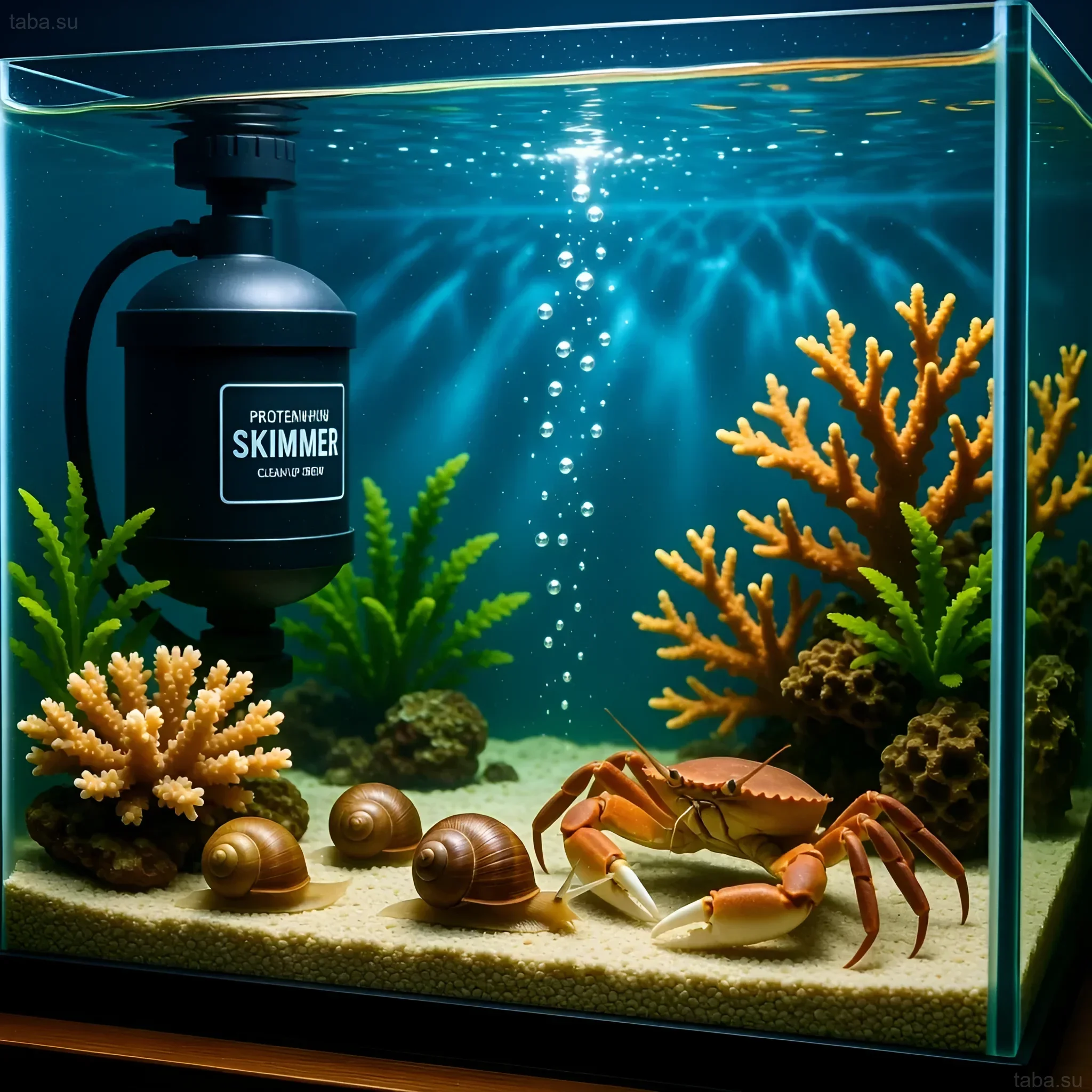
- Increased Skimming: Maximize the performance of your protein skimmer to remove as much organic matter (DOC) and toxins released by Dinos as possible.
- Carbon and GFO: Use fresh activated carbon to absorb toxins and GFO (granular ferric oxide) to control phosphates if they are too high (but avoid zeroing them out).
Stage 2: Light and Chemical Suppression
1. Complete Blackout:
This method is effective against many photosynthetic Dinos. The aquarium is completely darkened for 3–5 days. Aeration must be provided, as a massive die-off of Dinos can cause a sharp drop in oxygen levels. Blackout should be accompanied by:
- Daily pH monitoring (Dinos cause pH to drop).
- Removal of the coating before starting the blackout.
- Use of a UV sterilizer (see below).
2. UV Sterilization:
A UV sterilizer is one of the most effective tools. Since Dinos are motile organisms and rise into the water column at night, UV radiation destroys planktonic forms, preventing their reproduction. The UV should run 24/7 throughout the entire treatment period.
3. Chemical Treatment (Hydrogen Peroxide):
Treatment with hydrogen peroxide (H₂O₂) is a powerful but risky method. It is used at a dosage of 0.5–1.0 ml per 40 liters of water. Peroxide breaks down into water and oxygen, killing Dinos and cyano. Application must be cautious, as it can harm corals and invertebrates if the dosage is exceeded.
Stage 3: Restoring Nutrient Balance
If Dinos appeared due to ULNS, it is necessary to artificially raise nitrate levels (to 3–5 ppm) and phosphate levels (to 0.03–0.05 ppm). This can be done by dosing inorganic salts (e.g., potassium nitrate for nitrates) or by controlled increases in feeding.
Dinoflagellate Prevention: How to Prevent ‘Dinos’ from Appearing in Your Aquarium
The best strategy against Dinos is prevention. Stability and biodiversity are the main defense mechanisms of the system.
Maintaining Stability and Balance
- Avoid ULNS: Do not aim for absolute zero nitrates and phosphates. Maintain them at a minimal but detectable level to support a competitive microflora and macroalgae.
- Organic Matter Control: Perform regular water changes. Use a quality protein skimmer and change activated carbon in a timely manner to remove DOC.
- Quarantine: All new corals and live rock should undergo quarantine. Dinos often enter the system with imported live materials.
Biological Control
Biological competition is crucial, as Dinos are not a preferred food source for most herbivorous fish.
- Refugium: Set up a refugium with macroalgae (e.g., Chaetomorpha) and strong lighting. Macroalgae actively consume nutrients, competing with Dinos.
- Copepods and Microfauna: Maintain a healthy population of detritivores (e.g., Tisbe or Apocyclops copepods). Some copepod species can consume Dinos or compete with them for food.
Dinoflagellates and Your Pets: Impact on Fish, Corals, and Invertebrates

The toxicity of dinoflagellates is not a theoretical threat but a real risk to marine inhabitants. The severity of the consequences depends on the Dino species and the density of their population.
Impact on Corals
Corals suffer first. The slimy Dino mats physically block light and cause irritation, forcing corals to excrete large amounts of mucus. This leads to energy depletion and subsequent tissue necrosis. Small-polyp stony corals (SPS) are particularly vulnerable.
Impact on Fish and Invertebrates
Toxins entering the water can cause the following symptoms in fish:
- Rapid breathing and difficulty absorbing oxygen.
- Reddening of gills.
- General lethargy, refusal to eat.
During an active Dino bloom, it is crucial to monitor fish closely. If severe stress or mortality is observed, a large water change (up to 30%) should be performed immediately to reduce toxin concentration.
FAQ: Most Common Questions About Dinoflagellates
In this section, experts from taba.su answer the most pressing questions related to combating Dinos.
1. How do Dinos differ from diatoms?
Diatoms appear in new aquariums, are brown in color, and disappear on their own when silicate is depleted. They are easily wiped away and do not form slimy mats. Dinos are motile, form slime, and do not disappear without active intervention.
2. Can Dinos cause a pH drop?
Yes. Dinoflagellates actively consume CO₂ during the day, but at night, when they die off in large numbers or enter a respiratory phase, they can release a large amount of CO₂, leading to a sharp pH drop, especially in closed systems. This exacerbates coral stress.
3. Is it safe to use chemical algaecides?
Most general algaecides are not designed for Dinos and can be extremely dangerous to reef systems. The use of specialized products must be accompanied by strict dosage control and constant monitoring of water parameters, as a massive Dino die-off can cause ammonia and nitrite spikes.
4. Should infected sand be discarded?
If the sand is heavily infested and you have been fighting Dinos for several months, complete replacement may be justified. Dinos form cysts in the substrate that can be a source of new outbreaks. If replacement is not possible, the sand must be siphoned daily.
Interesting Facts About Dinoflagellates: From Science to Aquaristics
These microorganisms, despite their harmfulness in aquariums, are among the most amazing life forms on the planet.
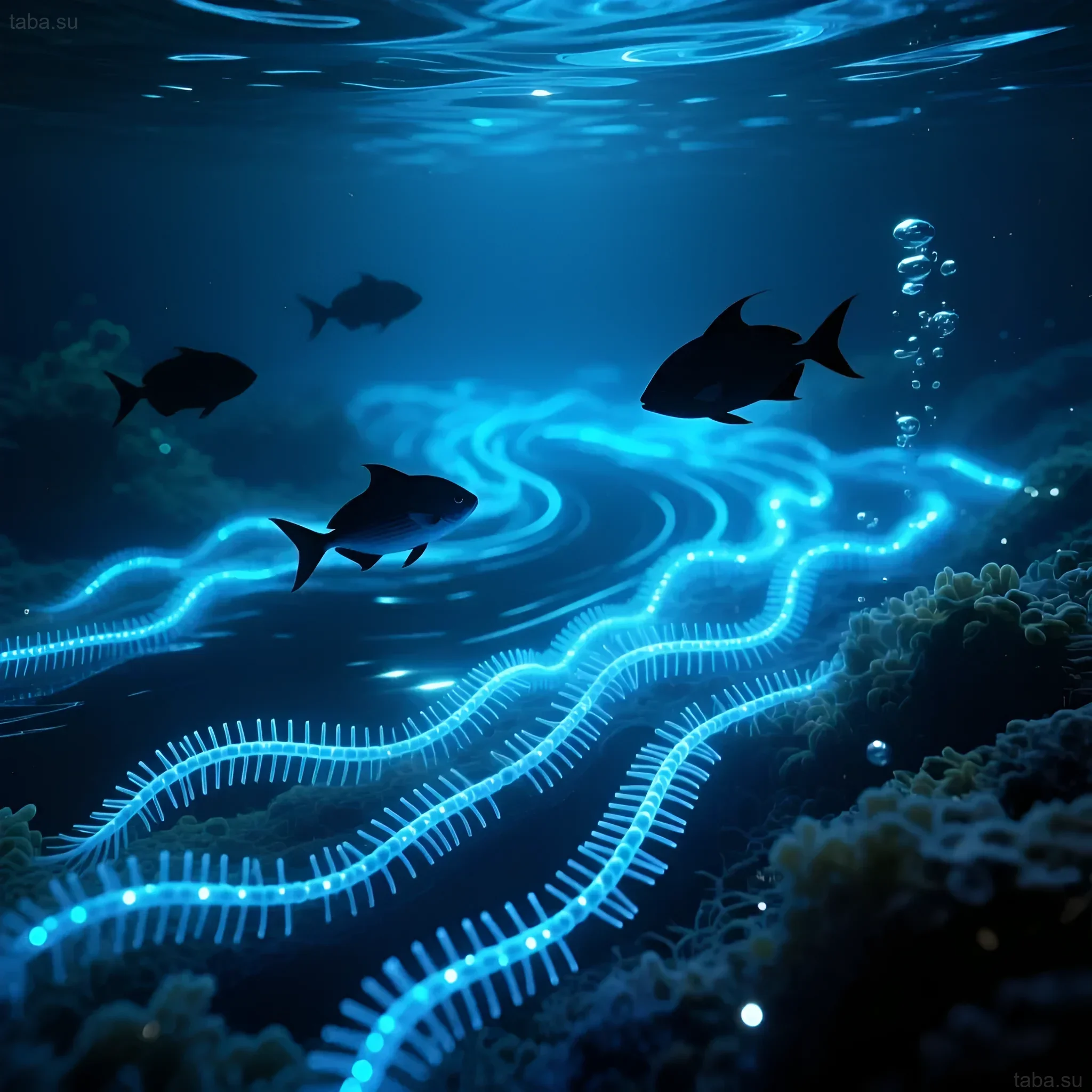
- Glowing Ocean: Some dinoflagellate species, such as those in the genus Noctiluca, are responsible for the phenomenon of bioluminescence in the ocean. When mechanically disturbed (waves, boat movement), they emit blue light.
- Coral Engines: Symbiotic dinoflagellates, known as zooxanthellae (Symbiodinium), live within coral tissues and provide up to 90% of their energy needs through photosynthesis.
- Red Tides: Massive blooms of certain toxic dinoflagellates in nature cause so-called “red tides” (Harmful Algal Blooms, HABs), which lead to mass mortality of marine fauna.
- Resilience: Due to their ability to form cysts, dinoflagellates can survive in a dry state or at extreme temperatures for decades until conditions become favorable for germination.