
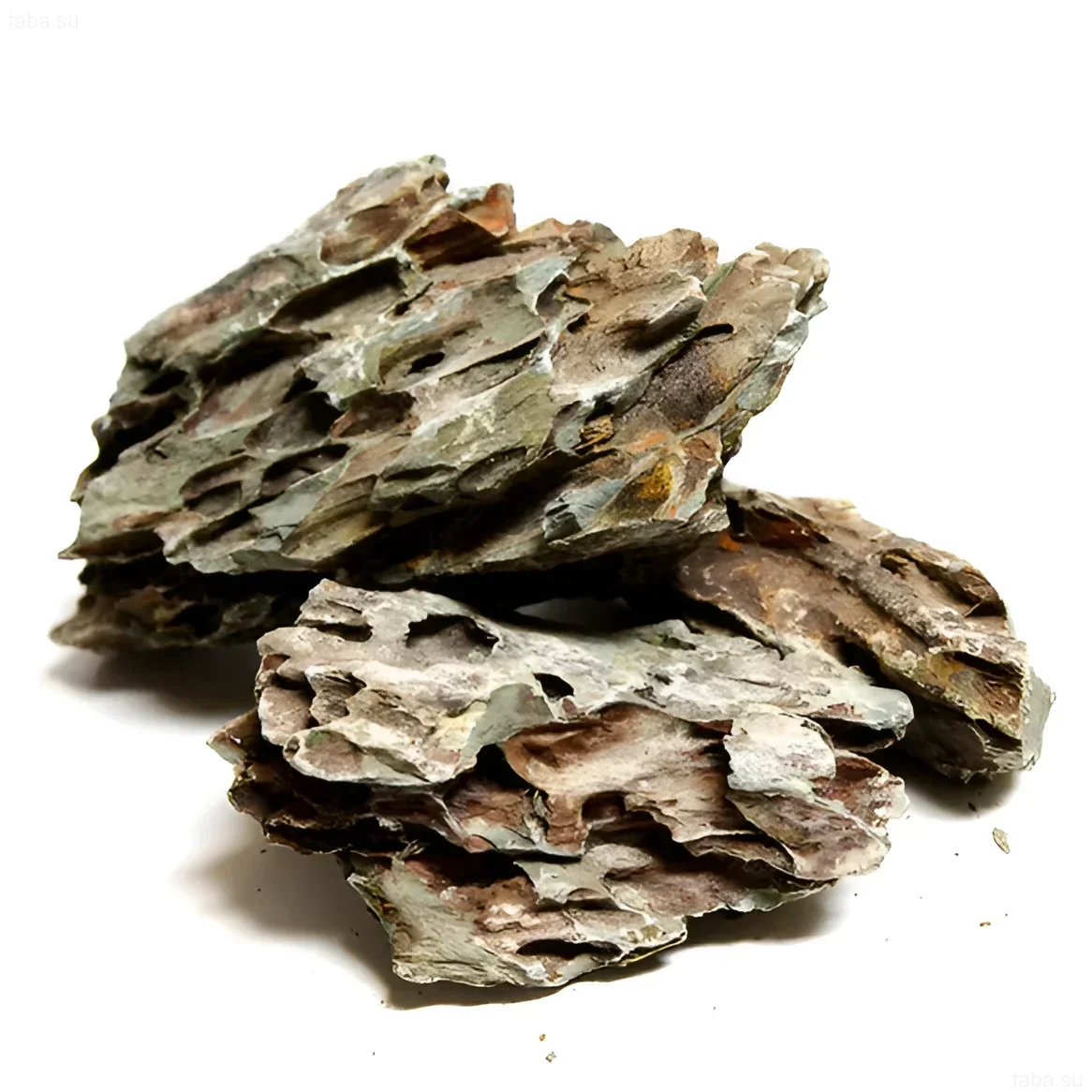
Dragon Stone, known internationally in aquascaping as Dragon Stone or Ohko Stone, is rightfully considered one of the most sought-after and visually impressive natural materials for decorating freshwater aquariums. Its unique texture, resembling dragon scales or time-worn rock, allows for the creation of deep and natural compositions that mimic terrestrial landscapes.
Dragon Stone (Ohko Stone): An Introduction to a Unique Aquascaping Element
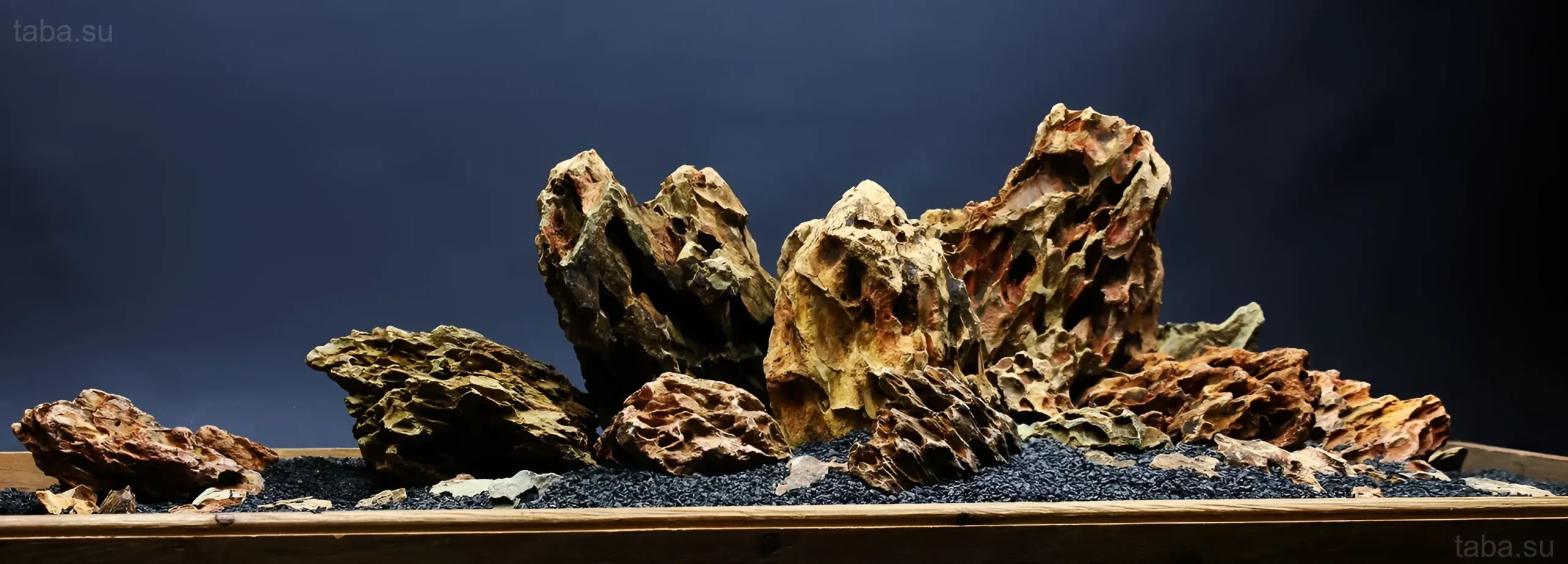
Ohko Stone is not just a decorative element; it’s a key tool in the aquascaper’s hands, allowing for the addition of dynamism and age to a composition. Its popularity is due not only to its aesthetics but also to its chemical neutrality, making it safe for most aquarium inhabitants.
Key Visual Characteristics of Dragon Stone:
- Color: Varies from light beige and yellowish-brown to dark olive. In water, the color usually becomes more saturated and darker.
- Texture: Deep, uneven pores, cracks, and winding channels that perfectly imitate natural erosion.
- Shape: Rounded or angular fragments with numerous “holes” and indentations that serve as excellent hiding places for small fish and shrimp (e.g., cherry shrimp Neocaridina davidi).
Thanks to its porous structure, Ohko Stone is excellent for attaching mosses and small ferns, such as Microsorums (Microsorum pteropus) or Bucephalandras (Bucephalandra sp.), allowing for maximum naturalness in the design.
Dragon Stone: Geological Origin and Characteristics
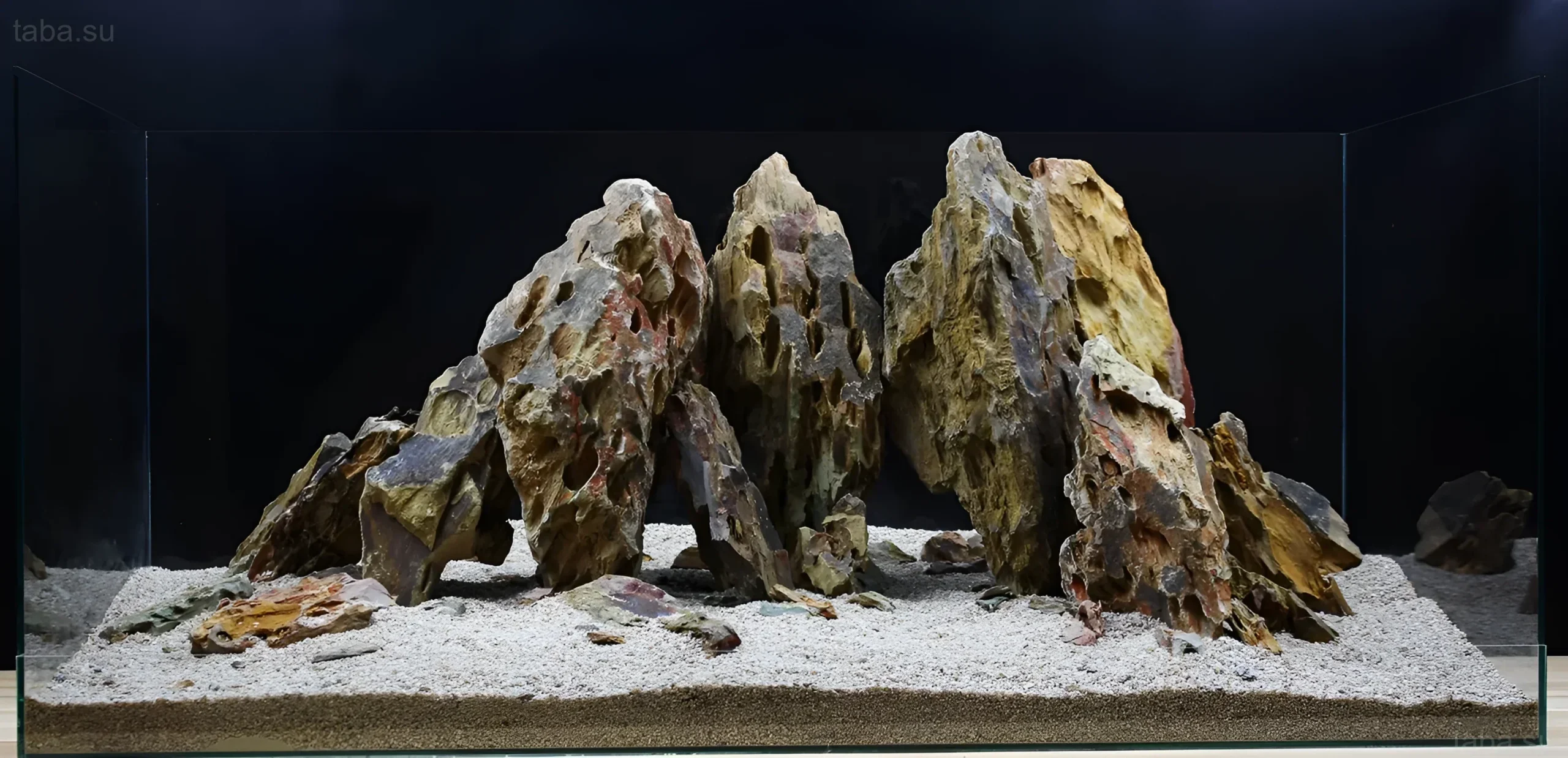
Geologically, Dragon Stone is a type of clay shale or sandstone that has undergone significant wind and water erosion. The origin of most commercially available Dragon Stones is linked to Asian countries, particularly Japan, China, and Vietnam.
Key Geological Features:
- Composition: Primarily silica and clay. This makes the stone relatively light and porous.
- Neutrality: Unlike calcareous rocks (e.g., grey stone or some types of lava), Ohko Stone contains almost no calcium carbonates, meaning it does not increase water hardness (GH/KH) or affect pH levels.
- Porosity: High porosity provides a large surface area for the colonization of beneficial nitrifying bacteria. This contributes to better biological filtration in the aquarium.
It is important to note that it is precisely the clay composition and porous structure that require careful preparation of the stone before submerging it in the aquarium, which will be discussed in detail later.
Choosing Dragon Stone for Your Aquarium: What to Look For?

The success of an aquascape largely depends on the correct selection and scaling of stones. When purchasing Dragon Stone, you should be guided not only by aesthetic preferences but also by practical considerations.
Selection Criteria:
- Scale and Proportion (Golden Ratio): To create a realistic composition, stones of different sizes must be used. Typically, one large “parent” stone (Oyaishi), several medium ones (Fukuishi), and many small fragments (Suteishi and Soeishi) are chosen.
- Texture and Detail: Look for stones with deep, well-defined grooves. Good Ohko Stone should have many natural indentations that can later be used for planting.
- Orientation: Choose stones that have a clear directional flow of lines. This will help create a sense of movement and depth in the composition.
- Presence of Clay: Pores of the stone often contain dense clay or sand clumps. The fewer such inclusions, the easier the cleaning process will be.
- Absence of Metal Inclusions: Although rare, ensure the stone has no traces of rust or metallic inclusions that could be toxic to fish and invertebrates.
For larger aquariums (from 200 liters), it is recommended to purchase at least 15–20 kg of stone to have a sufficient supply for creating a multi-layered and detailed landscape.
Preparing Dragon Stone for Use: Cleaning and Treatment
The most crucial stage of working with Dragon Stone is its preparation. Due to its high porosity and the presence of clay inclusions, the stone can heavily pollute the water if not treated properly.
Step-by-Step Preparation Guide:
1. Preliminary Cleaning
- Rough Removal: First, remove large pieces of clay and loose sand that easily break off.
- High-Pressure Washing: Use a strong stream of water (e.g., a garden hose or shower) to wash away surface dirt.
2. Removing Clay Inclusions
Clay trapped in deep pores is the main problem. If not removed, it will slowly leach into the aquarium, causing cloudiness.
- Mechanical Cleaning: Use a stiff toothbrush, a metal scraper, or, preferably, toothpicks and thin metal tools to pick out clay from the narrowest crevices.
- Soaking: Soak the stones in a bucket of clean water for 24–48 hours. Change the water periodically and scrub the stones.
- Using Acid (Optional and with Caution!): Some aquascapers use a weak solution of citric or acetic acid (5%) to dissolve remaining clay and carbonates (if present). However, this method requires thorough rinsing afterward.
3. Sterilization (Boiling)
Boiling is not strictly mandatory if the stone was purchased from a reliable supplier, but it guarantees the destruction of any spores, pathogens, or unwanted organisms that may have entered the pores.
- Place the stones in a large metal container.
- Fill with water and boil for 15–30 minutes.
- After boiling, let the stones cool completely.
Caution: Boiling can cause stones to crack if they contain internal air pockets or if they are cooled too quickly. Handle hot stones with care.
4. Final Testing
After all procedures, soak the Dragon Stone in clean water for several days. If the water remains clear, the stone is ready for use.
Dragon Stone in Aquascaping: Ideas and Composition Examples
The unique texture of Ohko Stone makes it ideal for creating various aquascaping styles. It is especially popular for imitating mountain landscapes and deep canyons.
Popular Styles and Techniques:
1. Imitation of Mountain Peaks (Iwagumi)
While the traditional Iwagumi style often uses smoother stones (e.g., Seiryu), Dragon Stone allows for the creation of a more dramatic and “jagged” mountain range. Use small fragments to create realistic scree at the base of the main stones.
2. “Roots and Rocks” Effect (Ryoboku/Nature Aquarium)
Combining Dragon Stone with driftwood (e.g., Red Moor Wood or Manzanita) allows for the creation of a landscape where tree roots seem to entwine old rocks. The stone’s pores are ideal for attaching mosses, which will mimic moss growing on rocks.
3. Creating Caves and Hiding Places
The natural holes and cavities in Ohko Stone are ready-made hiding places. When arranging the stones, try to create small tunnels and caves that will serve as shelters for bottom-dwelling fish (e.g., Corydoras Corydoras sp.) or shrimp.
Practical Tips for Placement:
- Depth: Place stones on a substrate or protective mesh to avoid damaging the aquarium bottom.
- Angle: To create perspective, angle the stones towards the center or focal point.
- Fixation: If the structure is tall or unstable, use aquarium silicone or cyanoacrylate glue (super glue) to fix the stones.
The Impact of Dragon Stone on Water Parameters and Fish Health
One of the main advantages of Ohko Stone is its chemical inertness. This is critically important for keeping species sensitive to hardness and pH, such as Neon Tetras (Paracheirodon innesi) or Discus fish (Symphysodon sp.).
Impact on Water:
As mentioned, clean Dragon Stone should not increase either carbonate (KH) or general (GH) water hardness. However, if the stone was poorly cleaned, residual clay can temporarily cause the following effects:
- Cloudiness: Fine clay suspension can cause milky water cloudiness, which usually subsides after several water changes and filter operation.
- Nutrients: Clay may contain trace amounts of nutrients, which can sometimes cause a slight algae bloom in the initial startup phase.
Benefits for the Ecosystem:
The porous structure of Dragon Stone provides an ideal environment for:
- Bacterial Colonization: Creates a vast surface area for the development of beneficial nitrifying bacteria, improving biological filtration.
- Shelter: The stone’s cavities are ideal for spawning, as well as for hiding fry and small shrimp.
- Plant Growth: Mosses, such as Java Moss (Taxiphyllum barbieri), easily attach and grow in the crevices of Ohko Stone, creating a natural look.
FAQ: Answers to Frequently Asked Questions About Dragon Stone
1. Does Dragon Stone sink?
Yes, Ohko Stone sinks. Although it is lighter than many dense rocks (e.g., basalt), its density still exceeds that of water. It does not require additional weighting.
2. How to deal with algae that get into the pores?
The porous structure can become a place for algae accumulation (especially hair algae). To remove them, it is recommended to use the following methods:
- Mechanical Removal: Use a thin brush or a cotton swab dipped in hydrogen peroxide (H₂O₂) for spot treatment.
- Biological Control: Introduce Nerite snails (Neritina sp.) or Amano shrimp (Caridina multidentata), which actively clean stone surfaces.
3. Can Dragon Stone scratch aquarium glass?
Yes. The stone has sharp edges and corners. When installing or moving it in the aquarium, always be extremely careful to avoid scratching the glass. It is recommended to place stones on a layer of substrate or a special mat.
4. What is an alternative to Dragon Stone?
If Ohko Stone is unavailable or too expensive, consider alternatives that also have a porous and neutral structure:
- Lava Rock: Very porous, but usually has a more uniform dark color.
- Seiryu Stone: Beautiful, grey, but often increases water hardness (less neutral).
Interesting Facts About Dragon Stone (Ohko Stone)
The name “Ohko Stone” comes from the Japanese word “Ohko,” which means something like “yellow stone” or “stone resembling scales.” This name stuck due to its characteristic texture.
Little-Known Details About Dragon Stone:
- Uniqueness: It is almost impossible to find two identical Dragon Stones. Each fragment is the result of unique geological processes.
- Sculptural Material: In some regions of Asia, this type of rock was traditionally used not only for garden ponds but also for creating small decorative sculptures.
- Weight in Water: Due to its porosity, after prolonged immersion in water, the stone becomes significantly heavier as its pores fill with water and bacterial film.
Dragon Stone is an investment in the beauty and health of your aquarium. With proper preparation and skillful placement, it will become a central element that will delight the eye for many years.