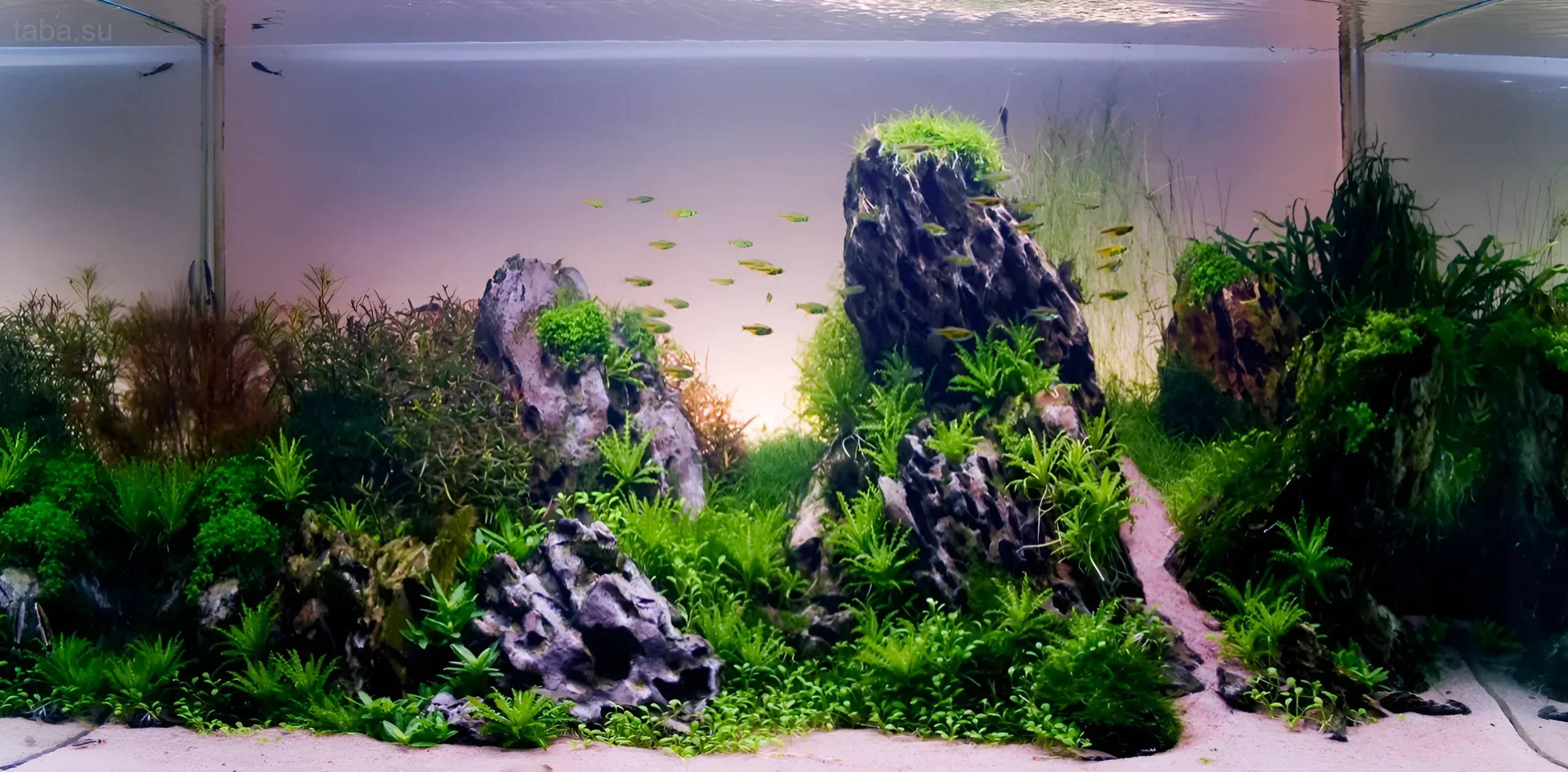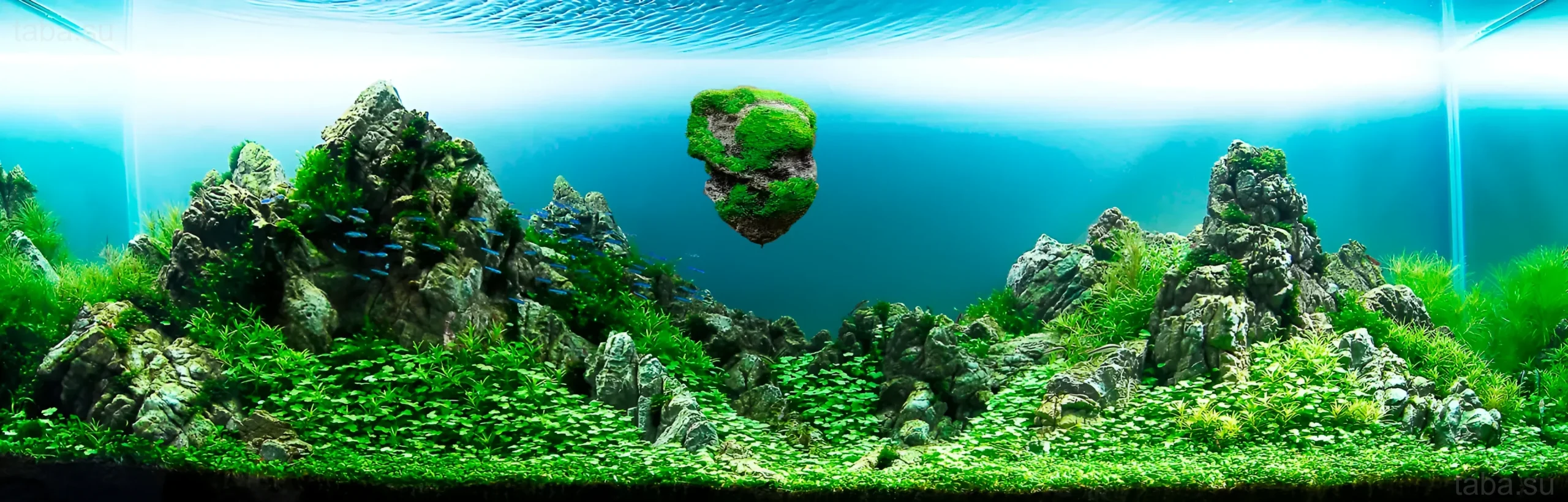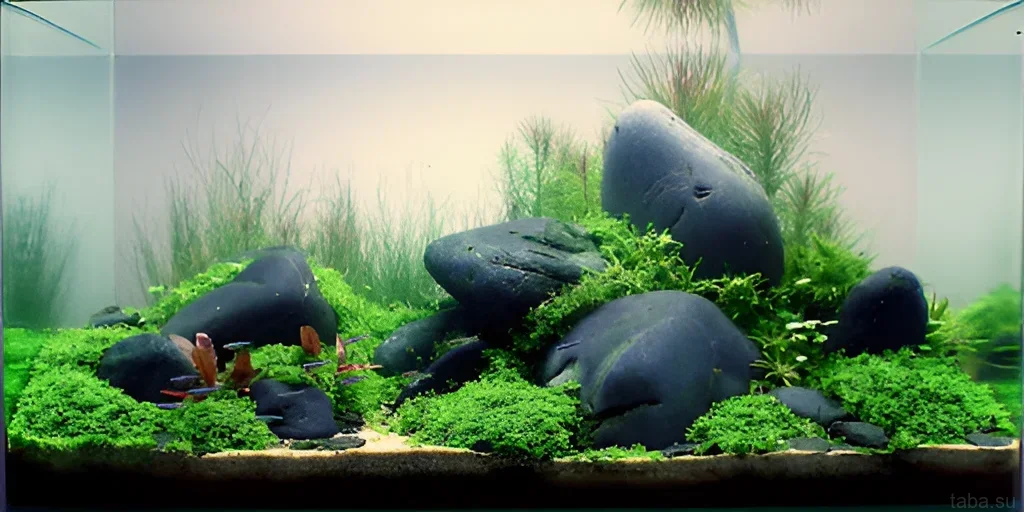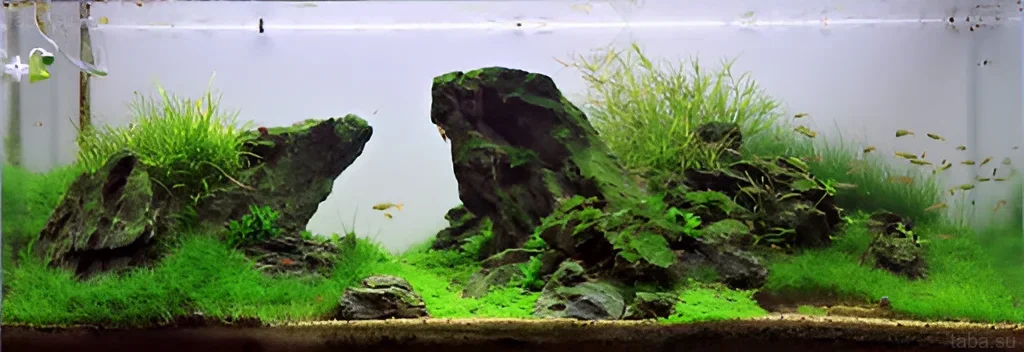
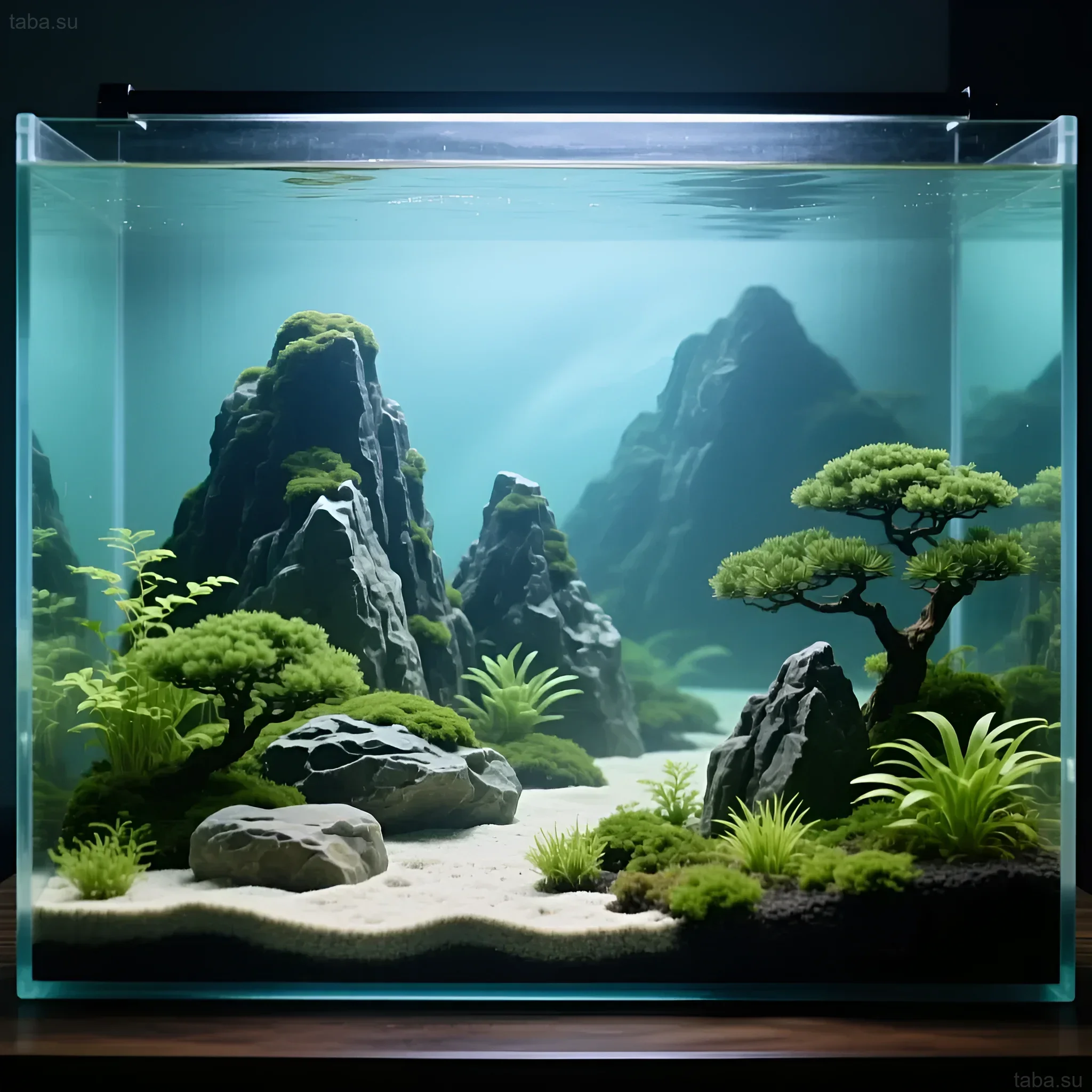
Iwagumi is not just a way of arranging stones in an aquarium. It is a deep philosophical concept that originated from traditional Japanese garden art. The term itself translates to “stone arrangement” or “stone composition.” In aquascaping, the Iwagumi style, popularized by master Takashi Amano, has become the pinnacle of minimalism and harmony, where the main role is given to hardscape (stones), and plants serve only as a background, imitating a grassy cover.
Creating an aquascape in the Iwagumi style requires not only technical skill but also artistic vision. Experts from the portal taba.su have prepared a detailed guide that will help you master all the intricacies of this exquisite and demanding direction in aquarium design.
Iwagumi: The Art of Japanese Aquarium Design
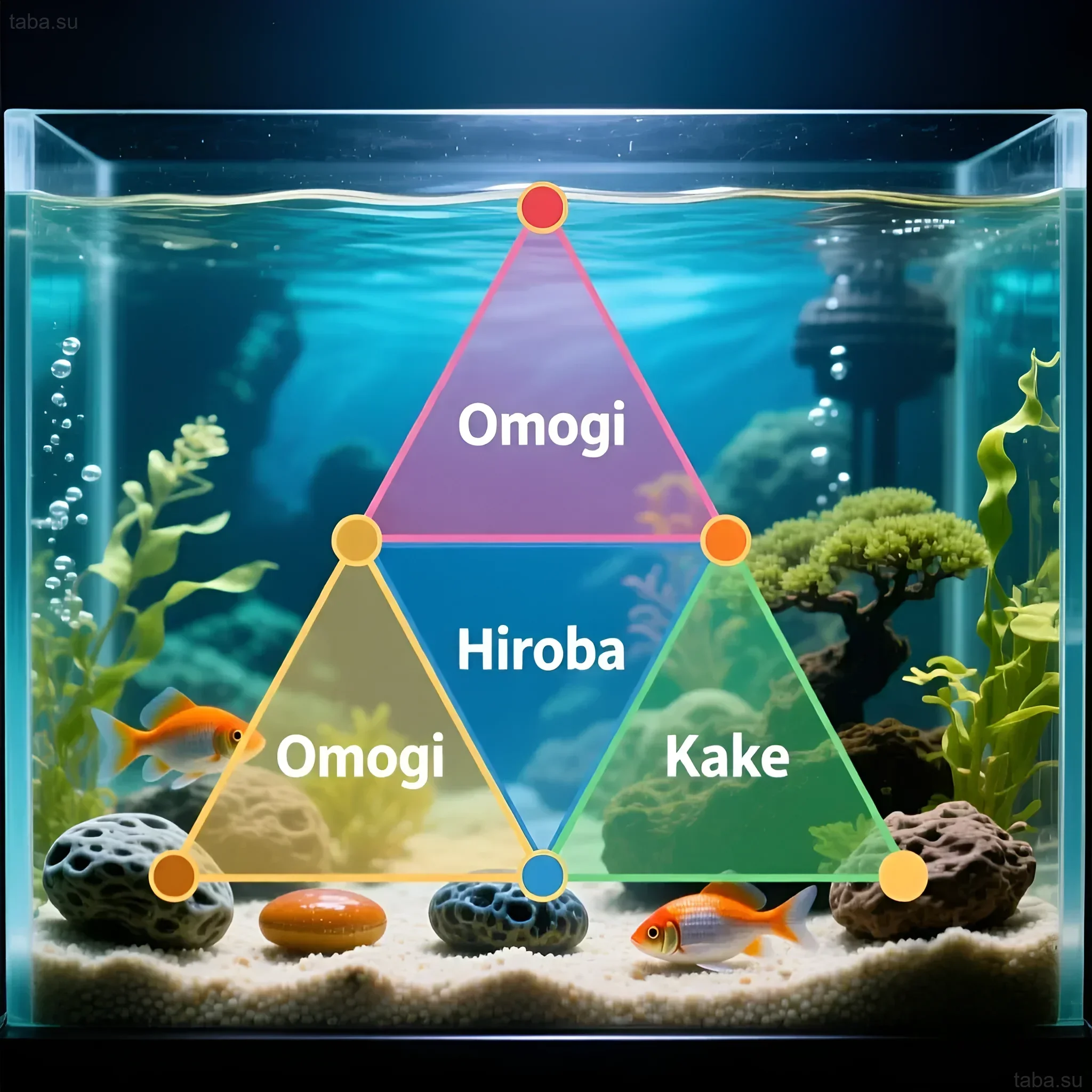
The Iwagumi style is based on the principles of Zen Buddhism, as well as the concepts of wabi-sabi (finding beauty in imperfection and naturalness) and minimalism. Unlike Dutch or natural aquariums, where lush plant growth or driftwood dominates, Iwagumi focuses on the vertical and horizontal lines created by stones, and on the feeling of open space.
Key characteristics of the style:
- Minimalism: Use of a limited number of elements – only stones and low-growing ground cover plants.
- Asymmetry: The composition is always asymmetrical to avoid staticity and add dynamism.
- Unity of material: All stones should be of the same type, color, and texture to imitate a single mountain range.
- Scale: Stones should create a sense of monumentality, even in a small aquarium.
At the core of any Iwagumi composition is the desire to recreate a natural mountain or rocky landscape that appears whole and untouched.
Iwagumi Composition Basics: The Golden Ratio and Beyond
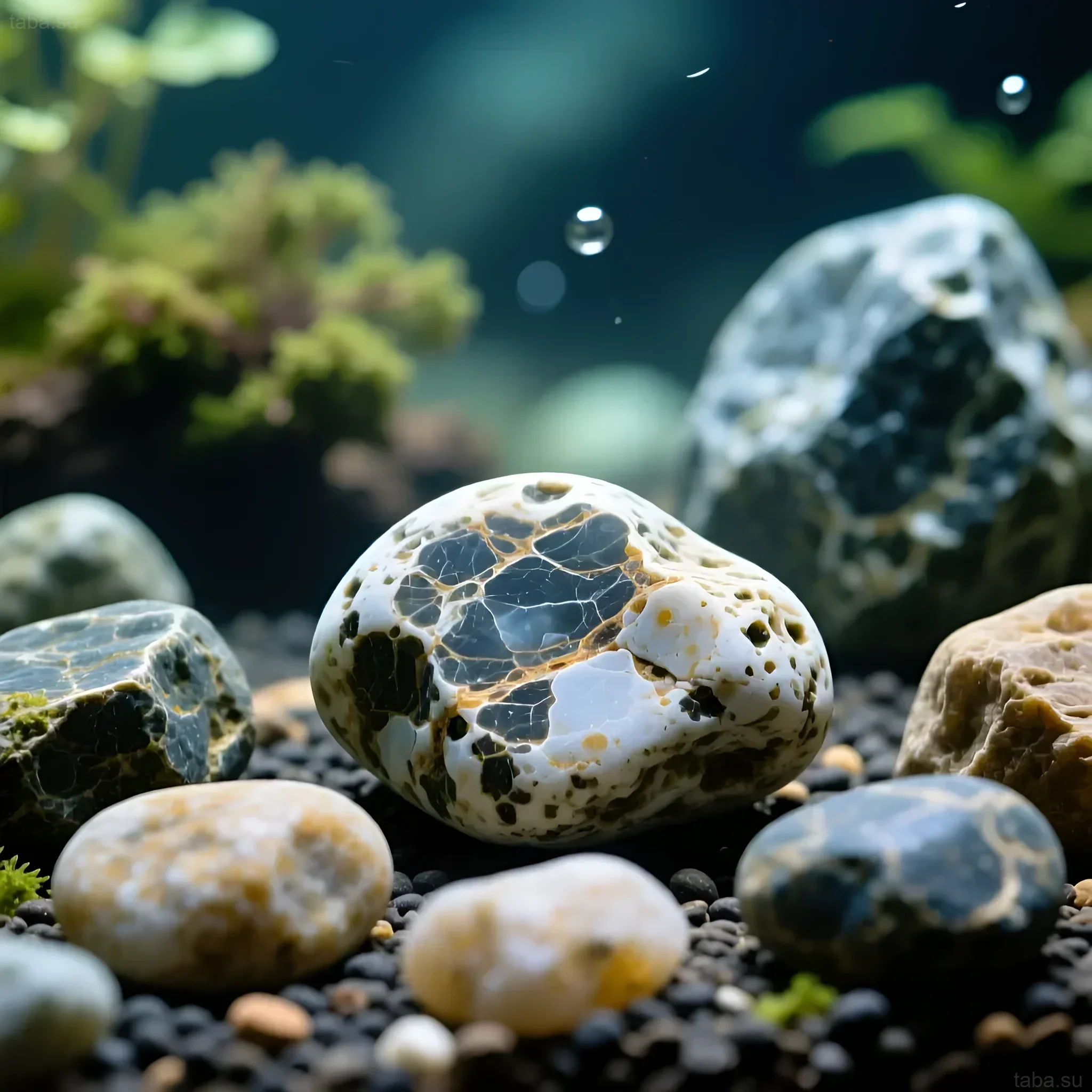
The heart of Iwagumi is the stone arrangement, which strictly adheres to rules known as Sanzon Iwagumi (three-stone composition). Even if more stones are used, they should be subordinate to this main triad.
Sanzon Iwagumi Stone Structure:
The traditional composition consists of an odd number of stones (3, 5, 7, etc.), which is also a reference to Japanese gardens.
- Oyaishi (Main Stone): The largest, most beautiful, and dominant element. It sets the tone and direction for the entire composition. Its peak should be located at the golden ratio point (approximately 1/3 or 2/3 of the aquarium’s length).
- Fukuishi (Auxiliary Stone): The second largest. It is placed next to the Oyaishi, but slightly to the side, to create balance. It should complement the Main Stone but not compete with it.
- Soeishi (Supporting Stone): The third largest. It is used to enhance the overall structure and add depth. It is often placed to the side of the main pair.
- Suteishi (Sacrificial Stone): Smaller stones used for detailing and creating a sense of natural erosion. They can be partially hidden by plants or substrate.
Important arrangement rules:
- Direction (Ki-no-nanage): All stones should be tilted in the same direction (ideally, towards the center of the aquarium or the front glass), creating a sense of flow or wind.
- Harmony: Stones should be embedded in the substrate to look natural. They should not simply be placed on the bottom.
- Size: The difference in size between the Oyaishi, Fukuishi, and Soeishi should be obvious.
Choosing Stones for Iwagumi: Types, Shapes, and Textures

Choosing the right stone is critically important, as it is the main character of the composition. Stones should be expressive, with deep grooves and sharp edges, to convey a sense of age and power.
Popular stone types for Iwagumi:
- Seiryu Stone: The most popular choice. It has a gray or bluish-gray color, sharp edges, and deep cracks. Note: it can slightly increase the carbonate hardness (KH) of the water.
- Ryuoh Stone: A light gray stone with a smoother but layered texture. Excellent for imitating cliffs.
- Manten Stone: A stone with a rich, rugged texture, often with white or yellow inclusions. Creates a very natural, “wild” look.
- Ohko/Frodo Stone: Yellowish-brown stones, porous, sometimes with holes. Good for creating the illusion of erosion.
Selection tips:
- Acidity test: If in doubt, drip vinegar onto the stone. If the stone fizzes, it contains calcium and will significantly increase water hardness. This can be a problem for aquariums with demanding plants and fish.
- Texture and scale: Choose stones with the most pronounced texture that will look good underwater. Ensure the texture of the stones matches the scale of the aquarium.
- Cleaning: Before use, stones must be thoroughly cleaned of dirt and boiled to exclude the entry of unwanted organisms into the aquarium.
Substrate and Plants in Iwagumi: Creating a Natural Landscape
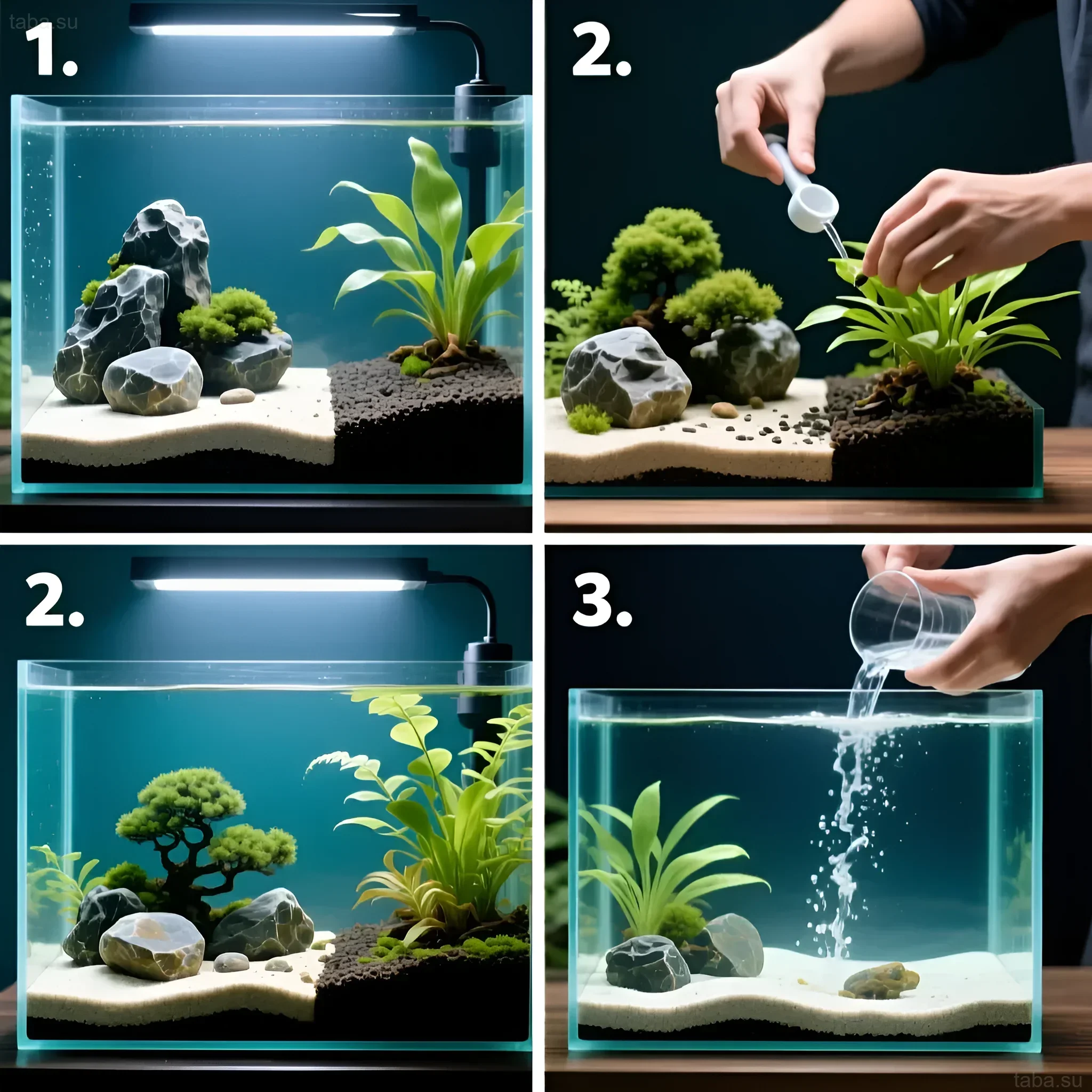
In Iwagumi, the substrate performs two main functions: it provides nutrition for ground cover plants and creates relief. The relief should be pronounced, often with a steep slope towards the back wall, to enhance the sense of depth and perspective.
Substrate Usage:
- Nutrient layer: Specialized aquarium substrate (e.g., Aquasoil) is used, which is rich in nutrients and has a granular structure ideal for rooting carpet plants.
- Creating slopes: To support high mounds in the background, Power Sand or volcanic lava is often used under the main substrate, as well as special dividers or nets.
Plants for the Iwagumi style:
The choice of plants in Iwagumi is strictly limited. Only low-growing, carpet-forming species are used, which do not cover the stones and do not disrupt the minimalist aesthetic. Only 1-3 types of plants are allowed.
- Ground cover (Carpet):
- Hemianthus callitrichoides ‘Cuba’: The most popular but demanding plant. Creates a dense, small “lawn.”
- Glossostigma elatinoides: Grows quickly but requires strong light and frequent trimming.
- Eleocharis parvula: Creates the effect of dense grass. Less demanding to trim.
- Marsilea hirsuta: Characterized by slow growth and unpretentiousness.
- Accent (rarely):
- Eleocharis vivipara or Vallisneria nana can be used in the background to imitate tall grass, but their use should be strictly limited.
Important: Plants should be planted very densely to quickly form a carpet and prevent algae growth.
Launching and Maintaining an Iwagumi Aquarium: A Step-by-Step Guide

The process of launching an Iwagumi requires careful planning and patience, especially during the carpet formation stage.
Launch Stages:
- Planning (Dry Setup): Place the stones in an empty aquarium on a mat (e.g., PVC mat) to avoid scratching the glass. Determine the ideal placement of the Oyaishi and other elements using the golden ratio rule.
- Substrate preparation: Lay the nutrient underlay, then the main aquarium substrate, forming the desired relief (slopes).
- Planting: The Dry Start Method (DSM) is recommended for demanding carpet plants like Cuba. If using the traditional method, the substrate is moistened, but water is only partially added. Plants are planted with tweezers in small bunches.
- Filling and Cycling: Water is carefully added. The standard nitrogen cycle begins.
- Lighting and CO2: For successful growth of carpet plants, powerful CO2 supply (25-35 ppm) and strong lighting (high PAR) are necessary.
Iwagumi Maintenance:
- Carpet Trimming: Carpet plants, especially Glossostigma and Cuba, require regular and aggressive trimming (once every 1-3 weeks) to prevent rotting of the lower layers and detachment of the carpet from the substrate.
- Algae Removal: Stones, being the main element, must be perfectly clean. Algae (especially black beard or xenococcus) on stones are removed manually with a brush or treated locally with Seidex (glutaraldehyde).
- Hardness Control: If stones that increase KH/GH (e.g., Seiryu) are used, regular water changes and possibly the use of reverse osmosis water are necessary.
Common Problems in Iwagumi and Their Solutions

Although Iwagumi looks minimalist, it is one of the most complex styles to maintain due to the high concentration of light, CO2, and nutrients required to maintain a perfect carpet.
| Problem | Cause | Expert Solution |
|---|---|---|
| Carpet detachment | Overgrown, too thick carpet; insufficient CO2. | Regular and low trimming (up to 1 cm), increased CO2 supply. |
| Algae on stones | Excess nutrients or unbalanced CO2. | Manual cleaning of stones, spot treatment, introduction of cleaners (Otocinclus affinis, Caridina multidentata). |
| Green/cloudy water | Bacterial bloom or excessive light in the early stage. | Daily water changes (50%), use of a UV sterilizer. |
| Poor carpet growth | Insufficient CO2, weak lighting, or lack of microelements. | Check the drop checker (CO2 should be yellow-green), increase iron and microelement dosage. |

Expert Tips: Secrets to Creating the Perfect Iwagumi
Experienced aquascapers use several tricks to make their Iwagumi look as natural and impressive as possible.
Secrets of Composition and Perspective:
- Forced perspective: To create the illusion of a large space, use larger stones in the foreground and smaller ones in the background. The same applies to plants: in the background, you can use slightly taller species (e.g., Eleocharis vivipara), and in the foreground, the shortest ones (Cuba).
- Fish selection: Only small schooling fish that do not distract from the hardscape are suitable for Iwagumi. Neons (Paracheirodon innesi), Glowlight Tetras (Hemigrammus erythrozonus), or small Rasboras (Trigonostigma heteromorpha) are ideal.
- Creating “shadows”: Placing the Main Stone (Oyaishi) in such a way that it casts a shadow on part of the carpet adds extra depth and volume to the composition.
- Golden Rule: Always use an odd number of stones. This gives the composition dynamism and natural asymmetry, while an even number often looks static.
Ultimately, Iwagumi is a balance between technical precision (CO2, light, nutrients) and artistic flair.
FAQ and Interesting Facts about Iwagumi

Frequently Asked Questions:
Question: Is CO2 essential in Iwagumi?
Answer: Yes, it is practically essential. The plants needed to create a dense carpet (Cuba, Glossostigma) are highly demanding. Without a powerful CO2 supply, they will grow slowly, be unable to compete with algae, and will not form the desired landscape.
Question: What is the minimum aquarium size suitable for Iwagumi?
Answer: Theoretically, a composition can be created even in a nano-aquarium (from 20 liters). However, for a better sense of scale and the ability to apply the golden ratio rule, aquariums of 60 to 120 liters are recommended (e.g., standard cubes or shallow rectangular tanks).
Question: Can driftwood be used in Iwagumi?
Answer: No. The classic Iwagumi style excludes the use of driftwood. If you add wood, the composition transitions to a mixed style, such as Ryuboku (driftwood and stone composition).
Interesting facts:
- Origins: Iwagumi is directly related to the Japanese dry garden Karesansui, where stones symbolize islands or mountains, and gravel represents water.
- “Mountain” Stone: The largest stone (Oyaishi) is often called the “Parent Mountain,” symbolizing stability and eternity.
- Popularity: Due to its purity and minimalism, Iwagumi often wins international aquascaping contests (IAPLC), demonstrating the perfect balance between nature and design.
Additional Images
Gallery of remaining images (click to view):