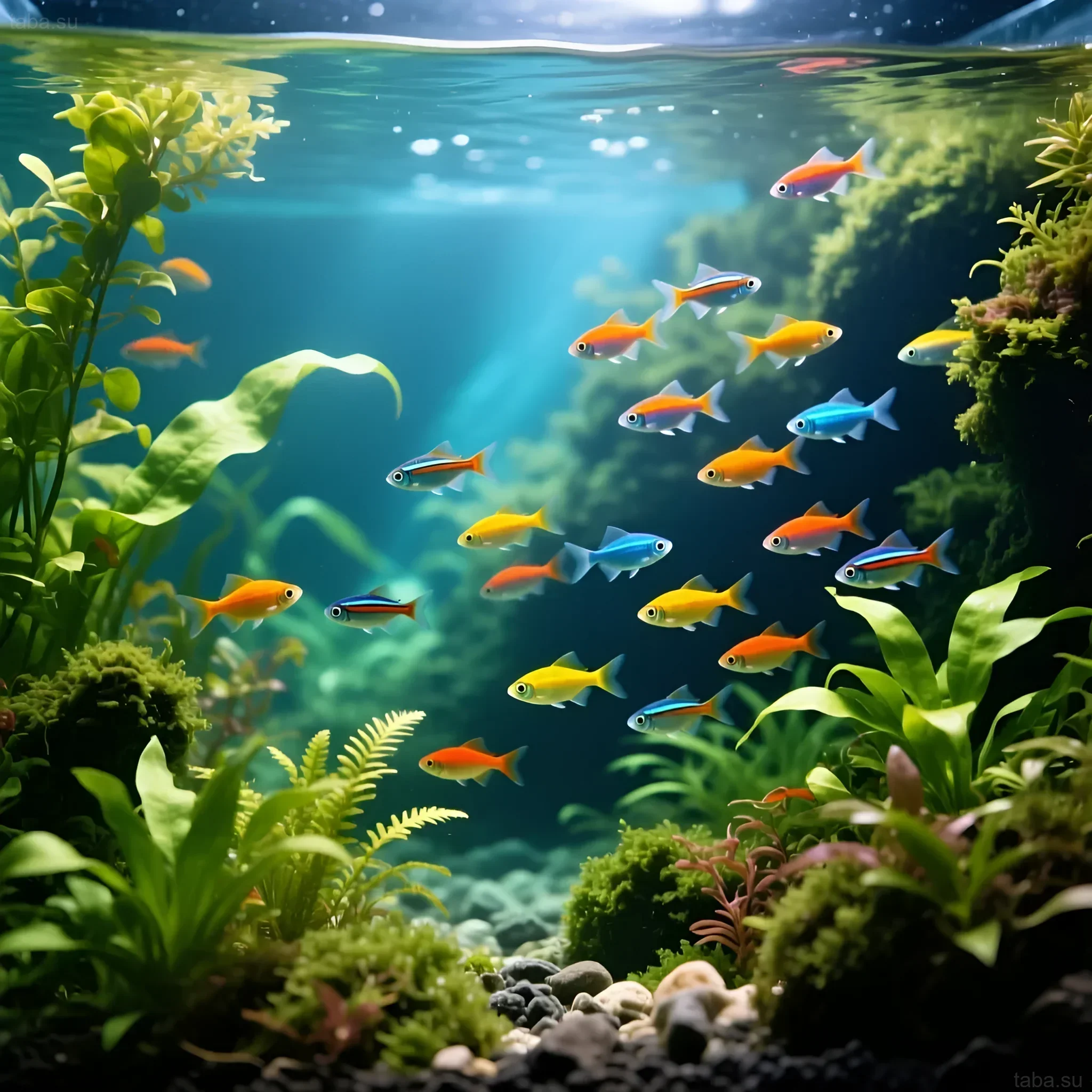
The pursuit of perfect harmony lies at the heart of all art, and aquaristics is no exception. Creating an underwater landscape that evokes a sense of peace and aesthetic pleasure requires not only knowledge of biology but also an understanding of visual composition. In this context, the golden ratio, or the 1.618 rule, becomes not just a mathematical formula but a powerful tool for achieving perfection in aquascaping.
The Golden Ratio in Aquariums: Harmony and Beauty of the Underwater World
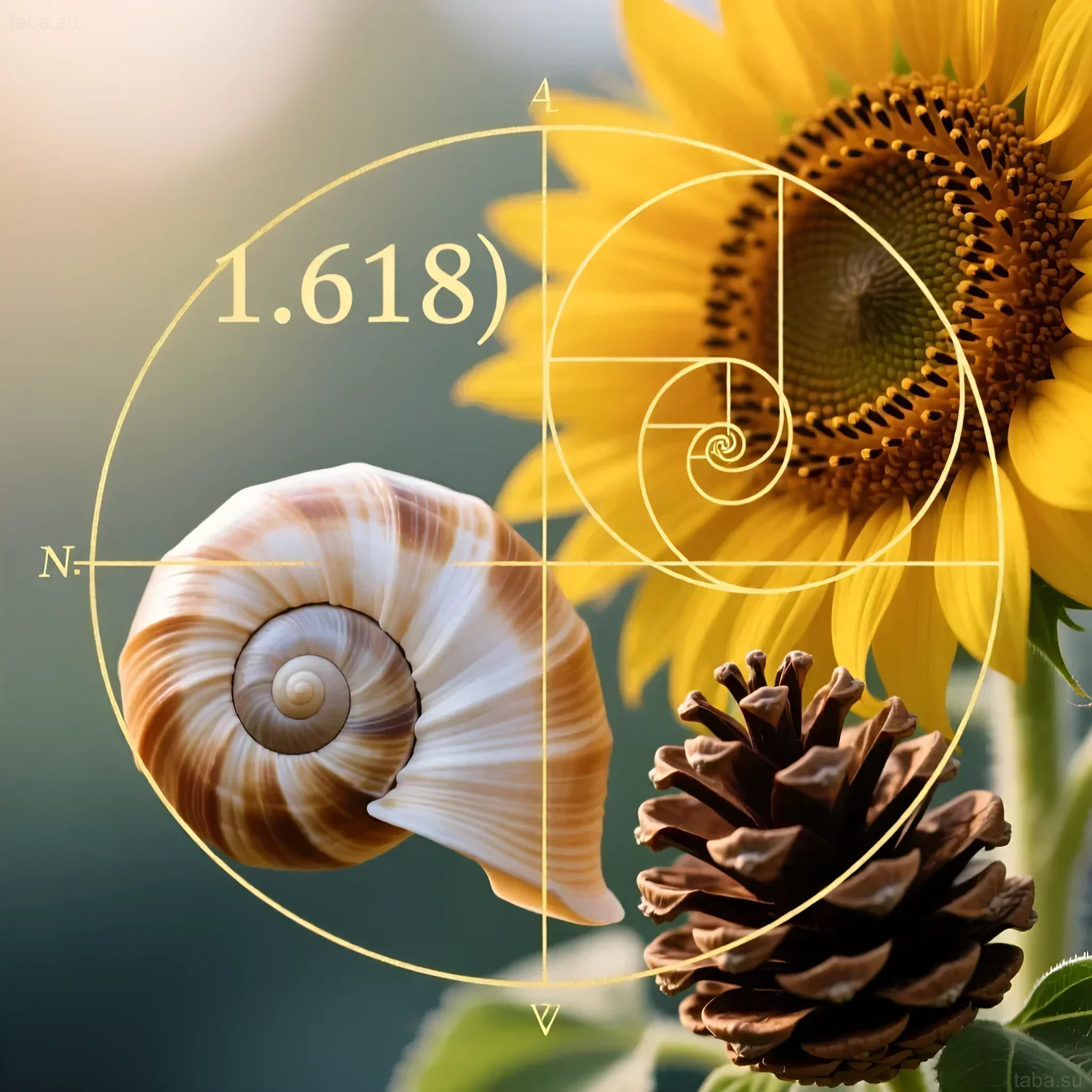
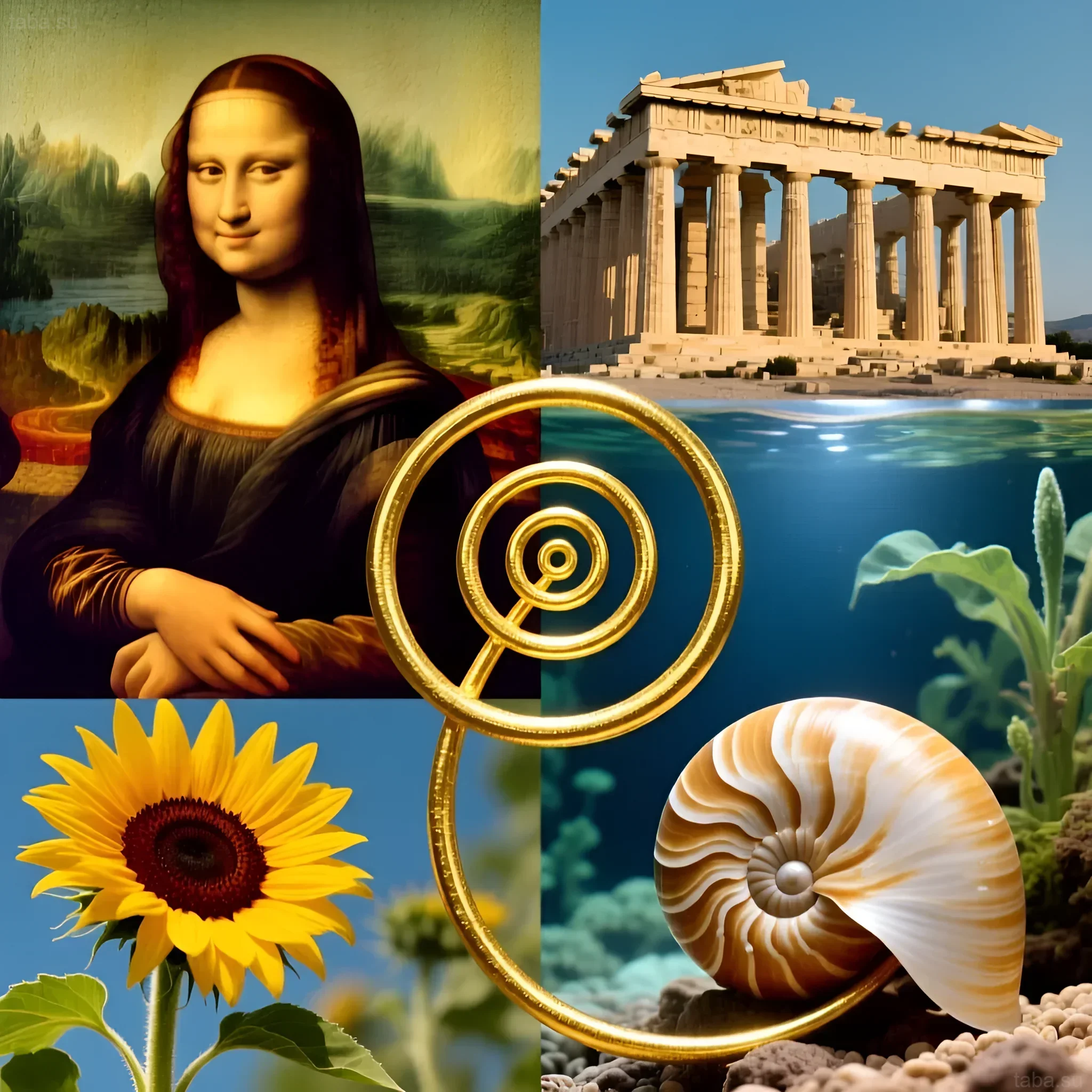
The golden ratio (denoted by the Greek letter Φ) is a universal principle of proportionality that the human eye and brain instinctively perceive as the most harmonious and balanced. From ancient Greek architecture to Renaissance paintings and natural forms, this magical proportion can be traced everywhere.
In aquaristics, applying the 1.618 rule helps avoid chaos and create a composition that looks natural and complete. taba.su experts assert that using this principle is the key to transitioning from a simple fish tank to a true work of underwater art.
What is the Golden Ratio (1.618) and How Does It Work?
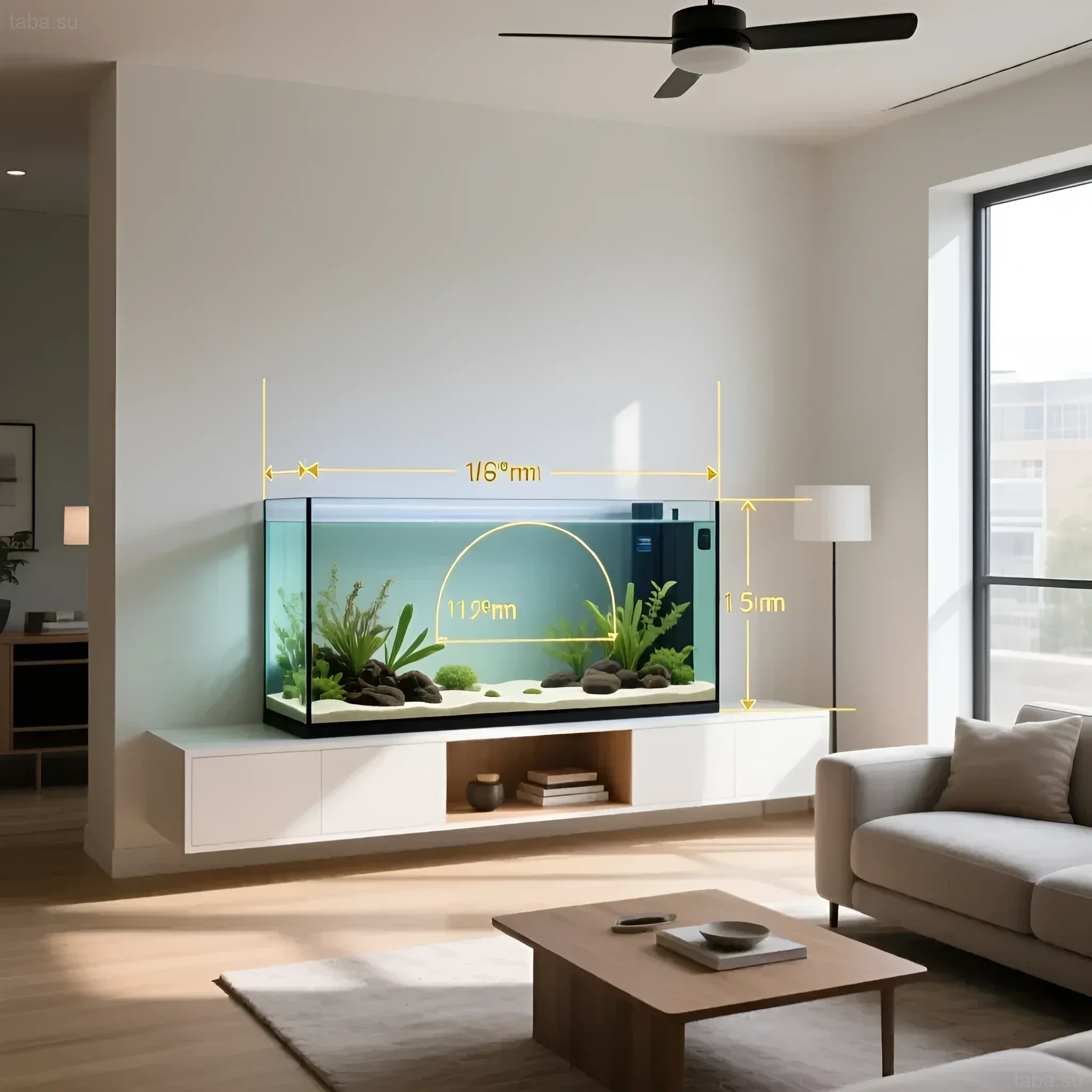
The golden ratio is an irrational number approximately equal to 1.618. It describes the ideal division of a whole into two unequal parts such that the ratio of the larger part to the smaller part is equal to the ratio of the whole to the larger part.
Practical Application in Design:
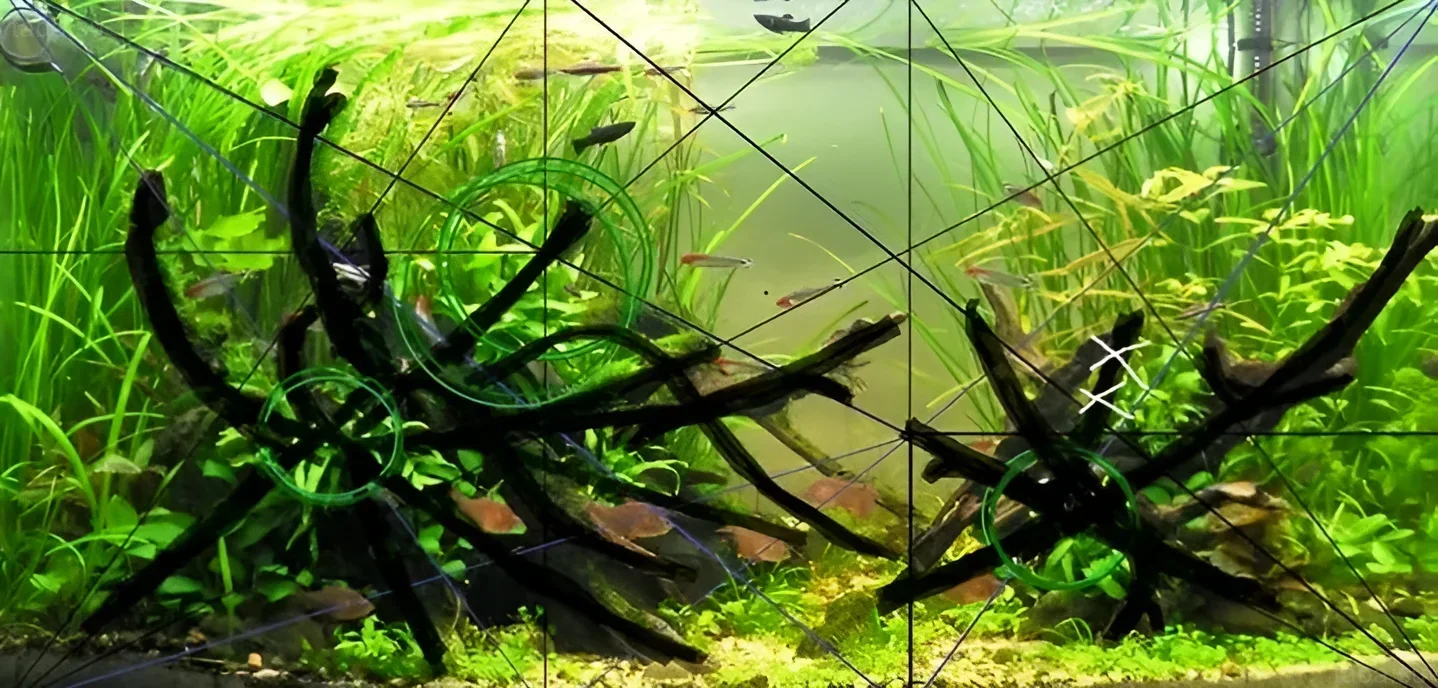
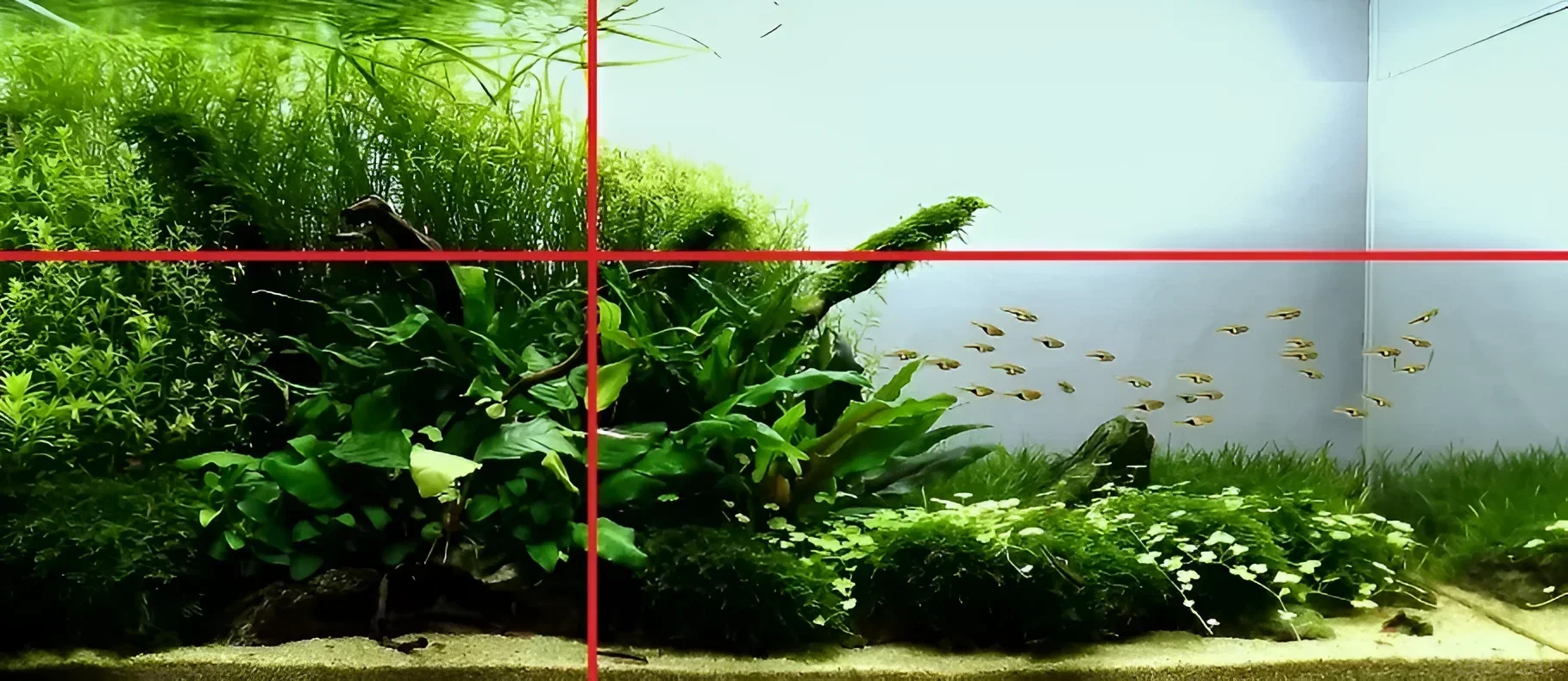
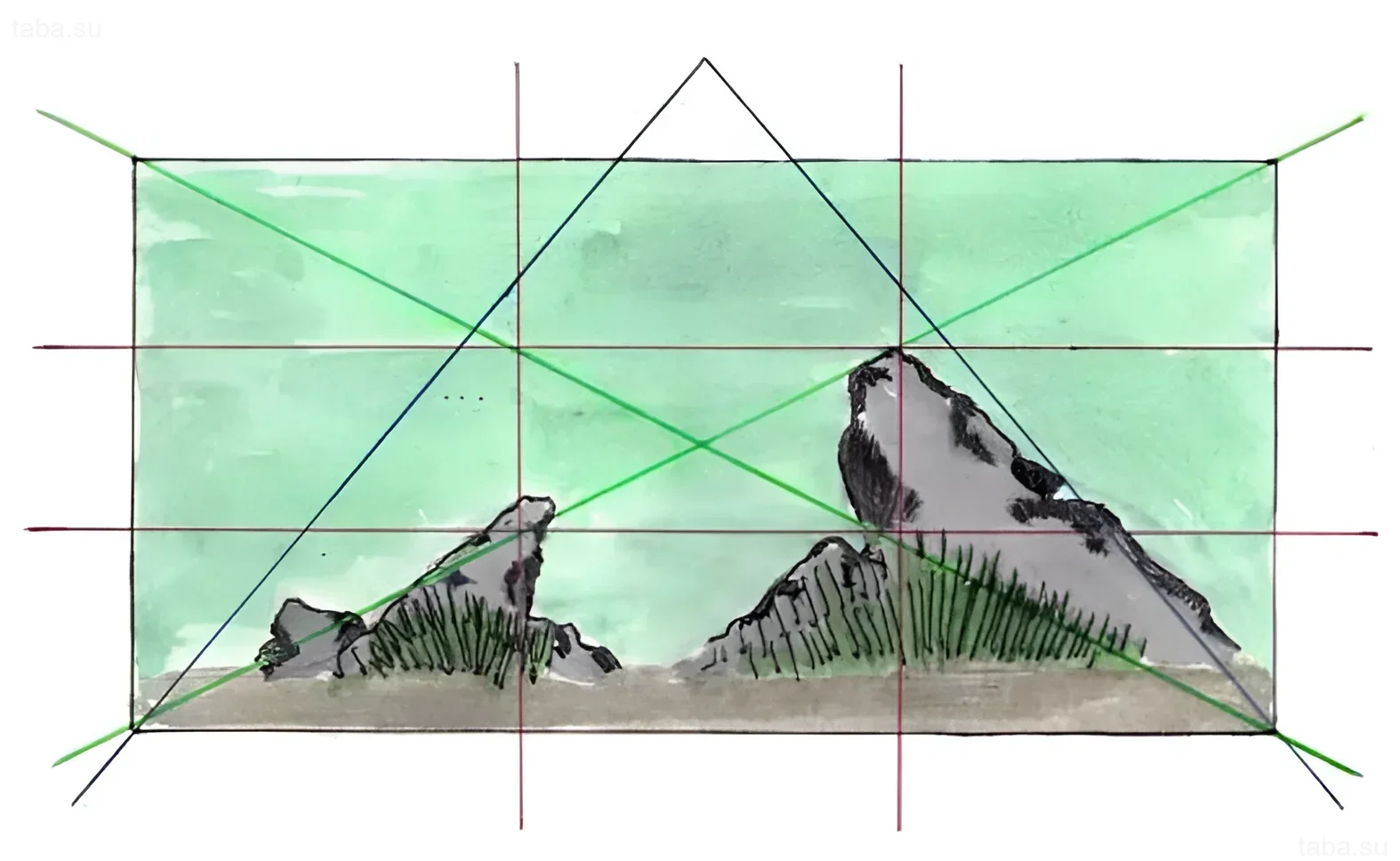
- The Rule of Two-Thirds: The most convenient way to apply 1.618 is the rule of two-thirds. If you divide the aquarium into three equal parts horizontally and vertically, the areas corresponding to 2/3 or 1/3 of the total length will be ideal places to position key elements.
- Focal Points: The intersections of the lines dividing the aquarium according to the rule of two-thirds (Rule of Thirds) are the strongest visual points. This is where the main focus of the composition should be placed (e.g., the largest driftwood or a cluster of bright plants).
Applying the Golden Ratio When Choosing and Placing an Aquarium
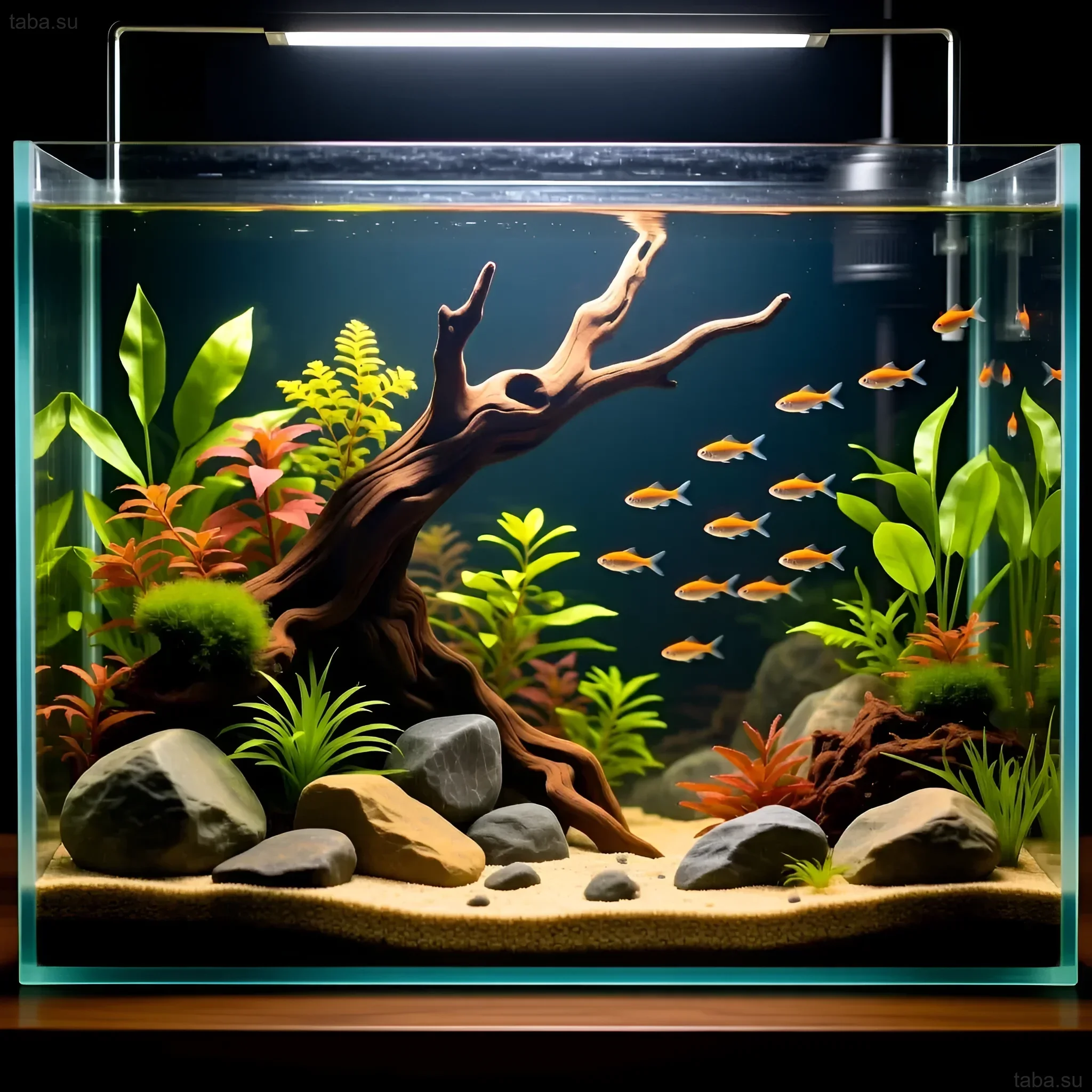
Harmony begins even before the first drop of water enters the aquarium. The 1.618 rule can be used when choosing the dimensions of the tank and its placement within a room.
Aquarium Proportions
While standard manufactured aquariums rarely strictly adhere to the golden ratio, those whose sides are in approximately a 1.6 to 1 ratio are often the most pleasing to the eye. For example, an aquarium 80 cm long and 50 cm high (a ratio of 1.6) will look more balanced than a cubic one.
Placement in the Room
When placing an aquarium in a room, experts recommend using the 1.618 principle to determine its position relative to a wall or another large object.
- If a wall is 3 meters long, the aquarium should occupy the larger portion (1.85 m) or the smaller portion (1.15 m), leaving the remaining space free.
- Avoid the Center: Placing an aquarium exactly in the center of a wall often makes the composition static and boring. Shift it into the “golden ratio zone” for dynamism.
The Golden Ratio in Aquarium Landscape Design: Rocks, Driftwood, and Plants
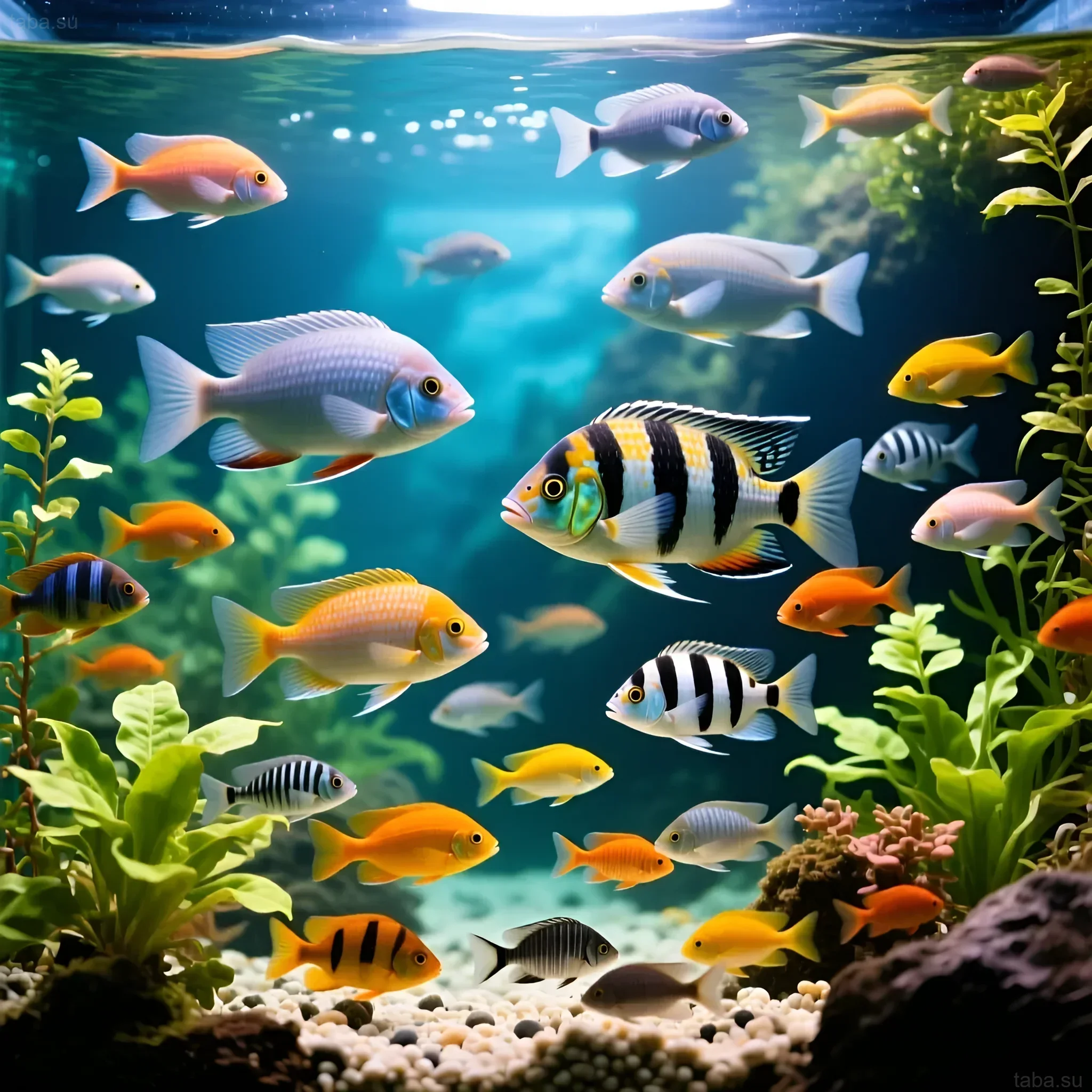
Aquascaping is the art of creating landscapes. It is here that the 1.618 rule is most evident, especially when working with hardscape (rocks and driftwood) and planting.
Placing the Focal Point (Hardscape)
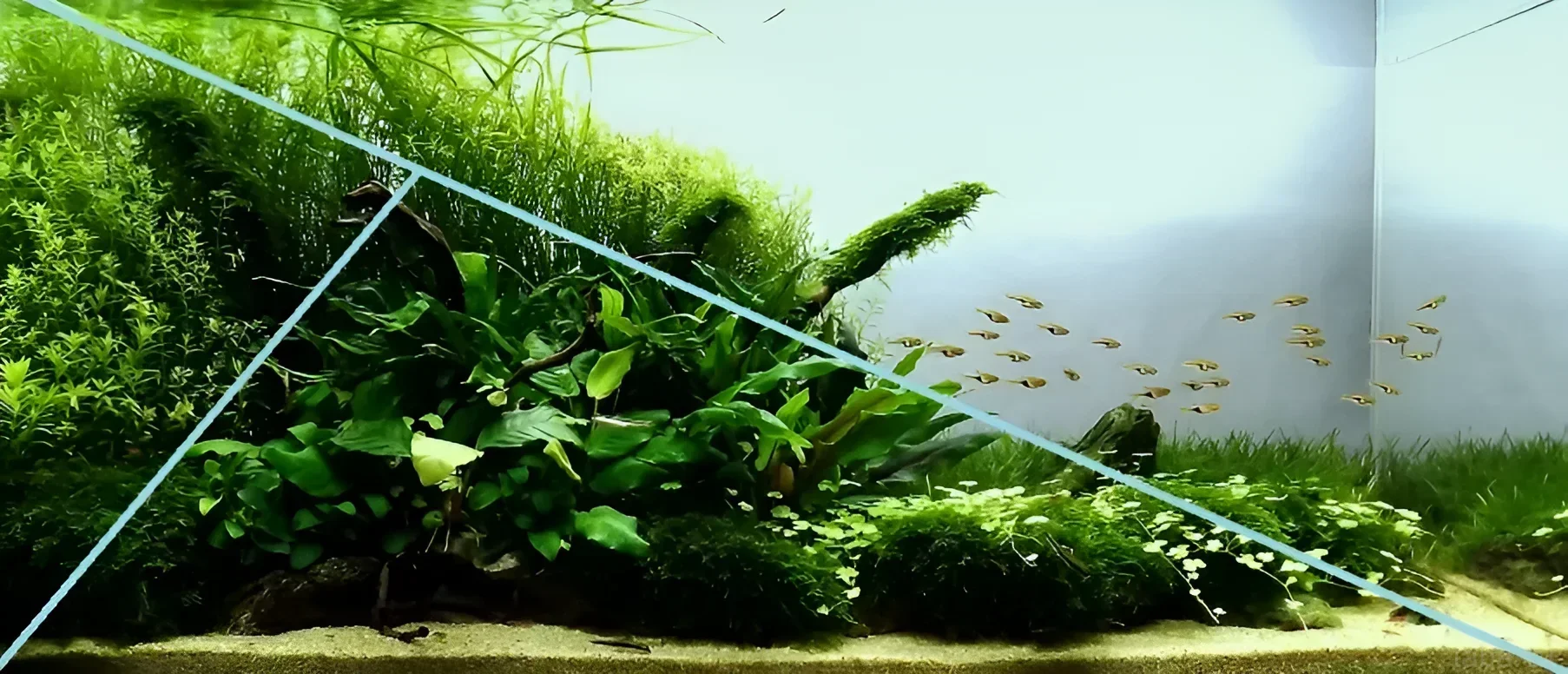
The focal point is the element that the viewer’s eye is drawn to first. According to the golden ratio, the focal point should be offset from the center.
- Defining Zones: Divide the aquarium into a 3×3 grid. Choose one of the four intersection points (1/3 from the edge) to place the main rock or driftwood.
- Example: In a 100 cm aquarium, the ideal focal points are at 38 cm and 62 cm from the edge.
Grouping Plants
The 1.618 principle also applies to the space occupied by each type of plant. Instead of planting evenly, create groups whose sizes are in a 1.618 to 1 ratio.
Examples of Compositional Division:
- Foreground: 1/3 of the area is occupied by ground cover plants (e.g., Hemianthus callitrichoides).
- Midground and Background: 2/3 of the area is allocated for taller and more voluminous species (e.g., Java fern Microsorum pteropus or Echinodorus).
- Volume Ratio: If you use two contrasting colors (red and green), allow the dominant color (usually green) to occupy 62% of the space, and the accent color (red, e.g., Alternanthera reineckii) to occupy 38%.
Creating Visual Depth
The golden ratio helps create an illusion of depth, especially in shallow aquariums. This is achieved through the gradation of sizes of decorations and plants according to the 1.618 principle:
- Use the largest elements in the background.
- In the middle, use elements reduced by 1.618 times.
- In the foreground, use the smallest details.
The Golden Ratio and Fish Selection: Creating a Balanced Ecosystem
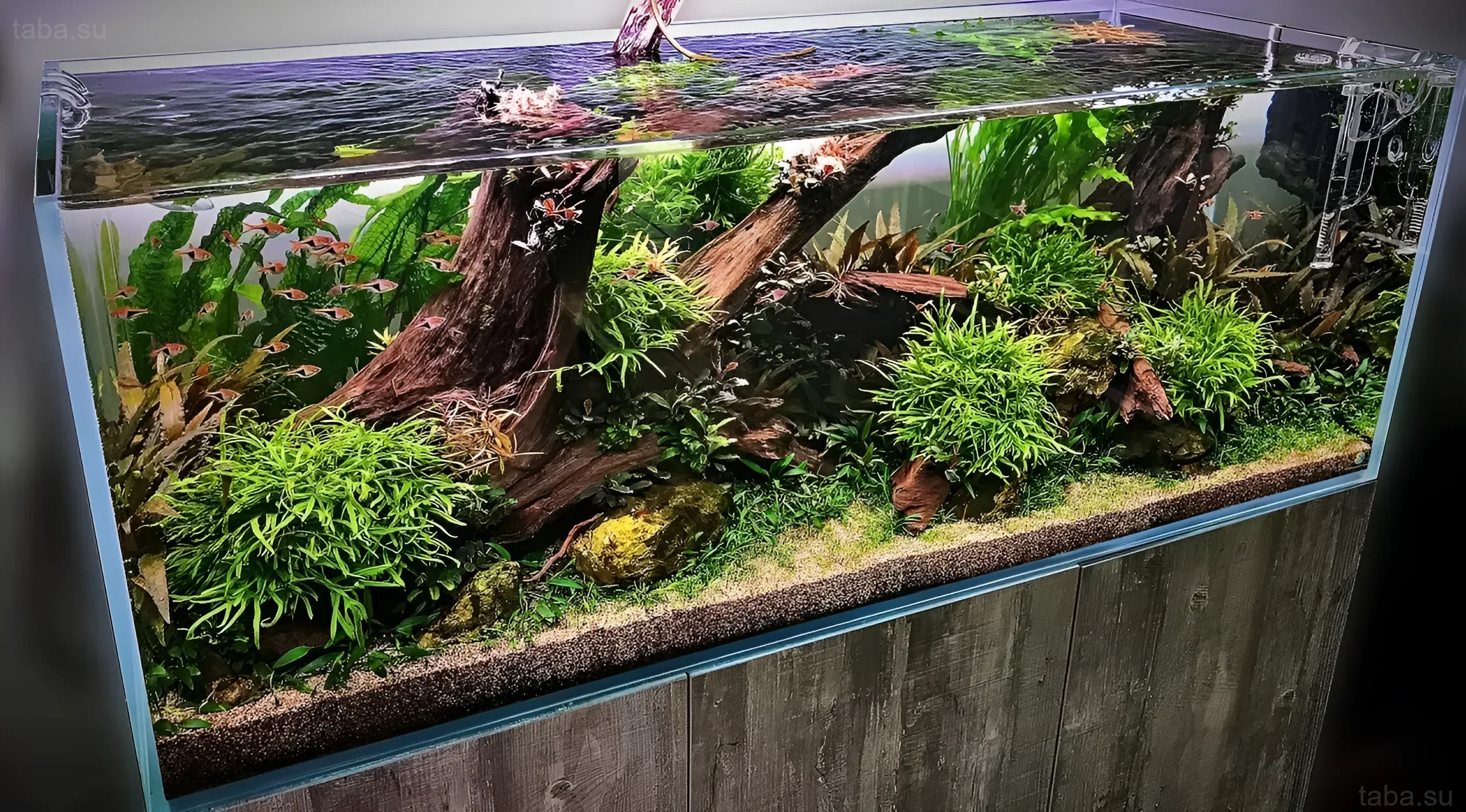
Although fish are living and constantly moving elements, their visual impact on the composition should also align with the principles of harmony. Here, the golden ratio helps determine the balance between schooling, solitary, and bottom-dwelling species.
Ratio of Size and Quantity
An ideal composition often includes a dominant group of fish and supporting, smaller groups. The ratio of their numbers or visual volume should tend towards 1.618.
- Dominant School: Choose one large school (e.g., neons Paracheirodon innesi). Its number should be 1.618 times greater than the number of the second most important group.
- Central Fish: If the aquarium houses a large solitary species (e.g., angelfish Pterophyllum scalare), its ideal “visual habitat” (where it spends most of its time) should be one of the golden ratio focal points.
Using Negative Space
Negative space is free, open water. It is as important as occupied space. According to the golden ratio, 62% of the aquarium should be filled (with plants, hardscape), and 38% should remain open for swimming. This creates a sense of spaciousness and allows schooling fish (e.g., barbs Puntius) to display their natural behavior, which is a dynamic element of the composition itself.
Common Mistakes When Using the Golden Ratio in Aquariums and How to Avoid Them

Blindly following the 1.618 rule without considering the aquarium’s context can lead to imbalance. taba.su experts highlight key mistakes to avoid.
1. The Mistake of Central Placement:
- Problem: Placing the main object (driftwood, castle) exactly in the center of the aquarium.
- Solution: Always shift the focus to 38% or 62% from the edge. Central placement creates symmetry, which is rarely found in nature and looks artificial.
2. Ignoring Vertical Sectioning:
- Problem: Applying the rule only horizontally, forgetting about height.
- Solution: If the aquarium is 50 cm high, the ideal line for the “horizon” (where the tall background plants end) should be at a height of 31 cm (50 / 1.618).
3. Overcrowding Focal Points:
- Problem: Trying to use all four intersection points of the 3×3 grid.
- Solution: Choose one, maximum two focal points. The composition should have one main “center of gravity” that draws the eye.
4. Static Composition:
- Problem: Placing all elements strictly perpendicular or parallel to the aquarium walls.
- Solution: Driftwood and rocks should be positioned at an angle that corresponds to the diagonals of the golden ratio. This adds dynamism and mimics natural processes.
FAQ: Answers to Frequently Asked Questions About the Golden Ratio in Aquaristics
Q: Is it necessary to use complex mathematical calculations?
A: No. In most cases, it is sufficient to use the visual rule of thirds. Divide the aquarium into 9 equal squares and place key elements on the lines or their intersections. This is a practical simplification of the 1.618 rule.
Q: Can the golden ratio be applied to nano-aquariums?
A: Yes, the principle of proportionality is universal. In nano-aquariums (up to 30 liters), even a slight shift of the focal point according to the 1.618 rule significantly improves the perception of volume.
Q: How does the 1.618 ratio affect lighting?
A: Light can also be part of the composition. If you use directional lighting, its zone of maximum intensity should fall on the main focal point, located in accordance with the golden ratio.
Q: What ratio is best for driftwood?
A: If you use two pieces of driftwood, their lengths or volumes should be in a 1.618 to 1 ratio. This creates a hierarchy and visual interest, avoiding the “twin effect” where two identical objects look boring.
Interesting Facts About the Golden Ratio and Its Influence on the Perception of Beauty
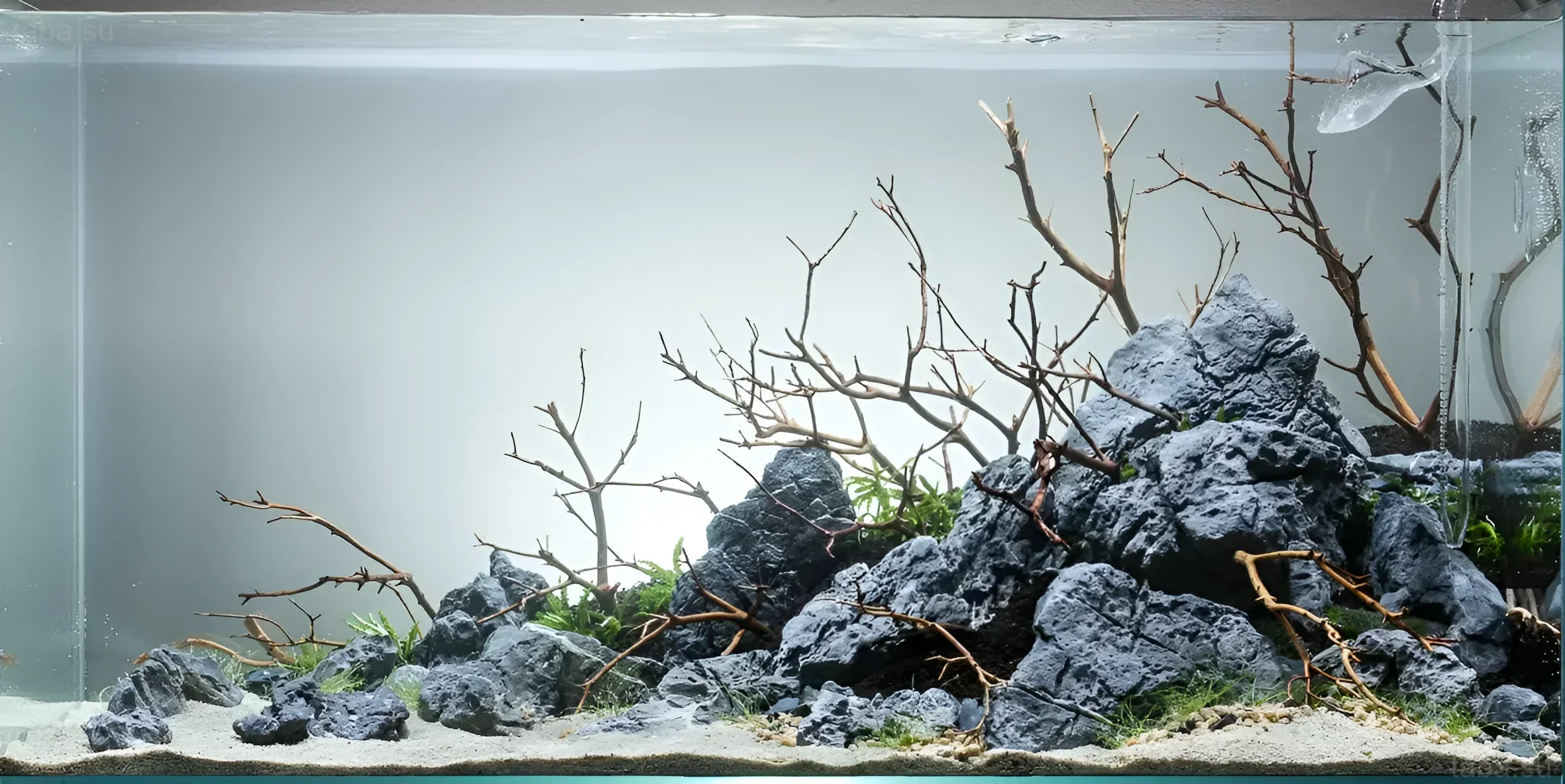
The golden ratio principle is not an artificial invention of designers; it is deeply rooted in nature, which explains why we find compositions built upon it so attractive.
- Biological Structures: The spirals of mollusk shells (e.g., the nautilus) and the arrangement of seeds in a sunflower often correspond to a logarithmic spiral based on the golden ratio.
- Fish and Plants: Even in the world of aquaristics, examples can be found. The arrangement of leaves in some aquatic plants (e.g., Vallisneria) sometimes follows the Fibonacci sequence, which is closely related to the number 1.618.
- Human Perception: Studies show that a human face perceived as most attractive often has proportions close to the golden ratio. By applying this principle to an aquarium, we are essentially appealing to innate mechanisms of beauty perception.
Using the 1.618 rule in aquascaping is not a strict rule, but rather a guideline that helps the aquarist create a dynamic, balanced, and most importantly, a living composition. By mastering this principle, you can transform your aquarium into a true masterpiece of underwater landscape design.
Additional Images
Gallery of remaining images (click to view):