
Ensuring safe and effective filtration in aquariums housing delicate inhabitants – shrimp or newly hatched fry – is one of the key tasks of a professional aquarist. Standard internal and external filters, based on powerful rotors and pumps, pose a serious threat to small fauna. In such specialized conditions, the airlift filter (or sponge filter) becomes the optimal, and often the only correct, choice.
Filters
External Aquarium Filter: Principle of Operation, Advantages, and Canister Selection

Aquaristics is the art of creating a balanced ecosystem. The foundation of any healthy aquatic environment is an effective filtration system. Unlike simple internal pumps, an external filter, or canister, is a comprehensive solution that provides not only mechanical cleaning but also powerful biological waste processing. It is canister filters that are recognized as the gold standard for medium and large aquariums, as well as for densely populated or planted systems where the highest water quality is required.
Internal ‘Canister’ Filter: Choosing, Aquarium Volumes, and Maintenance
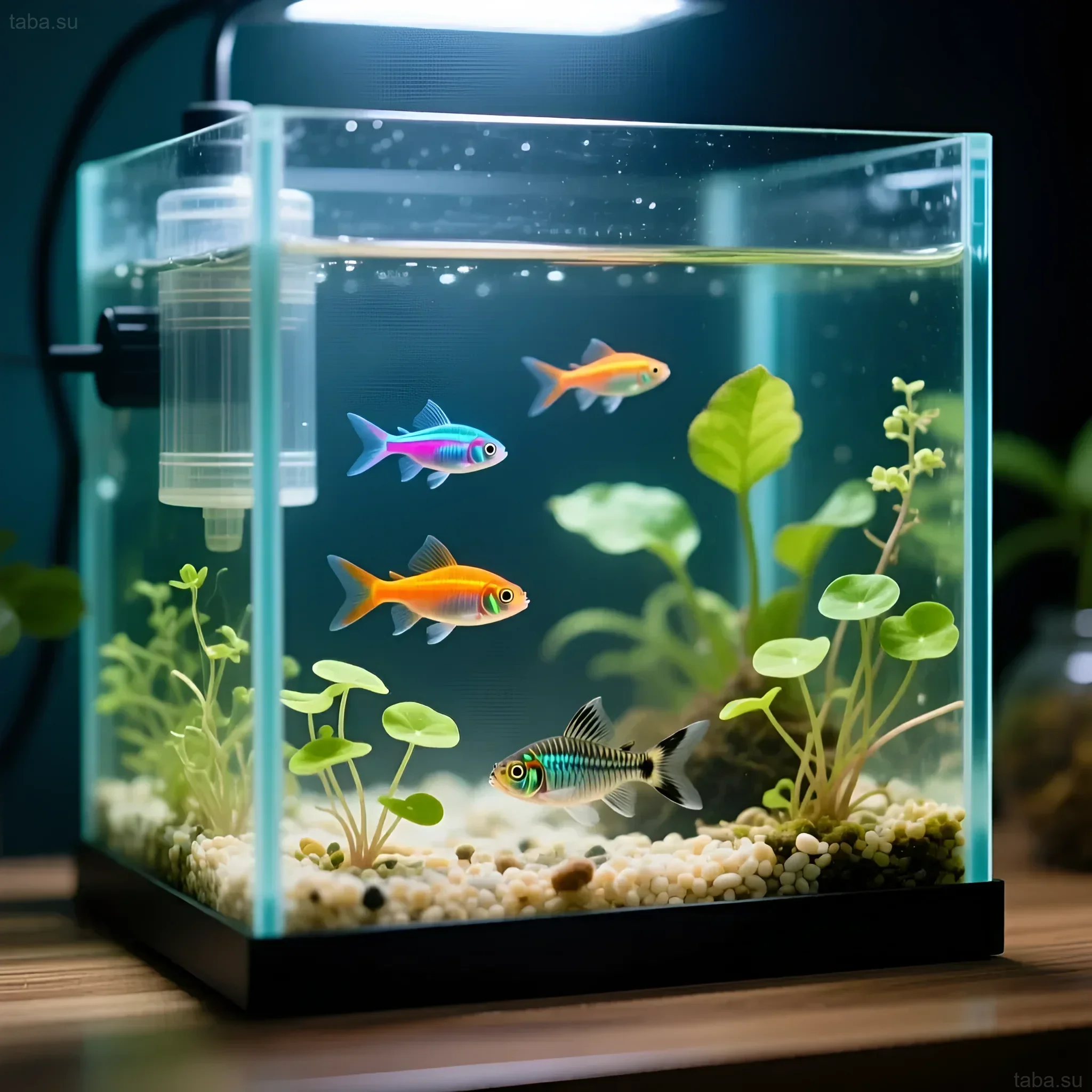
An internal filter, often called a “canister” or “submersible pump” by aquarists, is one of the most common and affordable devices for maintaining water purity in a freshwater aquarium. Its compactness, ease of installation, and high efficiency in mechanical filtration make it an indispensable element for many aquarium systems, especially those of small and medium volumes. However, like any piece of equipment, the “canister” has its limitations, and its effectiveness directly depends on correctly matching its power to the tank’s volume and bioload.