
Tylomelania (Tylomelania sp.) are among the most impressive freshwater snails that have become a real trend in modern aquaristics. Due to their characteristic appearance, resembling a long proboscis, they have earned the affectionate nickname “rabbit snails.” They are endemic to the Indonesian island of Sulawesi, specifically the Poso and Malili lake systems, and require specific keeping conditions. On the taba.su portal, we will examine in detail the two most popular and vibrant morphs: the orange and yellow Tylomelania, their needs, and the intricacies of breeding.
Snails
Theodoxus: The Perfect Biological Weapon Against Xenococcus (GSA)

Green spot algae, known in aquaristics as xenococcus (GSA, Green Spot Algae), is one of the most persistent and irritating enemies faced by owners of planted and even species aquariums. These tough, tightly adhering formations on glass and decorations not only spoil the aesthetics but also signal an imbalance in the system. Chemical control methods are often ineffective or harmful to plants and aquatic life, which is why professional aquarists have long turned to biological helpers. And among them, there is one true champion – the small freshwater snail Theodoxus (Theodoxus fluviatilis).
Red-spotted Nerite (Onion): The Ideal Algae-Eating Snail for Your Aquarium

Among the vast diversity of freshwater invertebrates, the Red-spotted Nerite snail, also known as the ‘Onion’ Nerite (Neritina tiwlosa, sometimes classified as Neritina pumilia), holds a special place. It’s not just a decorative element but also one of the most effective and diligent algae fighters you can find in a home aquarium. Its unusual coloration and exceptional work ethic have made it a favorite among both professionals and beginner aquarists aiming to maintain pristine glass and decorations.
Horned Nerite (Tylomelania aspera): A Complete Guide to Care and Maintenance

Snails are an integral part of a healthy aquatic system, acting as natural cleaners and indicators of well-being. Among the many species available to aquarists, the Horned Nerite, often mistakenly called the “Beeline” due to its striped coloration (though this nickname is more commonly associated with *Clithon sp.*), or more correctly, the Sulawesi Snail (*Tylomelania aspera*), holds a special place. This freshwater mollusk, distinguished by its impressive size and unique appearance, requires specific care conditions that must be meticulously maintained for its longevity and health.
Apple Snails: How to Accurately Determine Sex and Successfully Breed in a Home Aquarium

Apple snails, or ampullaries (genus Pomacea), are among the most popular and recognizable inhabitants of freshwater aquariums. Their bright coloration, impressive size, and active behavior make them a true decoration of the underwater world. However, for aquarists who wish not just to keep but also to successfully breed these mollusks, a key question arises: how to distinguish males from females and create ideal conditions for reproduction?
Zebra Nerite: The Ideal Cleaner for Aquarium Glass and Algae

Snails of the genus Neritina have long earned a solid reputation among aquarists, but it is the Zebra Nerite (Neritina natalensis) that is rightfully considered one of the most effective and aesthetically pleasing “sanitizers” of a freshwater aquarium. Unlike many other snails capable of uncontrolled reproduction, the Zebra Nerite combines high efficiency in consuming algal growth, especially tough Green Spot Algae (GSA), with safety for the aquarium ecosystem. Its striped shell makes it not only a useful but also a beautiful addition to any biotope. This guide provides comprehensive information on the keeping, care, and maximum utilization of this amazing snail’s potential.
Apple Snails: Care, Breeding, and Maintenance of Yellow, Blueberry, and White Snails
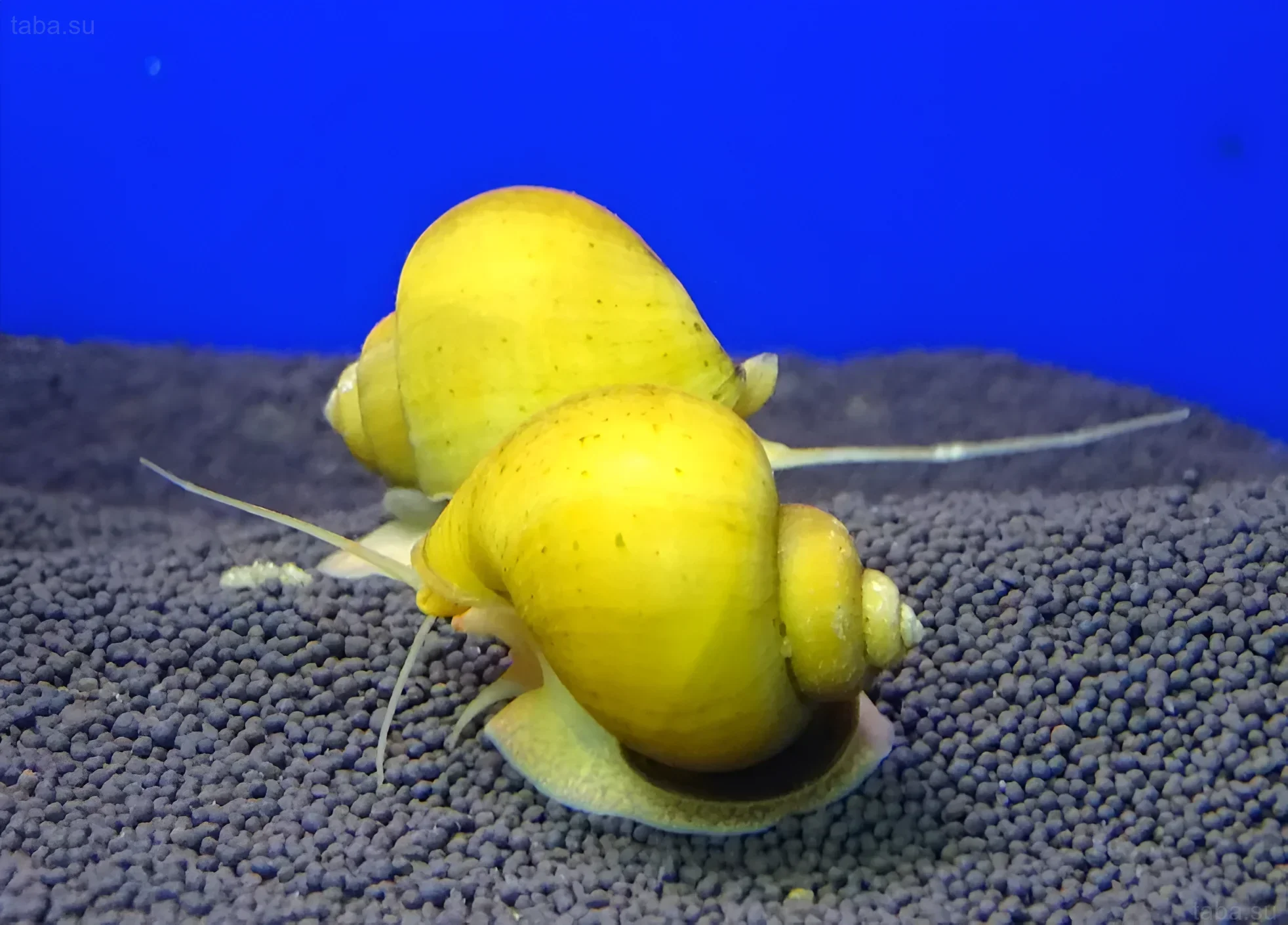
Apple snails, or ampullaries (representatives of the genus Pomacea), are among the most popular and striking invertebrate inhabitants of freshwater aquariums. Due to their impressive size, active behavior, and, most importantly, their wide range of color morphs, they have quickly won the affection of both beginner and experienced aquarists. However, to ensure these mollusks have a long and healthy life, strict maintenance rules must be followed, especially concerning water parameters and diet.