
The Angelfish, or Pterophyllum scalare, rightfully holds a place as one of the most majestic and recognizable freshwater fish. Its graceful, disc-shaped body and long, filamentous fins give it a regal appearance, which is why it earned the nickname “Queen of the Aquarium.” However, despite its popularity, keeping angelfish requires aquarists to understand their specific needs, especially regarding aquarium volume and water quality. The taba.su portal has prepared a comprehensive guide that will help both beginners and experienced enthusiasts create ideal conditions for these beautiful cichlids.
Peppered Corydoras: The Ideal Catfish for the Beginner Aquarist
The Peppered Corydoras (*Corydoras paleatus*) is, without a doubt, one of the most recognizable and beloved bottom-dwelling fish in the world of aquaristics. With its incredible hardiness, peaceful nature, and active foraging, it has earned a reputation as the ideal catfish for both experienced professionals and those just starting their journey in this fascinating hobby. These small but charismatic fish are indispensable helpers in maintaining the cleanliness of the aquarium bottom, and their schooling behavior brings lively interest to the underwater landscape.
Clown Loach: Schooling, Snail Control, and Ideal Care
The Clown Loach (Chromobotia macracantha) is deservedly considered one of the most charismatic and sought-after fish in freshwater aquaristics. Its vibrant coloration, active schooling behavior, and, importantly for many aquarists, its ability to effectively control populations of unwanted snails, make it an indispensable inhabitant of large home aquariums. However, keeping these fish requires a deep understanding of their needs, especially regarding aquarium volume and social interaction.
Silver Arowana: The Dragon Fish – Tank Volume and Care Requirements
The Silver Arowana (*Osteoglossum bicirrhosum*) is one of the most impressive freshwater fish that can be found in a home aquarium. Known as the “dragon fish” due to its archaic appearance, powerful body, and large scales, it consistently attracts the attention of aquarists worldwide. However, keeping this predator requires not just experience, but also a readiness to provide it with a truly colossal amount of living space. Before deciding to purchase a fry, it is necessary to realize that the arowana is not just a large fish; it is a fish that requires monumental conditions.
Hemianthus Cuba: How to Grow the Perfect Aquarium Carpet (Light and CO2)
Hemianthus Cuba (*Hemianthus callitrichoides* ‘Cuba’), often simply called ‘Cuba’, is one of the most sought-after, yet also most demanding, carpeting plants in aquascaping. Its ability to form a dense, bright green carpet resembling a lawn makes it a central element in many competition aquariums. However, to achieve such a result, the aquarist must create ideal conditions, primarily ensuring a high level of lighting and a stable supply of carbon dioxide (CO2).
Spiral Vallisneria: A Classic for the Background, Care and Propagation
Spiral Vallisneria (Vallisneria spiralis) is rightfully considered one of the most reliable and common aquarium plants. It is an unpretentious species that has remained a classic choice for decades for both beginner and experienced aquarists. Its long, ribbon-like leaves create a natural, lush background while providing excellent shelter for fry and small fish. Its ability to spread rapidly and adapt easily to various water conditions makes Vallisneria an indispensable element of any freshwater biotope.
Anubias Nana: The Driftwood King, Planting and Care in the Aquarium
Anubias are among the most popular and undemanding plants in freshwater aquaristics. Among them, the dwarf Anubias, known as Anubias Nana (Anubias barteri var. nana), has rightfully earned the title of “king of driftwood.” This plant is ideal for hardscape decoration as it does not require planting in the substrate and possesses exceptional resistance to unfavorable conditions. Thanks to its compact size and slow growth, Anubias Nana is an indispensable element for both nano-aquariums and large Dutch or natural aquariums, where it serves as a point of contrast.
Java Moss: The Ideal Shelter for Fry, Spawning, and Shrimp
Java moss, known in the scientific world as Vesicularia dubyana or, more commonly, as Taxiphyllum barbieri, is rightfully considered one of the most functional and indispensable plants in any aquarist’s arsenal. Its unique properties make it an ideal environment not only for decorative underwater landscaping but also for solving crucial practical problems: ensuring safe fish spawning, providing shelter for fry, and creating optimal conditions for aquarium shrimp to thrive. This hardy and undemanding plant can adapt to a wide range of conditions, making it equally valuable for both beginners and professional breeders.
Black Beard Algae (BBA): How to Get Rid of It Forever and Restore Balance
Black beard algae, or BBA, is perhaps the most unpleasant and persistent problem an aquarist faces, especially those with planted aquariums. This tough, dark algae can quickly infest decorations, substrate, and most annoyingly, the leaves of slow-growing plants. Battling it requires not only mechanical removal but also a deep understanding of the system’s biological balance.
Mexican Dwarf Crayfish CPO: A Complete Guide to Care and Breeding
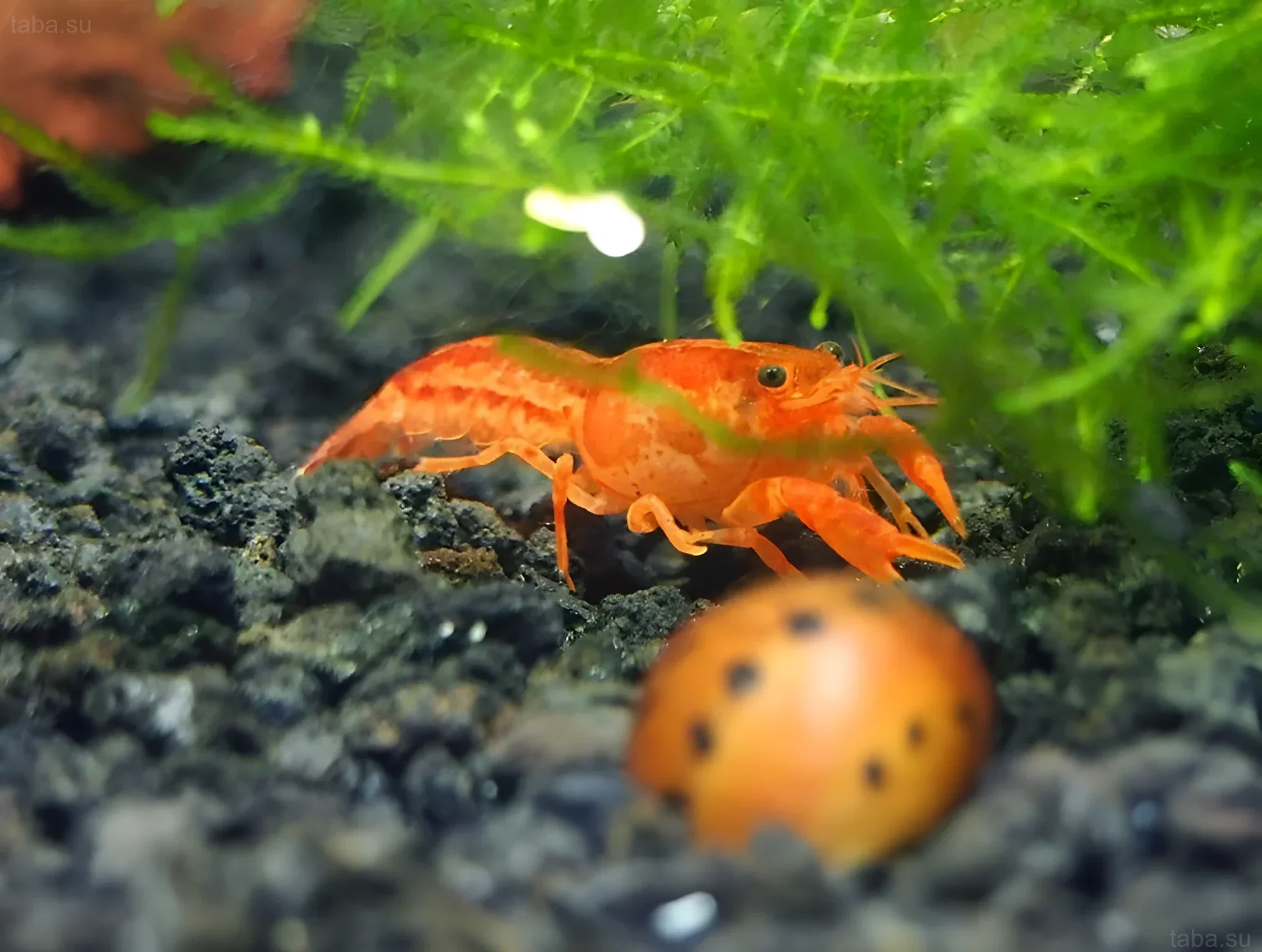
The Mexican dwarf crayfish (Cambarellus patzcuarensis), especially its popular orange variation often referred to as CPO (from Crayfish Patzcuarensis Orange), is one of the most sought-after invertebrates in the world of nano-aquariology. Thanks to their vibrant coloration, moderate size, and relatively peaceful nature, these crayfish have become ideal inhabitants for small freshwater biotopes. Successful CPO keeping requires knowledge of the specific conditions that need to be created for these small decapods to fully display their beauty and activity.